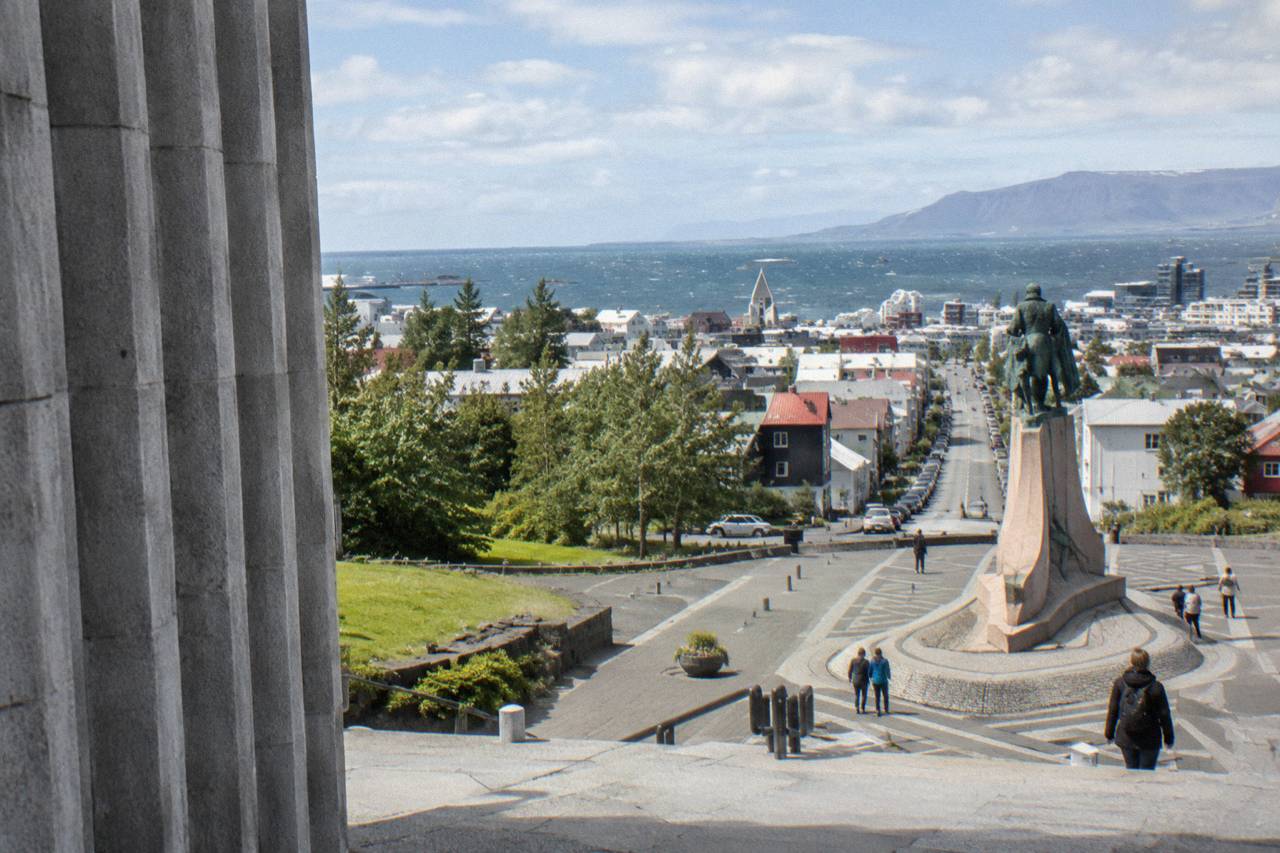
How Walkable Is Downtown Reykjavik?
Downtown Reykjavik is compact and easy to explore on foot. Here is how far everything actually is on foot, and when a guided walk earns its place.
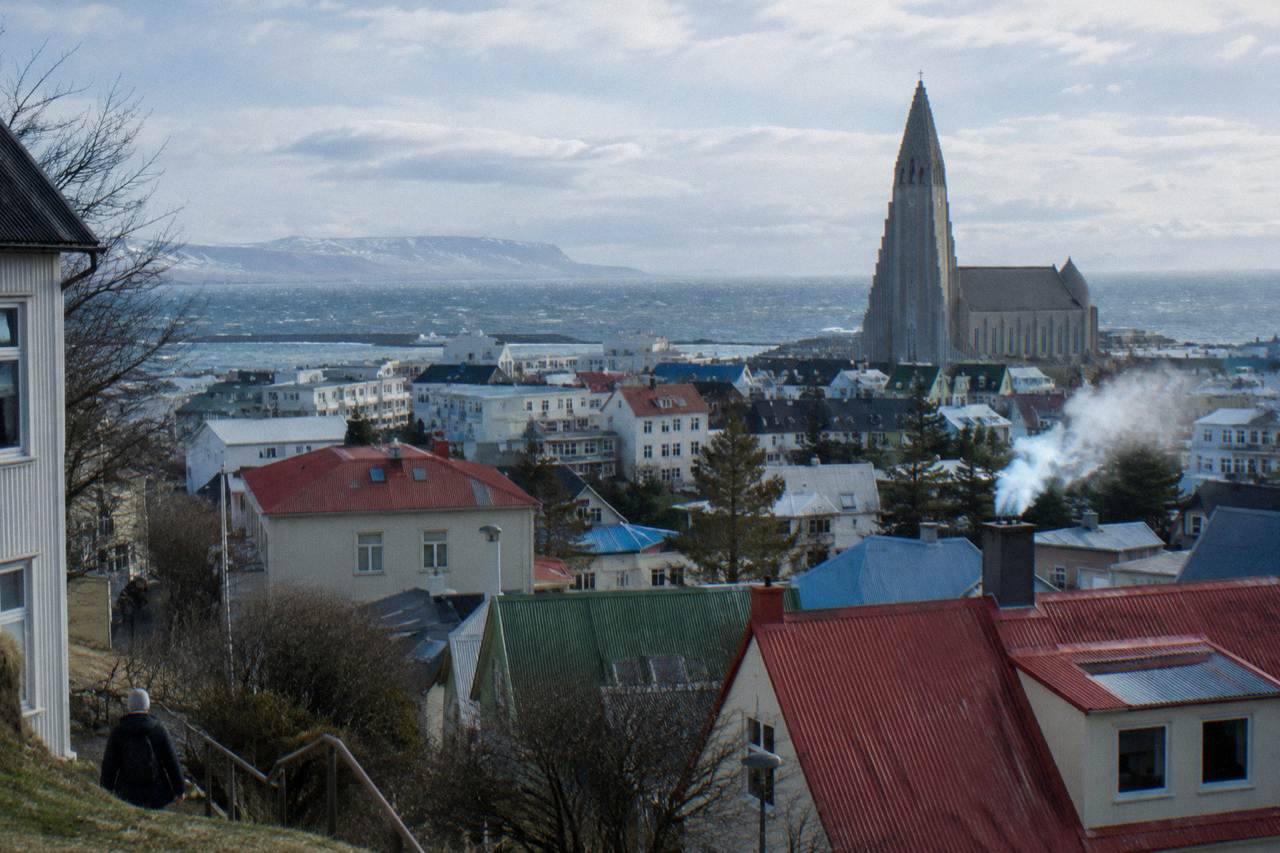
Reykjavik calls itself a capital city, but the numbers tell a humbler story. The downtown core that holds the harbour, the main shopping street, the big church and most of the restaurants fits inside a rectangle about two kilometres long and one kilometre wide. On a dry day you can walk from the Old Harbour to Hallgrimskirkja, the city's tallest and most famous building, in fifteen minutes without hurrying. That single fact shapes almost every decision a visitor makes here, because the usual question of "how do I get around" mostly dissolves into "how much can my feet handle". This article answers the walkability question directly, then looks at what the compactness means in practice: which sights are genuinely close, where the edges of the walkable zone sit, what hills and weather do to a walking plan, and when a guided walk adds something that a map cannot. Where you sleep matters more than usual in a city this small, and our guide to picking a walkable base in Reykjavik compares the neighbourhoods so you can stay within easy reach of everything on foot.
Downtown Reykjavik is exceptionally walkable, and that is not travel-guide flattery. The entire centre, from the Old Harbour to the pond and from Hallgrimskirkja down to Laugavegur, spans roughly two kilometres end to end. A visitor of average fitness can cross it in twenty to twenty-five minutes. Sidewalks run along essentially every street, car traffic is light by European capital standards, and the one meaningful hill, up to the church, takes about five minutes at a steady pace.
Walkability here is not just about distance. The street grid downtown is dense and legible, laid out around a handful of axes that all converge near the corner of Laugavegur and Bankastræti. Once you have walked the main drag once, orientation stops being a problem, because the church tower works as a landmark visible from almost everywhere in the centre, and the water of the harbour fixes the north edge of town permanently. You cannot really get lost downtown for longer than a block or two.
The pavements are generally in good condition, and the city clears and grits them through winter, though ice patches appear between clearances on freezing days, so footwear with real grip matters from November through March. Curb cuts are common at crossings. Street lighting is generous, which matters enormously given that in late December the sun rises after 11:00 and sets before 16:00; people walk downtown in darkness at 15:30 as a matter of routine and it feels entirely normal.
For anyone weighing independent wandering against a guided introduction, the compactness cuts both ways. You can see a lot alone in a few hours. You can also walk straight past the settlement-era traces, the folklore attached to specific corners and the shifts between the old working harbour district and the newer design-quarter streets without ever knowing they were there, which is exactly the gap a local guide fills.
How Big Is The Walkable Core, Really?
The practical walking zone runs from the Old Harbour and Grandi in the west to the Hlemmur area in the east, and from the seafront in the north to the southern shore of Tjörnin, the city pond. That is roughly 2.3 kilometres west to east and about 1.2 kilometres north to south. The Grandi harbour district stretches the western edge a little further but stays flat and pleasant along the waterfront path.
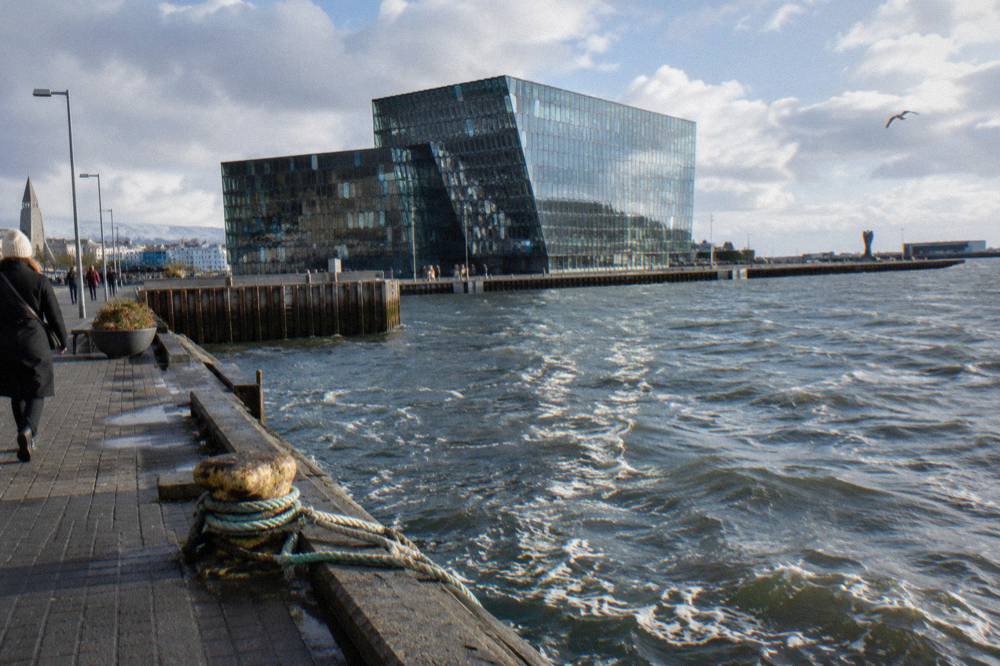
Boundaries matter more than averages here. East of Hlemmur, where Laugavegur meets the old bus terminal that is now the Hlemmur Mathöll food hall, the streets keep going but the density of things to see thins out. South of the pond you are into residential streets and the National Museum, walkable but quieter. The westward extension along Grandi is worth the extra distance: the waterfront walk past the modern Harpa concert hall toward the Saga Museum and the food hall at Grandagarður is flat, scenic and about twenty-five minutes from the church.
Distances between the anchors are short enough that listing them almost undersells the point. Still, a table helps when you are sequencing a day, so here are the walking times between the main downtown reference points, measured at a normal tourist pace rather than a commuter's stride.
| From | To | Walking time |
|---|---|---|
| Old Harbour (Ægisgarður) | Harpa concert hall | 8-10 min |
| Harpa | Austurvöllur square | 7-8 min |
| Austurvöllur | Hallgrimskirkja | 6-8 min uphill |
| Hallgrimskirkja | Laugavegur shopping street | 3-4 min downhill |
| Laugavegur (west end) | Tjörnin pond | 7-8 min |
| Hlemmur Mathöll | Laugavegur west end | 15-18 min |
| Hallgrimskirkja | Saga Museum, Grandi | 20-25 min |
One honest caveat about the table: these are direct walks, and downtown invites detours. A shop on Laugavegur, a bakery smell down a side lane and a mural in a courtyard will each add minutes. Budget half again on any estimate if you are the curious kind of walker, which is most people on their first visit.
If that core loop sounds appealing but you would rather have someone else sequence it and explain what you are passing, the family-run small-group walk, the Reykjavík Small group Walking Tour by CityWalk, covers the centre in about two hours from $50.08 per person, rated 4.9 across 5,260 reviews, the most reviewed walking tour option on offer here.
What Does Walking Downtown Actually Feel Like?
Walking downtown Reykjavik feels like moving through a small town that happens to hold national institutions. Buildings are low, two to four storeys, with corrugated iron cladding painted in bright colours. There is almost no high-rise canyon effect, no subway rumble, and the dominant sounds are wind, gulls and conversation. It is a city you experience at street level or not at all.
The texture changes quickly by district, which is part of why the centre rewards walking over any other mode. The harbour end smells of salt and diesel, with fishing boats tied up and tour boats boarding. Around Austurvöllur and the pond you get the ceremonial city, parliament, the cathedral, government buildings in modest stone. Laugavegur and Skólavörðustígur carry the commercial energy, design shops, outdoor clothing, bookstores and cafes. Twenty to twenty-five minutes west of the church, Grandi has shifted from industrial yard to food-and-museums district without losing its working edges. The main streets have life on them; the parallel streets can be nearly empty five minutes apart.
Cats are a genuine feature of the pedestrian experience. Reykjavik has a well-known free-roaming cat population, and downtown cats stroll sidewalks and doze in doorways with total entitlement. A feline-focused walking tour, rated 4.9 across 128 reviews from $71, exists entirely because visitors notice this and want it explained, which says something about the pace at which people actually move through this city.
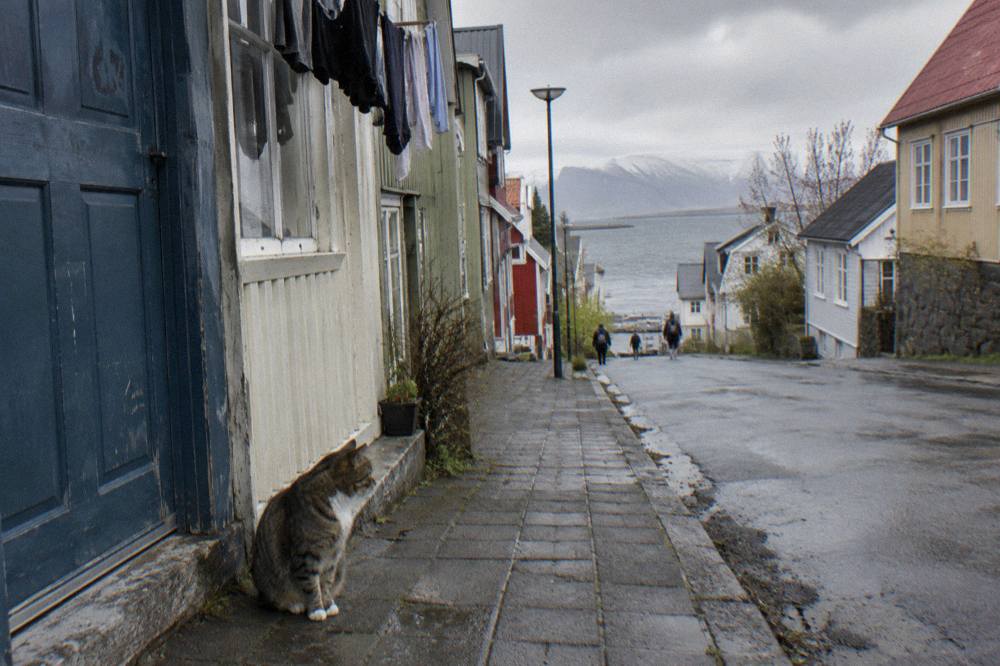
Winter changes the feel more than the layout. From November through January you will do a meaningful share of your walking in the dark or the blue twilight, under streetlights, with the Christmas lights of Laugavegur doing much of the atmospheric work. Downtown stays lively through the dark months, Icelanders are indoor-outdoor people by habit, and the compactness means a cold walk is rarely more than ten minutes before a cafe, bar or museum appears.
Do You Need Public Transport In The Centre?
For the downtown core itself, no, you do not need public transport at all. Buses earn their keep for the places beyond walking range, the geothermal pools in residential neighbourhoods, the airport bus and day trips out of the city. A single adult fare on the capital-area buses is 690 ISK, children 11 and under ride free, and the day passes that used to simplify visitor budgets are no longer sold.
That fare-capping change, effective from mid-July 2026, catches out a lot of travel advice still circulating online. There is no 24-hour or 72-hour visitor pass on the buses any more. You tap a contactless card or the local Klapp system, and the operator's capping rules limit what an adult pays per day and week, per the pricing published at Straeto's official pricing page. For a visitor making two or three bus trips in a day, capping quietly does the job the old day passes did: you never pay for more than three rides a day or nine a week.
The other transport question downtown is whether the hop-on hop-off bus replaces walking. It does not, and this article's companion piece on the hop-on hop-off bus in Reykjavik covers it in detail; the loop takes about 80 to 85 minutes and runs every 45 minutes on the winter schedule, which means a bus that a determined walker could outpace over the course of a day. Its value is orientation on day one, not mobility.
E-scooters exist as a top-up rather than a necessity. Hopp rents at 115 ISK to start plus 45 ISK per minute, riders must be 18 or older, and at those rates a scooter across the centre costs more than the bus and saves minutes over walking a distance that was short to begin with. Here is how the in-town options compare for a typical visitor.
| Option | Cost | Best for |
|---|---|---|
| Walking | Free | Everything inside the core, which is most of the trip |
| Straeto bus | 690 ISK adult single, children 11 and under free | Pools, outlying areas, days when weather turns |
| Reykjavik City Card | 6,100 ISK for 24 hours | Bundling buses with 17 museums and 8 pools |
| Hopp e-scooter | 115 ISK start + 45 ISK per minute, 18+ | Short hops when dressed for it |
| Taxi | Metered, expensive by habit | Luggage runs and late nights |
The City Card deserves one line of context before you buy: its full inclusions and prices are listed at the official Visit Reykjavik City Card page, and the site's own breakdown of whether the Reykjavik City Card is worth it works the maths for a walking-first itinerary. For downtown-only plans the card is usually unnecessary, because you will walk everywhere the card's buses would take you.
How Far Are The Key Sights From Each Other?
The headline sights downtown sit within a fifteen-minute walk of each other at the extremes. Hallgrimskirkja to Harpa is about twelve minutes. Harpa to the Settlement Exhibition is about ten. The pond sits seven minutes from the main square. Only the museum cluster on Grandi pushes past twenty minutes from the church, and that walk is along the flat waterfront, the nicest stretch of pavement in the city.
Numbers help, but sequence helps more. The natural walking spine runs from the church down Skólavörðustígur, the sloping design street that runs up toward Hallgrímskirkja, to Laugavegur, along Laugavegur east to Hlemmur, then back down to the pond, the square and the harbour. That is a loop of roughly 3.5 kilometres with stops, doable in a relaxed half-day, and it passes nearly everything first-time visitors list. You will find more Reykjavik guides on Reykjavik City Tours.
Two sights pin the edges. At the west, Harpa's glass facade and the harbour walks; at the east, Hlemmur Mathöll, the food hall in the old bus station, open daily into the evening, where the Hlemmur end of Laugavegur now finishes for many visitors in a bowl of soup. Grandi's Saga Museum, adult admission 4,000 ISK per its official site, anchors the Grandi harbor district to the northwest, a flat walk from the church along the waterfront, and you can read the site's guide to things to do in Reykjavik city centre for the full stop-by-stop sequencing.
One warning born of the compactness: because everything is "close", visitors routinely overbook. Six sights, two museums and a food hall in one afternoon is technically feasible on this map and miserable in practice. The distances are short; the content is dense. Downtown rewards fewer stops, looked at properly, and the question of pace is exactly where a guide's judgment earns its fee.
What About Hills, Weather And Daylight?
Downtown has exactly one real hill, the rise from the pond up to Hallgrimskirkja, and it takes about five minutes at an easy pace. Weather is the genuine variable. Reykjavik's winter months average just above freezing with rain on nine to fifteen days a month, and winter daylight shrinks to about four hours in late December. None of this stops walking here; it just changes what you wear and when you go.
The hill question deserves its plain answer because the city looks steeper in photos than it is. The church sits on a modest rise, Skólavörðustígur climbs gently to it, and everything north of it descends to the sea. A visitor with mobility limits can avoid the hill almost entirely by following the flat harbour-to-pond line and approaching the church from the east. For fuller advice on layers, shoes and rain strategy, see what to wear on a Reykjavik walking tour.
Weather works on a simple rule: wind matters more than rain. A calm, rainy day is an umbrella-day nuisance; a windy rainy day is horizontal water and the umbrella destroyed. Downtown's buildings give some shelter on the main streets, but the harbourfront and the pond are exposed, so plan indoor stops, the Settlement Exhibition, Harpa's foyer, the food halls, as wind valves. The site's piece on Reykjavik tours in the rain covers the wet-day playbook, and the monthly detail lives in the Reykjavik weather by month guide.
Daylight is the quiet third factor. On 1 November the sun rises at 09:10 and sets at 17:10; by the winter solstice the day shrinks to roughly four hours. Summer inverts this, with over twenty-one hours of usable light in late June, meaning a 23:00 stroll downtown in full brightness. Neither extreme reduces walkability, but winter walkers should front-load outdoor sightseeing into the 10:00 to 16:00 window and let dinner, bars and the evening economy carry the dark hours, which Icelanders do as standard. Tap water is safe everywhere, per the city's own public-health monitoring at reykjavik.is, so a refillable bottle covers a day of walking without buying a thing.
Should You Walk Alone Or With A Guide?
Walk alone if you want pace control and have read up; walk with a guide if you want the city decoded. Downtown's sights are close, but its meaning is not self-evident. Which buildings survived, why the houses are corrugated iron, where the folklore lives, what the harbour still catches, these are things a map will not volunteer. A guided walk compresses hours of wandering into two informed hours, and downtown's small size makes it the ideal guided-walking city.
The economics are gentler than in most capitals. The Reykjavík Small group Walking Tour by CityWalk runs about two hours from $50.08 per person, rated 4.9 across 5,260 reviews, a deeper review pool than any other city walk. The same family of options includes a slightly longer pick: the Reykjavik: Guided City Walking Tour, about 144 minutes, from $52, rated 5.0 across 106 reviews, a younger listing with a perfect score so far.
Between those poles sits the express format, and it exists precisely because downtown is small. The Reykjavik: Express Walk with a Local in 60 minutes, from $89, covers the core in an hour, too new to have accumulated a review history worth quoting, and genuinely useful for cruise passengers and layover travellers on a clock rather than an evening.
A reasonable hybrid works well: take a guided walk on day one to build the mental map and hear the stories, then spend subsequent days rewalking the same streets alone, because the second pass is when a compact city like this really opens up. The site's overall Reykjavik walking tour guide compares every format in depth, including the folklore and food variants, if the decision needs more data.
A Realistic Walking Day Downtown
Start at the church mid-morning, when the tower opens at 10:00 in winter, walk down through the design street to Laugavegur, continue east to Hlemmur Mathöll for lunch, return via the pond and the main square, and finish along the harbour at Harpa. That is a full and satisfying day inside a rectangle barely two kilometres wide, with a total walking distance under six kilometres and no transport of any kind.
Timing the anchors matters more than the route. The church tower is ticketed at the church shop only, no advance booking, with winter hours from 10:00 to 17:00 and last tower entry at 16:45, and access is restricted during services, so check the church's own site for the day's closures. Museums open around 10:00 across the board. Food halls run from 11:00, the harbour district's Grandi Mathöll daily from 11:00 to 21:00 per its official pages, though specific closure dates around holidays apply and the booking-page habit of checking before you walk applies here too.
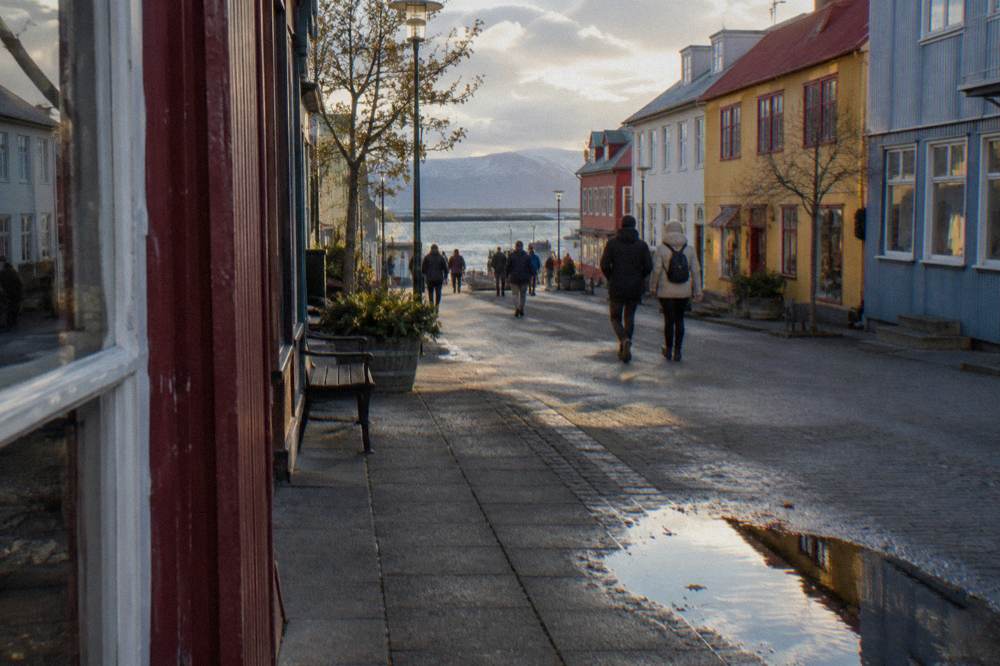
Add one deliberate inefficiency. The straight-line day above is efficient to a fault; the point of a walkable downtown is the unlisted things, the doorways, the cats, the yard with the boat in it. Give the day one unstructured hour and it pays for itself in the stories you keep. For a fuller sequence with map and timings, the site's self-guided walking tour of Reykjavik and the companion walking tour map do this properly.
By any honest measure, downtown Reykjavik sits in the top tier of walkable city centres in Europe, not because anyone designed it for tourists but because it grew small and stayed small. The question worth asking is rarely whether you can walk it. It is whether you want to walk it informed, and the guided options below close that particular gap in about two hours.
Common Questions About Downtown Reykjavik Walkability
How Walkable Is Downtown Reykjavik?
Very walkable. The walkable core measures roughly 2.3 kilometres west to east and 1.2 kilometres north to south, with sidewalks throughout, one short hill and crossing times of twenty to twenty-five minutes at the extremes. Most visitors never need transport inside the centre at all.
How Walkable Is Downtown Reykjavík?
The same answer holds under the Icelandic spelling: downtown Reykjavík is compact, flat apart from one short climb to the church, and fully navigable on foot. Winter ice and short daylight require grip and timing rather than a different plan.
Can You Walk Everywhere In Reykjavik Without A Bus?
Inside downtown, yes. Buses matter for residential pools, the Perlan and Árbær areas and out-of-town trips. A single adult bus fare is 690 ISK, and the 24 and 72 hour day passes are no longer sold, replaced by daily fare capping.
How Long Does It Take To Walk Across Downtown Reykjavik?
Harbour to Hlemmur, the long axis, takes about twenty to twenty-five minutes. Church to Harpa is around twelve minutes. A full sightseeing loop of the centre runs under six kilometres and fits comfortably in a half-day with stops.
Is Downtown Reykjavik Hilly?
Barely. The only real climb is from the pond up to Hallgrimskirkja, about five minutes at an easy pace, and it can be avoided almost entirely by approaching the church from the east along the flat harbour-to-pond line.
Is It Worth Taking A Guided Walking Tour If The City Is This Walkable?
Many visitors think so. The most reviewed option, the small-group walk from $50.08, is rated 4.9 across 5,260 reviews and decodes the history and folklore a map will not volunteer, in about two hours inside the same compact core.