Things To Do In Reykjavik City Centre
Reykjavik's centre is compact enough to see on foot in a day or two, but the interesting part is choosing which sights, museums and food stops deserve your hours. Here is how the centre is laid out, what each area offers, and which guided options fit each one.
Short answer
The centre runs from Hallgrimskirkja down Laugavegur to the Old Harbour, roughly a 25 minute walk end to end. Plan on a half day for the landmark core, add a museum or two (Saga Museum adult entry 4,000 ISK), and finish at the harbour food halls. Guided walking tours run from $49 to $52 per person.
Reykjavik's city centre packs a national cathedral, a harbour, two food halls, a famous hot dog stand and a shopping street into an area you can cross on foot in about half an hour. That compactness is the whole trick of planning here. Visitors who arrive without a plan tend to drift between Laugavegur and the harbour, see the outside of three buildings, and leave wondering what the fuss was about.
The centre rewards a little structure. This guide walks through the layout from the church down to the water, what each stop actually costs and takes, and where a guided tour earns its price versus where you are better off alone. The backbone option for most first-time visitors is Reykjavik's small group walking tour, rated 4.9 across 5,260 reviews and bookable from $50.08 per person, which covers the landmark core in about two hours.
What Are The Main Areas Of Central Reykjavik?
The centre has three zones that flow into each other: the church-and-shopping core around Hallgrimskirkja and Laugavegur, the cultural strip along Tryggvagata and the pond, and the Old Harbour district of Grandi. Each is walkable, and the full chain from the church steps to the harbour food halls is about 25 minutes at a normal pace.
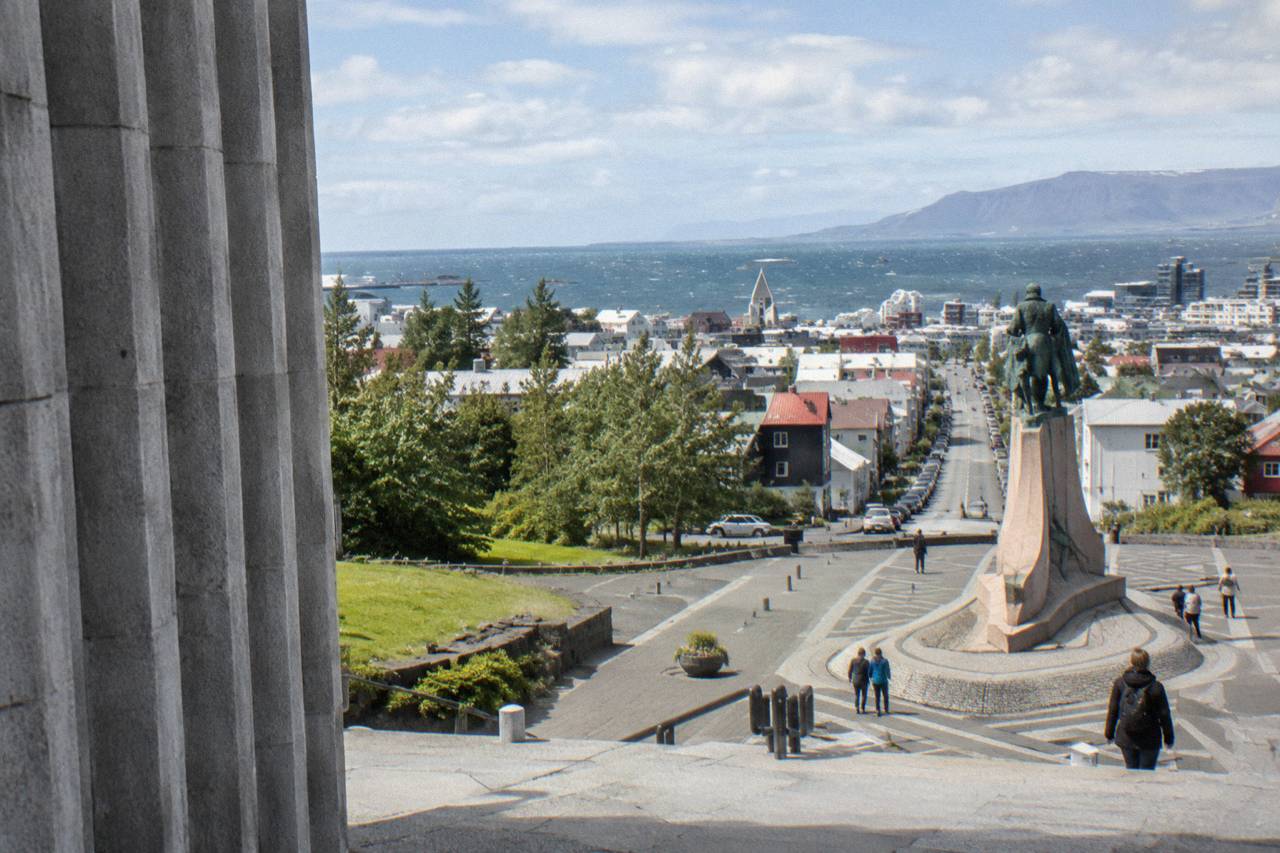
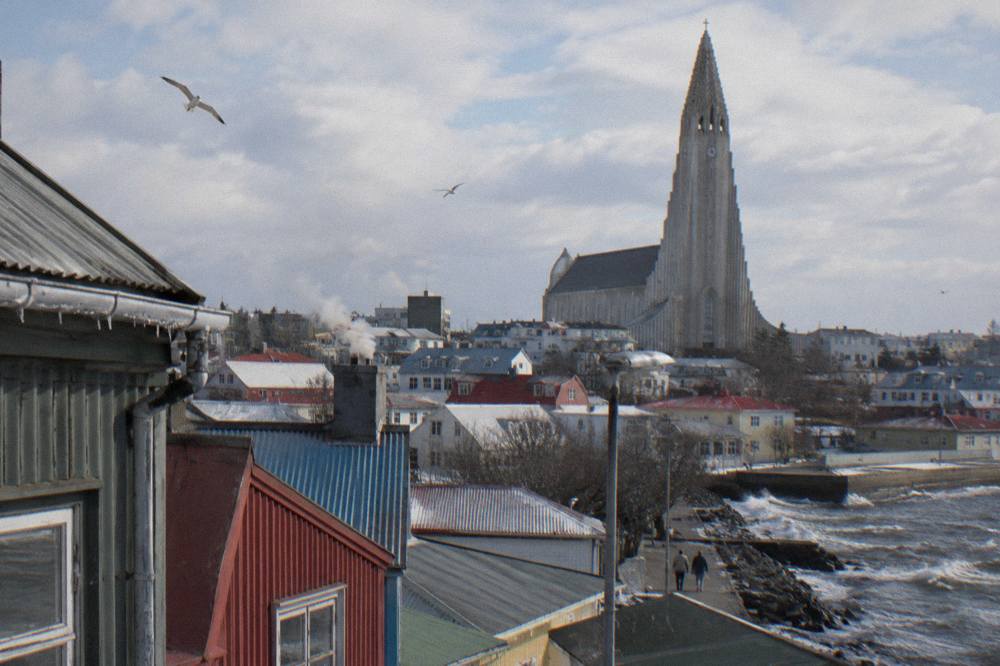
Start at the top of the hill. Hallgrimskirkja, the Lutheran church whose stepped concrete tower copies basalt columns, is the tallest thing in the centre and the easiest orientation point in the city. Skolavordustigur runs from its front steps down to Laugavegur, the main shopping street. Side streets off Laugavegur hold most of the street art, the smaller shops and a concentration of cafes.
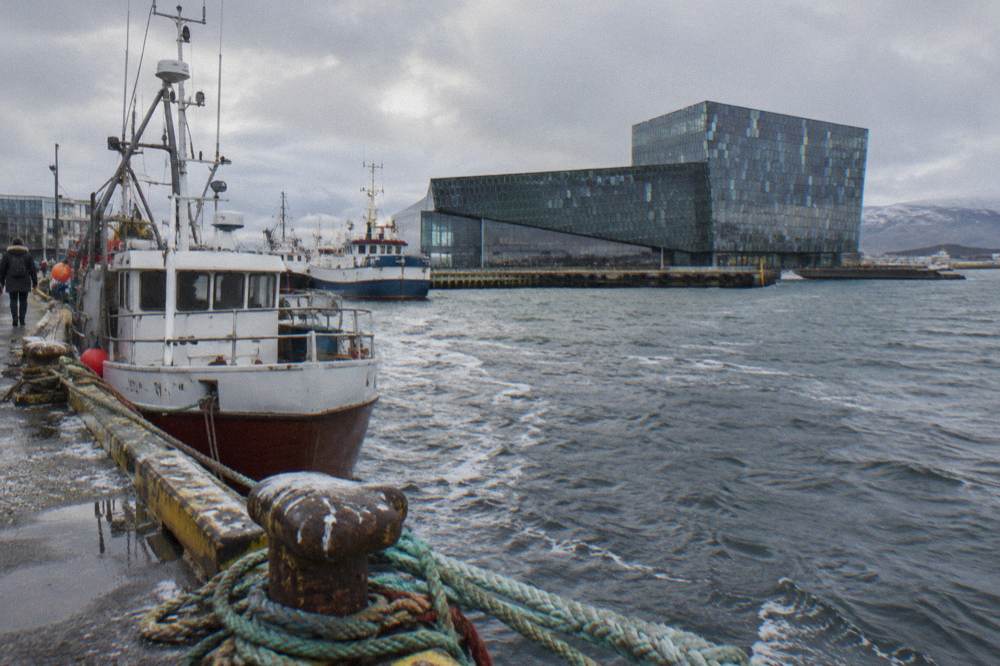
Halfway down, the scene shifts. The city pond, Tjornin, sits to the southwest with the City Hall on its corner, and Tryggvagata carries you toward the harbour; the Settlement Exhibition sits nearby on Aðalstræti. At the bottom is the Old Harbour: working boats, whale watching departures, the Harpa concert hall on the eastern edge, and the Grandi district just west along the water, where the Saga Museum and the Grandi food hall sit among the fish-processing buildings. If you want the bigger picture, from whale watching at the Old Harbour to the lamb, seafood and hot dog scene, our guide to what Reykjavik does best pulls it all together.
For a fuller treatment of the routes between these areas, a stop-by-stop self-guided itinerary lets you follow the same ground without a guide, and it pairs naturally with this page's zone-by-zone overview.
Which Landmarks Should You See First In Reykjavik?
See Hallgrimskirkja's tower first for the overview, then Harpa, the Sun Voyager sculpture and the Old Harbour waterfront, in that order. The church tower is ticketed at the church shop only, with no advance booking; the tower closes to entry at 16:45 in winter. Harpa and the waterfront are free to walk through at any hour.
Hallgrimskirkja is the one paid landmark in the core worth queuing for, because the tower view shows you the whole city plan at once: the pond, the harbour, the white Harpa facade, and Esja mountain across the bay. The church posts winter hours of 10:00 to 17:00, with tower access restricted during services and concerts, so check the church's own site on the day. The nave itself carries no listed fee.
Harpa, the concert hall whose glass honeycomb front is the glass-clad concert hall beside the old harbour, costs nothing to enter. Its ground floor and harbour-facing windows are public space, and the interior alone justifies the ten minute detour. Guided tours of the building run at scheduled times for a fee on the operator's own page, but most visitors simply walk through.
The Sun Voyager, the steel boat sculpture on the waterfront east of Harpa, and the harbour itself need no ticket and no explanation, just ten minutes of walking. If you would rather have a guide frame these stops than read plaques, a viking-guided sightseeing walk covers the centre's landmarks in about two hours from $52 per person, rated 4.7 across 497 reviews; check the booking page for its meeting point.
Which Museums In The Centre Are Worth Your Time?
The Settlement Exhibition gives the best return in the centre, and the Reykjavik City Card includes free entry to it among 17 museums and attractions, plus city buses and pools: 24 hours costs 6,100 ISK, 48 hours 8,500 ISK, 72 hours 10,500 ISK, and the card includes 17 museums, eight pools and unlimited city buses.
The Settlement Exhibition, open daily 10:00 to 17:00, is built around the excavated ruins of a Viking-age longhouse found under the street, displayed in place behind glass. It is the single most concrete piece of early Reykjavik history you can stand next to, and City Card holders enter free. It closes over the Christmas holidays, so check the museum's own page for December dates.
The Saga Museum at Grandagarður 2 takes a different approach: 17 wax-figure scenes from the sagas with a multilingual audio guide, self-guided, about 45 to 60 minutes for a typical visit. Admission is 4,000 ISK for adults, 3,400 ISK for students and seniors, 1,200 ISK for children 6 to 12, and 9,200 ISK for a family ticket. It is open every day 10:00 to 17:00 with limited holiday hours, and the City Card carries a discount rather than full entry here.
Whether the card pays off depends on your pace, and the question has a real answer once you count the entries: see the full breakdown of the Reykjavik City Card. Note one boundary that catches people at the airport: the card does not cover bus route 55 to Keflavik.
| Museum | Area | Adult entry | Hours |
|---|---|---|---|
| Settlement Exhibition | Tryggvagata, centre | Included in City Card | 10:00 to 17:00 daily |
| Saga Museum | Grandi, Old Harbour | 4,000 ISK | 10:00 to 17:00 daily |
| Whales of Iceland | Grandi, Old Harbour | 4,300 ISK | 10:00 to 17:00 daily |
| Hallgrimskirkja tower | Church hill | Ticketed at church shop | Last tower entry 16:45, winter |
Where Should You Eat In The City Centre?
Hlemmur Matholl and Grandi Matholl, the two food halls, anchor the centre's eating, with Hlemmur at the top of Laugavegur open daily into the late evening and Grandi at the harbour open 11:00 to 21:00. Bæjarins Beztu Pylsur, the hot dog stand operating since 1937, lists a pylsa at 920 ISK.
Hlemmur Matholl, in a converted bus terminal, holds a rotating set of vendors covering bistro food, pizza, Thai, Indian and a gelato counter. It suits groups who cannot agree and anyone who wants a fast, decent meal between the pond and the top of Laugavegur. Grandi Matholl, in the harbour district at Grandagarður 16, leans toward street food and seafood with communal tables and water views, and it closes for a few fixed holiday dates each winter.
Between the halls sits the classic: Bæjarins Beztu Pylsur, near the harbour, has been serving the lamb hot dog with crispy onion and remoulade since 1937, and a plain pylsa lists at 920 ISK. The queue moves fast and it is the cheapest genuinely Icelandic meal in the centre.
A guided food tour turns the same geography into an education, and the strongest-reviewed option is the foodie walking tour with six tastings, about three hours from $147 per person, rated 4.9 across 2,124 reviews. For the fuller picture of what to order and where, the Reykjavik food tour guide compares every eating walk on offer.
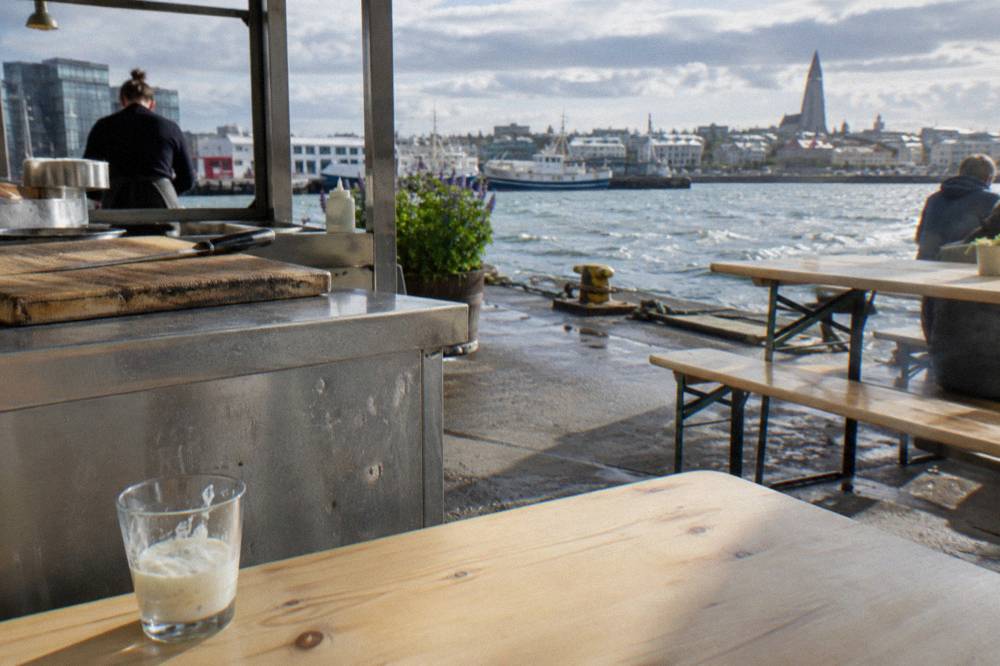
A little planning around the two schedules pays off. Grandi Matholl's fixed daytime window makes it a lunch and early-evening venue rather than a late stop, and given its winter holiday closures, anyone visiting in that season should confirm it is open before making the trip out to the harbour. Hlemmur's later hours make it the dependable choice after dark, and its rotating vendor lineup means the counter mix can shift between visits, so see what is on the pass when you arrive rather than expecting a fixed roster. That variety is the hall's whole appeal: browse first, then order.
The three stops also form a natural walking line through the centre. Start at the pond, follow Laugavegur to its top end, where Hlemmur sits, then drift back down toward the harbour, where the Grandi hall's counters line up by the water. The whole loop stays on the centre's main axis, so no transport is needed beyond comfortable shoes.
If the guided option appeals, put it on your first day. The route draws on the same streets, pond to Laugavegur to harbour, so the tour doubles as an orientation walk, and you can circle back afterward to whichever vendors earned a second visit. For anyone still deciding, the food tour guide linked above lets you weigh that option against the other eating walks before you settle on one.
How Much Does A Day In Reykjavik Centre Cost?
Budget roughly 6,100 to 10,500 ISK for a sight-packed day using the City Card, or 4,000 to 4,300 ISK entry for the two museums, plus a separate church tower ticket, with meals on top at food hall prices that vary by stall. A guided walking tour adds $49 to $52 per person.
The honest answer is that the centre can be done cheaply or expensively, and the lever is how many interiors you enter. Walking the landmarks, the waterfront, Harpa's public floors and the pond costs nothing beyond lunch. The moment you add the tower, two museums and a pool swim, the City Card math starts working in your favour, especially on the 48-hour version at 8,500 ISK.
The city's public pools are the underrated line item: adult admission is 1,500 ISK, children under 10 enter free with a guardian, and the geothermal water is the most Icelandic hour available for the money. The official city fee schedule lists the full range of multi-visit passes.
| Item | Cost | Notes |
|---|---|---|
| City Card 24 hours | 6,100 ISK | 17 museums, 8 pools, city buses |
| City Card 48 hours | 8,500 ISK | Best fit for a two-day visit |
| Saga Museum adult | 4,000 ISK | Discount with City Card |
| Public pool adult | 1,500 ISK | Children under 10 free |
| Hot dog at the harbour stand | 920 ISK | Since 1937 |
| Small group walking tour | from $50.08 | About 2 hours, local guide |
When Is The Best Time Of Day To See The Centre?
Mid-morning is the sweet spot: the church tower opens at 10:00, museums open at 10:00, and Laugavegur's shops fill around 11:00, so starting at the church at 10:00 puts you at the harbour food halls for lunch. In winter, plan indoor stops for late afternoon, since sunset falls around 16:27 by mid-November.
Daylight is the constraint that shapes every winter day here. The sun rises at 09:10 on 1 November and sets at 17:10, and by 15 November the day has shrunk to about six and a half hours, from 09:56 to 16:27. That is enough for a full centre itinerary, but only if you front-load the outdoor walking and hold Harpa, the museums and the food halls for the dark hours.
Summer inverts the problem. Around the June solstice the city gets over 21 hours of daylight, which pushes dinner late and makes an evening harbour walk entirely reasonable. The trade is crowds on Laugavegur in the early afternoon, so the same start-at-the-church logic applies with more slack.
If your visit lands in the darker months, check what keeps running and what does not before you plan an evening, since boat schedules and tour timetables shift with the season. One detail worth knowing early: the hop-on hop-off bus runs a winter schedule with departures roughly every 45 minutes from about 09:30, the last departure around 16:15, and the full loop takes about 80 to 85 minutes.
Should You See The Centre With A Guide Or On Your Own?
On your own suits confident walkers with a map and two full days; a guide suits anyone with one day, anyone who wants the stories behind the buildings, and anyone eating their way through the food scene. Small-group walking tours run from $50.08, food tours from $136.58 to $223, and the hop-on hop-off bus from $53.49 for a 24-hour ticket.
The case for a guide is density. A local guide compresses the church, the pond, the parliament district and the harbour into about two hours with the context that plaques do not carry, and the small group format keeps it conversational. The most-reviewed option in the city, rated 4.9 across 5,260 reviews, runs about two hours from $50.08 per person.
The case for going alone is flexibility and cost: the centre's layout is simple, crime is low, and every landmark above is reachable on foot from anywhere downtown. If you go alone, pair this page with the Reykjavik walking tour map and treat the tower view as your orientation session.
| Option | Duration | Price | Best for |
|---|---|---|---|
| Small group walking tour | ~2 hours | from $50.08 | First-time visitors, one-day visits |
| Hop-on hop-off bus, 24 or 48 hours | Ticket length varies | from $53.49 | Mobility, spread-out sights |
| Food tour with 6+ tastings | ~3 hours | from $149 | Eating the centre efficiently |
| Self-guided walk | Half day | Free, plus entries | Confident walkers, tight budgets |
What Can You Do From The Centre If You Have More Time?
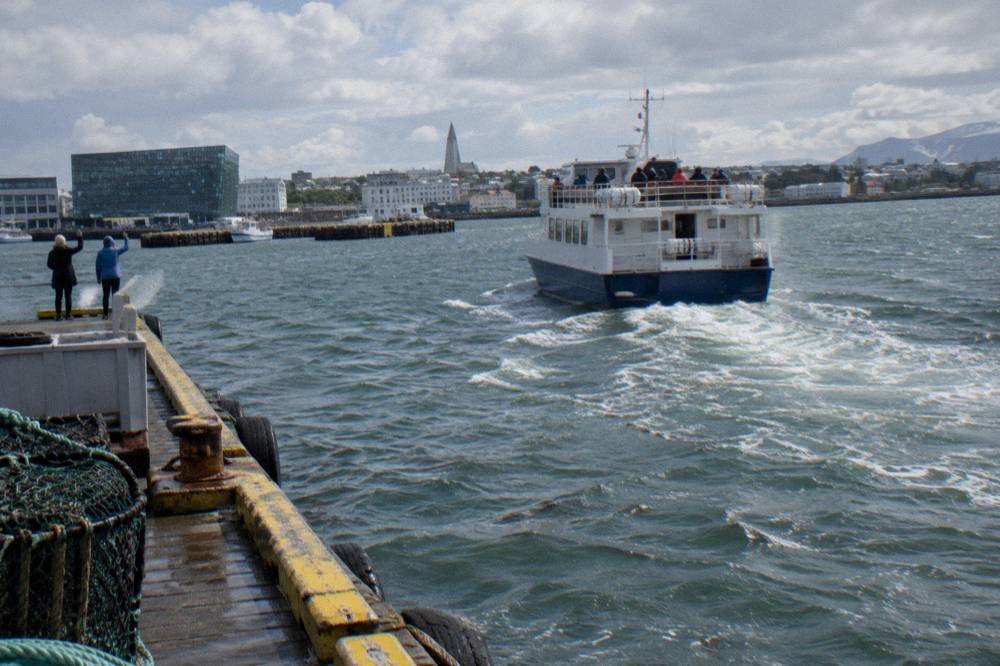
The Old Harbour is the launch point for whale watching year-round, puffin boat trips in nesting season, and northern lights cruises from September to mid-April. Classic whale watching starts from $105 per person and the harbour is a ten minute walk from the bottom of Laugavegur.
The harbour is not just scenery; it is the centre's transport hub for the water. Classic whale watching boats run daily through the winter from the Old Harbour piers, and the original classic whale watching tour is rated 4.6 across 2,999 reviews, from $105 per person. Operators describe sightings rather than promising them, and the standard advice is to dress for the deck, not the dock: windproof layers, warm hat, gloves.
Puffin trips are the strictly seasonal option, running through the nesting window of roughly May to August, with a one-hour boat tour from $67 rated 4.6 across 1,434 reviews. For the full picture, the whale watching guide covers seasons, operators and what to wear from the same piers.
If your day-trip ambitions point inland, the Golden Circle is the classic combination and pairs naturally with a city tour on separate days, with the driving loop leaving the centre from the BSÍ terminal side.
How Do You Get Around The Centre Without A Car?
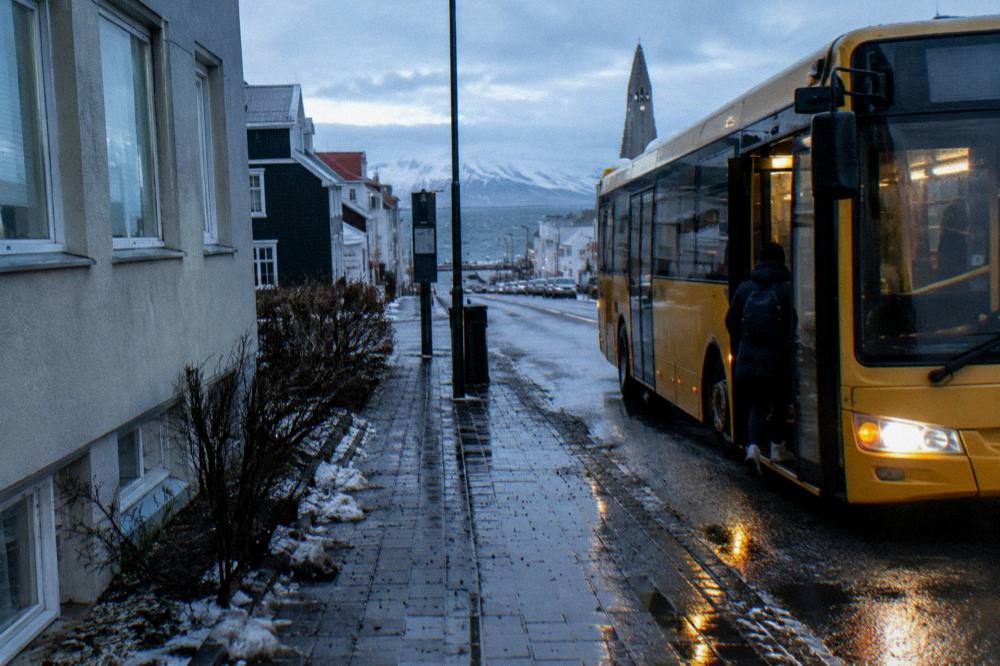
You walk. The centre is flat-to-hilly, compact and pedestrian-priority, and a car is a liability: parking is metered and scarce. City buses cost 690 ISK per adult single with contactless payment, children 11 and under ride free, and fares cap at three rides per day, since 24 and 72 hour day passes are no longer sold.
The bus detail matters more than visitors expect, because the old advice about buying a day pass no longer applies. Straeto replaced day passes with automatic fare capping in July 2026: tap the same contactless card and you never pay for more than three adult rides in a day or nine in a week. A 30-day pass at 12,000 ISK exists but is irrelevant for a short visit.
For the airport run, Flybus connects Keflavik to the BSÍ terminal in the centre for 3,999 ISK adult one-way, or 5,299 ISK with a hotel drop-off leg, and children 1 to 5 ride free. The BSÍ terminal sits at the southern edge of the centre, walkable from most downtown hotels. Everything else, including most tour meeting points listed on Reykjavik City Tours in the city centre, is reachable on foot. The full transport picture, including e-scooters and the hop-on hop-off bus, is in the guide to getting around Reykjavik without a car.

Common Questions About Things To Do In Reykjavik City Centre
Can You See Reykjavik City Centre In One Day?
Yes. The landmark core from Hallgrimskirkja to the Old Harbour is a 25 minute walk end to end, so one full day covers the tower, Laugavegur, Harpa, the waterfront, one museum and a food hall dinner. Two days let you add a pool visit and a boat trip.
What Is Free To Do In Central Reykjavik?
Walking Laugavegur and the street-art side streets, entering Harpa's public floors, the Sun Voyager sculpture, the harbour waterfront and the pond at Tjornin all cost nothing. The Hallgrimskirkja nave has no listed fee; only the tower is ticketed.
Is The Reykjavik City Card Worth It For The Centre?
It depends on pace. The 24-hour card at 6,100 ISK covers 17 museums, eight pools and city buses, so it pays off with two museums plus a pool in one day. Entry-only visitors doing one museum and free sights are better off paying individually.
What Is The Best Guided Tour Of Reykjavik Centre?
The small group walking tour, rated 4.9 across 5,260 reviews, about two hours from $50.08 per person, is the most-reviewed option. Food tours suit visitors whose priority is eating, and the hop-on hop-off bus suits anyone who wants to rest between areas.
Where Do You Catch Whale Watching Tours From The Centre?
From the Old Harbour piers, about a ten minute walk from the bottom of Laugavegur. Classic whale watching runs year-round from $105 per person; RIB speedboat trips pause for winter after October.