Reykjavik Walking Tour Map: Stops In Order
Central Reykjavik folds into a compact loop you can walk in two to three hours, and this route puts the stops in a sensible order with timings, costs and daylight notes.
Short answer
The classic central loop runs Hallgrimskirkja down Laugavegur to the Old Harbour, then back along the waterfront past Harpa to the Settlement Exhibition, roughly 3 to 4 km end to end. Most walkers finish it in two to three hours at a relaxed pace, or three to four with museum stops. A guided version such as the Walking tour of Reykjavik city, from $51.22 per person, covers the core in about 2.5 to 3 hours.
Reykjavik's centre is small enough that you rarely need a bus, and tight enough that a bad route order wastes your day. Walk the church first and the harbour last, or the reverse, and everything lines up along one natural line from the hill down to the water. This page lays out that line as an ordered map: eleven central stops, how long each deserves, what entry costs where a fee applies, and where the guided walking tours actually start and end so you can either join one or steal its geometry for your own walk. If you want a second route built the same way but around paint rather than landmarks, the guide to Reykjavik's murals and street art walks shows where the pieces actually cluster and which guided city walks pass them.
What Is The Best Self-Guided Walking Route In Reykjavik?
The best self-guided route is a loop of about 3 to 4 km from Hallgrimskirkja at the top of the hill down through Laugavegur and the Old Harbour, returning along the waterfront past Harpa to the city centre, walked in two to three hours without museum interiors and three to four hours with them. Every major central stop sits on or beside that line, so you never backtrack, and the downhill start saves your legs for the flat harbour stretch at the end.
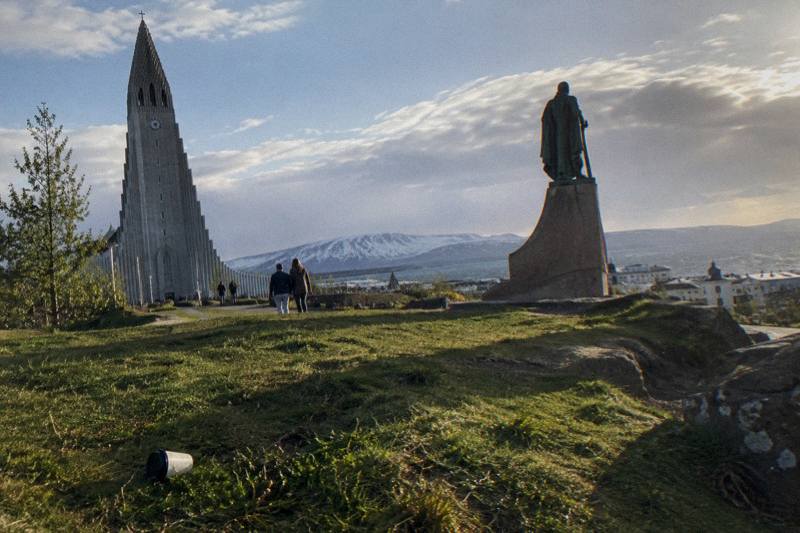
Start at Hallgrimskirkja, the church whose tower anchors almost every photograph of the city. The tower is ticketed at the church shop, with no advance booking; check the church's opening hours page for the current admission price before you visit and for service-day closures. Winter hours run 10:00 to 17:00 with last tower entry at 16:45, and access to both nave and tower is restricted during services and concerts.
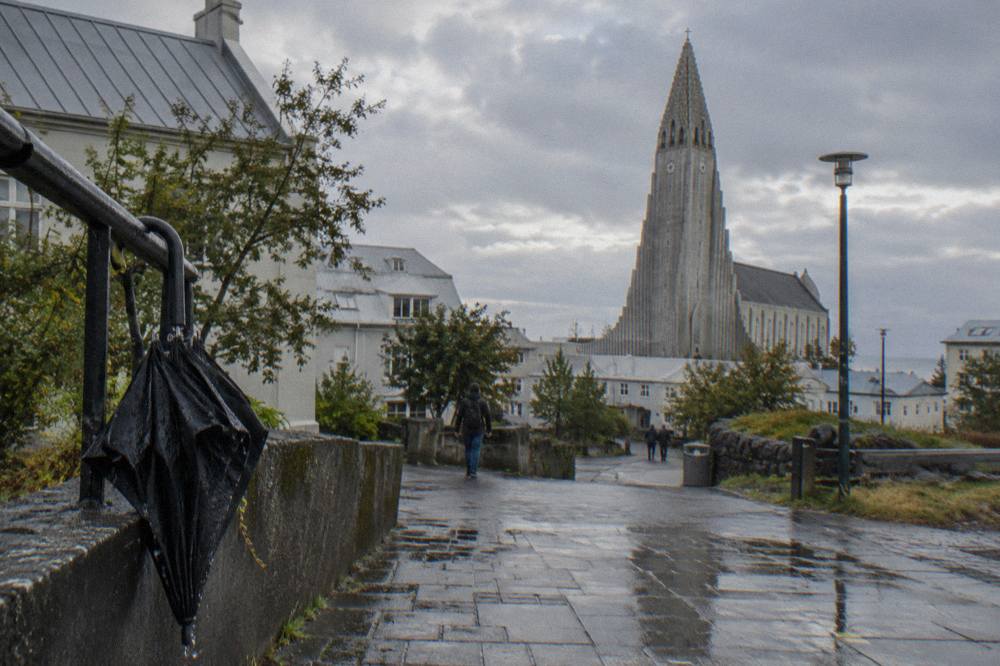
From the church forecourt, walk down Skolavordustigur, the gently sloping street of design shops and galleries that runs down from Hallgrimskirkja toward the harbour. It empties you onto Laugavegur, the main shopping street, which you follow east or cut across toward the Old Harbour depending on your appetite for retail. The Photography Museum and the street art of Grandi sit west; the lake, the city hall and the Settlement Exhibition sit south. Either order works because the whole district is a fifteen-minute walk across.
The loop as most walkers actually do it:
| Order | Stop | What it is | Realistic time |
|---|---|---|---|
| 1 | Hallgrimskirkja | Tower viewpoint and nave | 20 to 30 min |
| 2 | Skolavordustigur | Design and gallery street | 15 min walking |
| 3 | Laugavegur | Main shopping street | 20 to 30 min |
| 4 | Old Harbour | Working fishing harbour | 20 min |
| 5 | Whales of Iceland or Saga Museum (Grandi) | Indoor exhibits | 45 to 60 min each |
| 6 | Grandi street art stretch | Murals and harbour views | 20 min |
| 7 | Harpa concert hall | Glass facade, free foyer | 20 to 30 min |
| 8 | Sun Voyager sculpture | Waterfront photo stop | 10 min |
| 9 | Old Pond and city hall | Lake, wildfowl, view inward | 15 to 20 min |
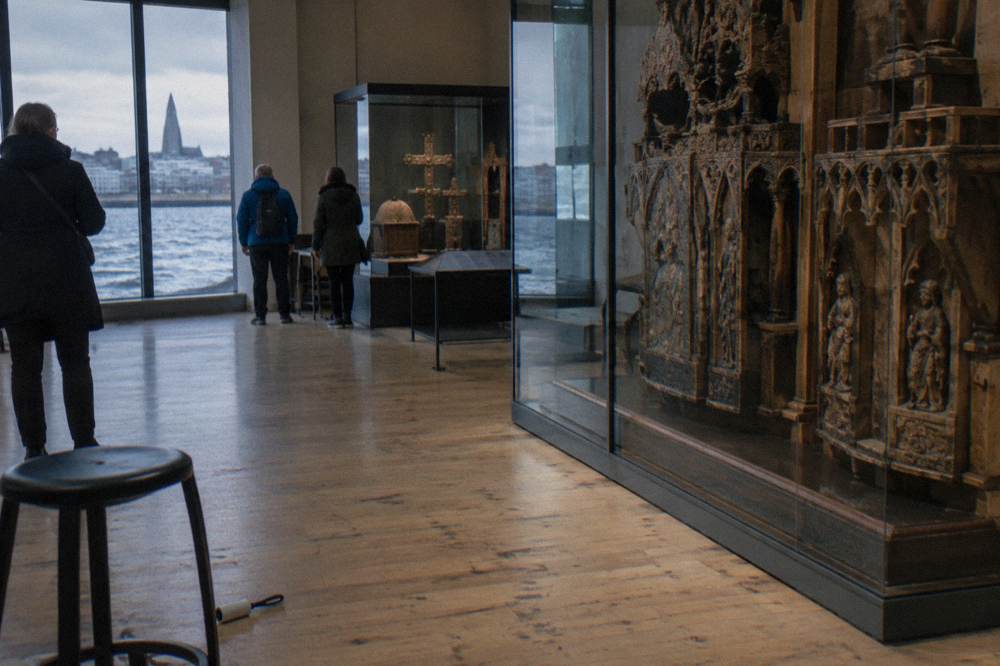
| 10 | Settlement Exhibition | Viking-age ruins under glass | 30 to 45 min |
| 11 | Austurvollur square | Parliament, cathedral, cafes | 10 to 15 min |
Distances between consecutive stops are short, a handful of minutes at an unhurried pace, because the whole centre is barely a quarter-hour from edge to edge. If you only have a half day, do stops 1, 3, 4, 7 and 8 and you will still have seen the spine of the city. If you want the full route pre-planned with more background on each street, the self-guided walking route guide expands each stop with detour options, and the broader Reykjavik walking tour guide compares the formats side by side.
Where Do Guided Walking Tours Start And End In Reykjavik?
Most guided walking tours in central Reykjavik start at a fixed meeting point within a few minutes' walk of Hallgrimskirkja or Austurvollur square and end within the same central core, with typical durations of 1.5 to 3 hours; the booking page for each tour lists its exact meeting point. That matters for route planning because you can anchor your own walk on the same geometry: arrive at the meeting point early, use the wait for the tower, and finish your self-guided loop wherever the tour drops you. If your visit lands in December, the guide to Reykjavik Christmas tours and the Yule Lads explains what seasonal walks add, from folklore stops to holiday markets.
Two walks below sit closest to this route: the small-group CityWalk option, which carries the largest review pool in the city, and a classic guided city walk in the same style.
The Walking tour of Reykjavik city runs about 2 hours 30 minutes to 3 hours, is rated 5 across 494 reviews and costs from $51.22 per person, which puts it almost exactly on top of the self-guided loop above in both length and coverage. The small-group walk by CityWalk, rated 4.9 across 5,260 reviews from $50.08, is the most-reviewed walk in the city and covers a similar centre in about 2 hours. The Guided City Walking Tour, rated 5 across 106 reviews from $52, runs roughly 144 minutes. Where a tour's meeting point is not stated in its listing, check the booking page before you set out; central Reykjavik is small but a wrong assumption still costs you a quarter of the tour.
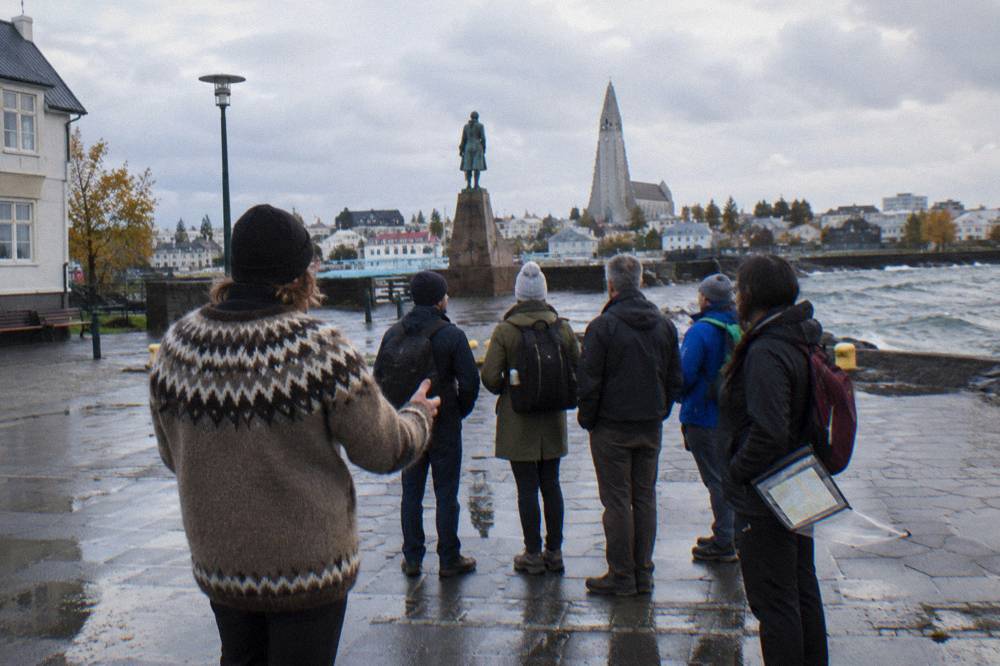
A practical pattern for a single day: book a morning guided walk, then use the afternoon for the stops the tour passes quickly, above all the church tower and one indoor exhibit. Walkers who prefer to move at their own pace through the city's history can follow the ordered stops above and dip into a themed walk instead; the folklore and saga walking tours guide covers the elf-and-ghost format, which uses a different, darker version of the same central streets.
The viking-costumed sightseeing format is a lighter historical overlay on essentially this same route, rated 4.7 across 497 reviews from $52 for about 2 hours.
How Long Does Each Central Reykjavik Stop Really Take?
Plan two to three hours for the full eleven-stop loop museum-free, or three to four hours with museum interiors, adding 45 to 60 minutes for each interior stop you enter; the two biggest time variables are the Hallgrimskirkja tower queue and how long Laugavegur's shops hold you. Most first-time walkers budget too little time for the Grandi harbour district, which looks like a detour on the map but rewards it with street art and two of the city's best indoor exhibits.
The timings below assume an adult walking at an unhurried pace with short photo stops. Families with young children or anyone walking in deep winter should add roughly 25 percent for ice underfoot and clothing adjustments.
| Stop | Outside only | With interior | Notes |
|---|---|---|---|
| Hallgrimskirkja | 10 min | 20 to 30 min | Tower ticket sold on site only |
| Laugavegur and side streets | 20 min | 45 min | Shops close early on some days |
| Old Harbour and Grandi | 30 min | 90 min | Add 45 to 60 min per exhibit |
| Harpa | 15 min | 30 min | Foyer free; tours at set times |
| Waterfront to Sun Voyager | 20 min | 20 min | Flat, exposed, windy |
| Old Pond and city hall | 15 min | 25 min | City hall toilets useful |
| Settlement Exhibition | 5 min | 30 to 45 min | Open daily 10:00 to 17:00 |
Two structural facts change the math. First, winter daylight is short: on 15 November the sun rises at 09:56 and sets at 16:27, so an eleven-stop loop with interiors does not fit a winter afternoon, and the tower's last entry at 16:45 is moot on the darkest days. Second, the Settlement Exhibition closes on 24 to 26 December and 31 December to 1 January, per the city museum's official page. Build the indoor stops as your bad-weather buffer rather than fixed appointments and the route absorbs Icelandic weather without collapsing.

What Does It Cost To Visit Each Stop On The Route?
Most of the route is free to walk, with paid interiors at only a handful of stops: the church tower, Saga Museum at 4,000 ISK adult, Whales of Iceland at 4,300 ISK adult, and the city's public pools at 1,500 ISK adult, while the Reykjavik City Card bundles museums, pools and buses at 6,100 ISK for 24 hours. Walked without interiors, the whole map costs nothing but coffee.
| Stop | Adult cost | Basis |
|---|---|---|
| Hallgrimskirkja tower | Ticketed, check the church site | Sold at the church shop, no advance booking |
| Saga Museum | 4,000 ISK | Concessions 3,400 ISK, child 1,200 ISK |
| Whales of Iceland | 4,300 ISK | Open 10:00 to 17:00, closed 25 Dec |
| Settlement Exhibition | Check the museum page | City Card holders enter free |
| Public pools | 1,500 ISK | Children 0 to 9 free with a guardian |
| Harpa foyer | Free | Guided tours priced on the hall's schedule |
| Laugavegur, harbour, waterfront, pond | Free | Street-level stops |
The Reykjavik City Card is the one bundle that changes this arithmetic, and its prices are on the official Visit Reykjavik page: 6,100 ISK for 24 hours, 8,500 ISK for 48 hours, 10,500 ISK for 72 hours, covering seventeen museums, eight geothermal pools, unlimited capital-area buses and the Videy ferry. Whether it beats pay-as-you-go depends on how many interiors you enter; the City Card value breakdown runs the numbers against exactly this kind of walking day. Two cautions: the card excludes airport route 55, and it does not cover guided walking tours.
Tipping is not expected or customary anywhere on the route, and tap water is safe to drink, so a refillable bottle saves both money and plastic. The famous hot dog stand near the harbour lists a pylsa at 920 ISK, which makes it the cheapest hot meal on the whole map by a wide margin. Anyone walking the route as a food crawl rather than a history crawl should read the Reykjavik food tour guide instead; the guided foodie walk, rated 4.9 across 2,124 reviews from $147, eats its way through six or more tastings over about 3 hours and uses an overlapping but food-first geography.
What Should You Know About Hallgrimskirkja On The Route?
Hallgrimskirkja is the route's natural start because its tower is the only elevated viewpoint in the centre, tickets are sold only at the church shop with no advance booking, and winter hours run 10:00 to 17:00 with last tower entry at 16:45, with closures during services. That last clause is the one that catches walkers: the daily schedule lists restricted access for mass, concerts and ceremonies, including a Wednesday morning mass window, so the church you planned for 09:30 may not admit you.
Do the tower first or not at all. By early afternoon the queue for the lift is longest, and in winter the last entry at 16:45 is within an hour of darkness, which flattens the view. The nave itself has no listed entry fee. Photographers get the best light on the tower's west face in the afternoon; the photography walking tour guide frames the angles stop by stop for exactly this route.
The forecourt statue of Leifur Eiriksson, a gift from the United States, marks the top of Skolavordustigur and makes a reliable rendezvous point if your group splits. Guides use it as a meeting spot precisely because it is visible from everywhere uphill of the shops. From the statue, the street runs visibly downhill toward the lake, which is the route's built-in compass for the rest of the day.
How Do Weather And Daylight Change The Route?
Reykjavik's winter daylight shrinks to about 4 hours around 21 December and widens to 21 hours in late June, so the same eleven-stop loop is a full-day project in midwinter and a relaxed evening stroll in summer, and wind rather than rain is the factor that reorders the route. Plan the exposed waterfront stretch, Harpa to Sun Voyager and back, for the calm side of the day and keep the indoor exhibits as your storm shelter.
| Season | Daylight character | Route consequence |
|---|---|---|
| December to January | About 4 to 6 hours | Tower first, harbour walk by 14:00 |
| February to April | 8 to 15 hours | Normal loop fits with room to spare |
| May to July | 18 to 21 hours | Loop at any hour; midnight sun walks possible |
| August to October | 16 down to 10 hours | Most flexible; rain days swap to interiors |
The climate itself is milder than the latitude suggests, with Reykjavik's December mean temperature around 0.8 C, but 9 to 15 days per month carry measurable rain, so a shell layer lives in the pack year-round. Aurora season runs mid-August to late April whenever the sky is dark and clear, which turns the dark-waterfront stretch of this route, Sun Voyager northward, into an informal northern lights viewpoint in winter, though sightings are never promised. The tours in winter guide and the weather by month guide expand the packing and timing decisions.
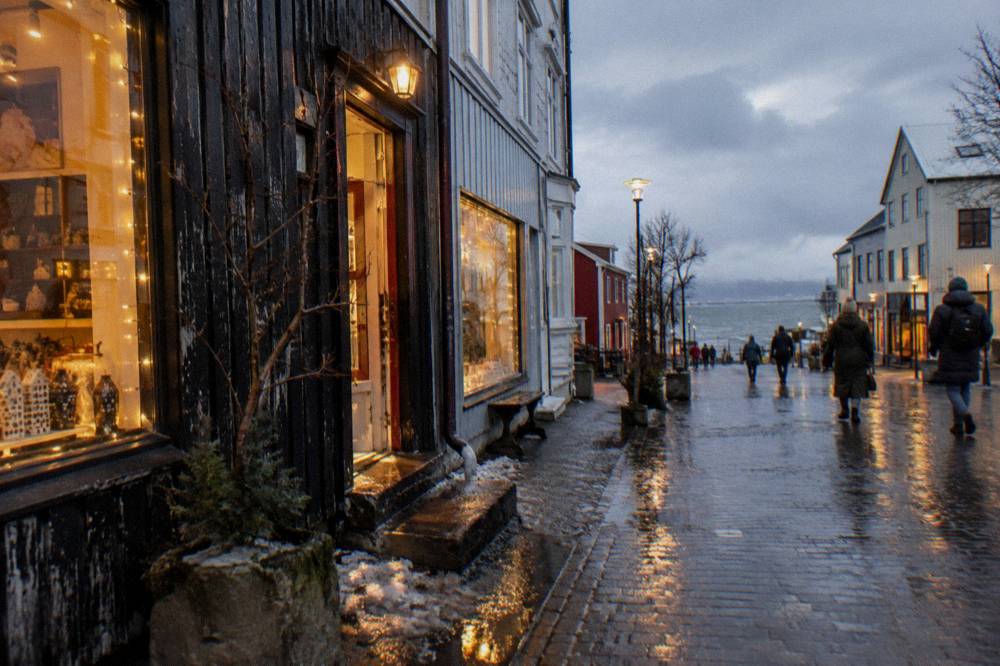
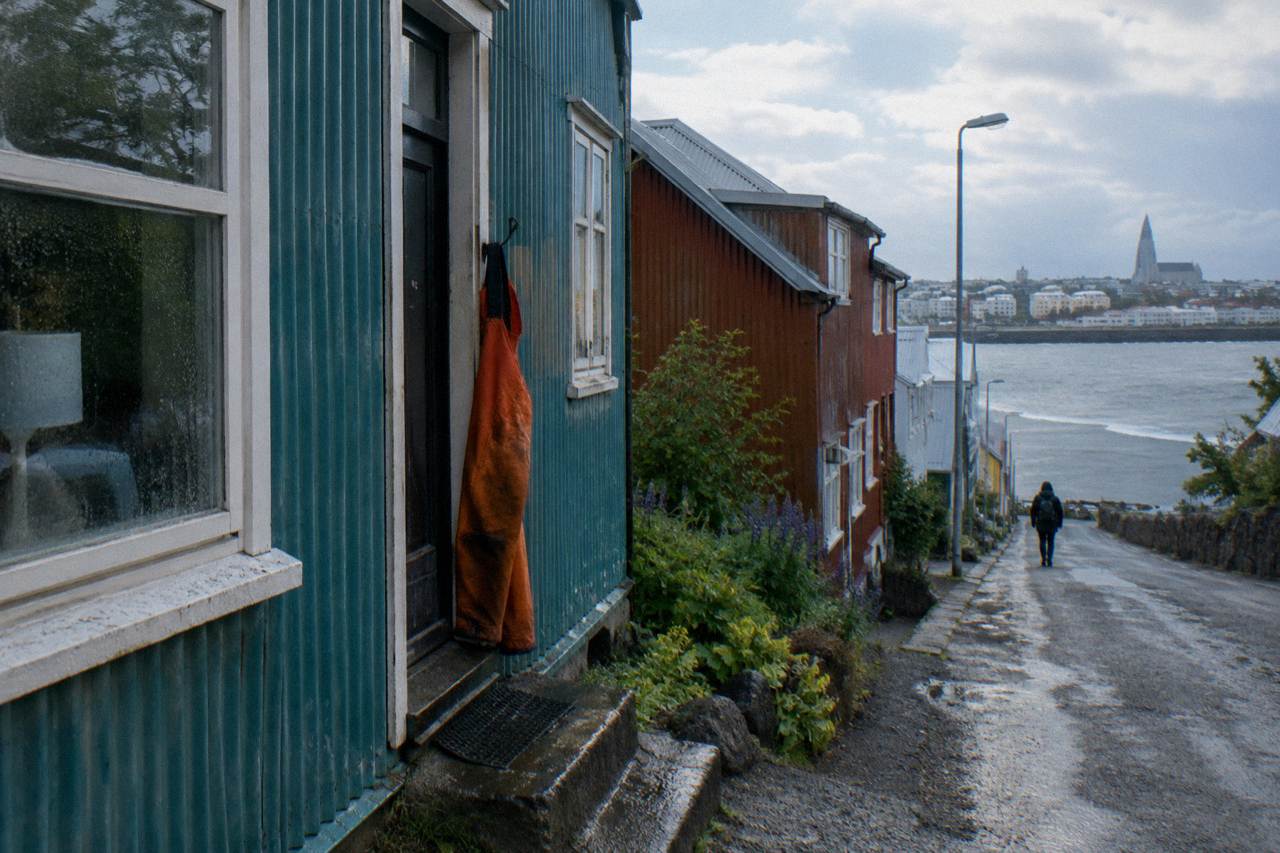
Ice is the honest winter variable. Freezing rain followed by thaw leaves pavements glazed, and local walkers shorten their strides on Laugavegur's slopes well before visitors do. Studded or grippy footwear changes the winter route less than you would think: the loop is still walkable, just slower. Winter tyres become mandatory on Icelandic roads from 1 November, a reminder that the same date switch applies to how you should dress for the harbour stretch, which funnels wind off the water.
The compact small-group format handles weather well because the guide reroutes indoors on the worst days; the small-group walk with a local guide, rated 4.8 across 616 reviews from $49 for about 2 hours 30 minutes, is a good storm-day swap for the self-guided loop.
Where Can You Rest And Eat Along The Route?
The route has two natural refuelling points, Laugavegur's cafes mid-walk and the harbour district's food halls near the end, with Hlemmur Matholl open daily from 11:00 and Grandi Matholl from 11:00 to 21:00, so most walkers break once around the harbour and finish at either hall or the hot dog stand. Neither hall sits exactly on the loop, but both sit within five minutes of it.
| Refuelling stop | Where it sits on the route | Hours |
|---|---|---|
| Laugavegur cafes | Midpoint, stop 3 | Varies by venue |
| Hot dog stand near the harbour | Between stops 3 and 4 | Long daily hours |
| Hlemmur Matholl | Eastern edge, near the bus hub | Daily from 11:00 |
| Grandi Matholl | Grandi district, between stops 5 and 6 | Daily 11:00 to 21:00 |
Hlemmur Matholl occupies the city's former main bus terminal, which is a fitting rest stop on a walking route: the buses that once filled it now run from the street outside, and the vendors range from bistro plates to pizza and gelato. Grandi Matholl sits in the old harbour district with communal seating and harbour views, placing it perfectly after the museums and before the waterfront walk back. Both close for specific holiday dates, so check before you build a lunch around one in late December.
The hot dog stand, operating since 1937, is the route's cheapest institution, with a pylsa at 920 ISK. Order it "eina med ollu", with everything, if you want to eat it the local way. For a fuller map of where the city actually eats, the where locals eat in Reykjavik post covers the neighbourhoods beyond the centre that this route never reaches.
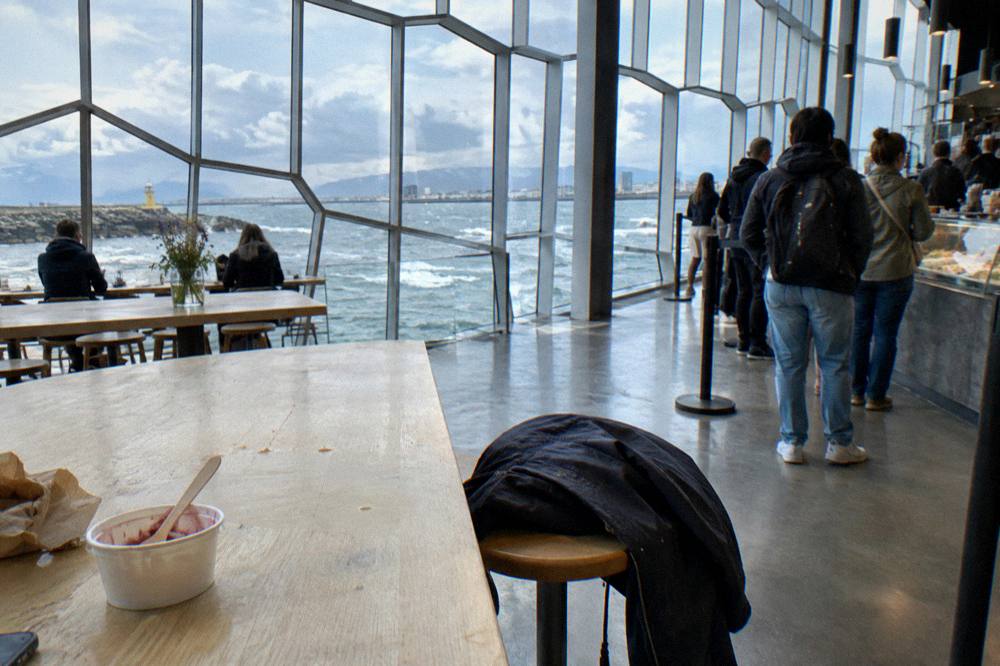
Coffee culture holds the route together between meals, and Reykjavik City Tours tip: the walk's best hour is often the one spent warming up halfway down Laugavegur, ideally with a hot drink in hand rather than at any single sight. Budget for it. A flat white in central Reykjavik costs what a lunch would elsewhere, and no route map survives contact with an Icelandic bakery window.
For walkers who want the same streets explained with history as the spine, the guided city walk pairs well: the guided walk with a local guide, rated 5 across 106 reviews from $52 and about 144 minutes, keeps the history and leaves you at the harbour in time for a food hall lunch.
How Do You Turn This Route Into A Guided Day?
Pick one guided walk that matches your pace, anchor it to the morning, and spend the afternoon on the stops tours pass quickly, above all the church tower, one Grandi exhibit and the food halls; with a 2 to 3 hour central walk from $50.08 to $52, the guided cost is about the price of two museum entries. The guided versions of this exact route are close in price and length, so the real choice is format and group size rather than geography.
Whichever you choose, verify the meeting point on the booking page the evening before, because central Reykjavik has half a dozen plausible meeting squares and the wrong one costs you the first twenty minutes of the tour. The best time of day for a walking tour guide settles the morning-versus-afternoon question against daylight and crowd patterns.
Common Questions About Reykjavik Walking Tour Maps
What Is The Best Self-Guided Walking Route In Reykjavik?
A 3 to 4 km one-way loop from Hallgrimskirkja down Skolavordustigur and Laugavegur to the Old Harbour, returning along the waterfront past Harpa and the Old Pond, taking two to three hours without interiors and three to four with them.
Where Do Guided Walking Tours Start In Reykjavik?
Most central walking tours meet within a few minutes' walk of Hallgrimskirkja or Austurvollur square; the exact meeting point is listed on each tour's booking page.
How Long Does It Take To Walk Around Central Reykjavik?
The full eleven-stop loop takes two to three hours at a relaxed pace without entering museums, and three to four hours with one or two interior stops.
How Much Does It Cost To Visit The Hallgrimskirkja Tower?
The tower is ticketed at the church shop with no advance booking; check the church's official site for the current price, since the published figure changes and winter hours close the tower at 16:45.
Is The Reykjavik City Card Worth It For This Route?
At 6,100 ISK for 24 hours it pays off if you enter two or more paid interiors plus a pool; it covers seventeen museums including the Settlement Exhibition, eight pools, and unlimited capital-area buses, but no guided tours.
Can You Walk This Route In Winter?
Yes, but daylight shrinks to about 4 hours around 21 December, so do the tower first, front-load the harbour stretch, and keep the Saga Museum or Whales of Iceland as bad-weather swaps.