Self-Guided Walking Tour Of Reykjavik: Route And When To Hire A Guide
Reykjavik's centre is compact enough to walk on your own in a few hours, but the stories behind the buildings stay locked unless someone tells them. Here is a route that works, what it costs, and where a guide earns the price.
Short answer
A self-guided loop of downtown Reykjavik covers Hallgrimskirkja, Laugavegur, the Old Harbour and Harpa in roughly 3 to 4 hours at a relaxed pace. Entry costs are modest: the Saga Museum charges 4,000 ISK for adults, a public pool visit is 1,500 ISK, and a Reykjavik City Card at 6,100 ISK for 24 hours bundles museums, pools and buses.
Reykjavik is one of the smallest capitals in Europe, and its walkable core is smaller still. From the Lutheran church on the hill to the glass concert hall on the water, the whole spine of the centre is under two kilometres end to end, which is why so many visitors simply set off on foot without a plan and still stumble onto most of the sights. The catch is that Reykjavik does not explain itself. The cottages on Frakkastígur, the concrete relief on the Sun Voyager's plinth, the reason the pond in the middle of town has an official Icelandic name and a nickname: none of it announces itself on a plaque. If you're wondering whether your own feet can carry you through all of it, the guide to how walkable downtown Reykjavik really is covers the actual distances and the point at which a local guide starts to pay off.
That gap is the honest starting point for this guide. A self-guided walk in Reykjavik costs almost nothing and delivers plenty, and for many travellers it is the right call, especially on a short stopover or a tight budget. But there are moments in this city where a guide changes what you are actually looking at, and knowing which moments those are is worth more than any route card. This page lays out a full DIY route with timings and real costs, then tells you plainly where paying for a guided walk earns its keep. The route is built around places the city's guided walks themselves use, so you are not missing anything by going alone, you are just carrying the map instead of the commentary. For a tighter focus on one layer of the city, the guide to Reykjavik's murals and the walks that pass them shows where the street art actually clusters and how to build your own route around it.
What Does A Self-Guided Walking Tour Of Reykjavik Actually Involve?
A realistic self-guided tour of central Reykjavik is a 3 to 4 hour loop on mostly flat ground, covering roughly 3 to 4 kilometres with stops, and it needs no car, no ticket bundle and no booking beyond individual museum entries. The core route runs from Hallgrimskirkja down Skolavordustigur to Laugavegur, across to the Old Harbour, along to Harpa, and back through Austurvollur square to Tjornin pond, with every stop reachable on foot paths and pavements throughout.
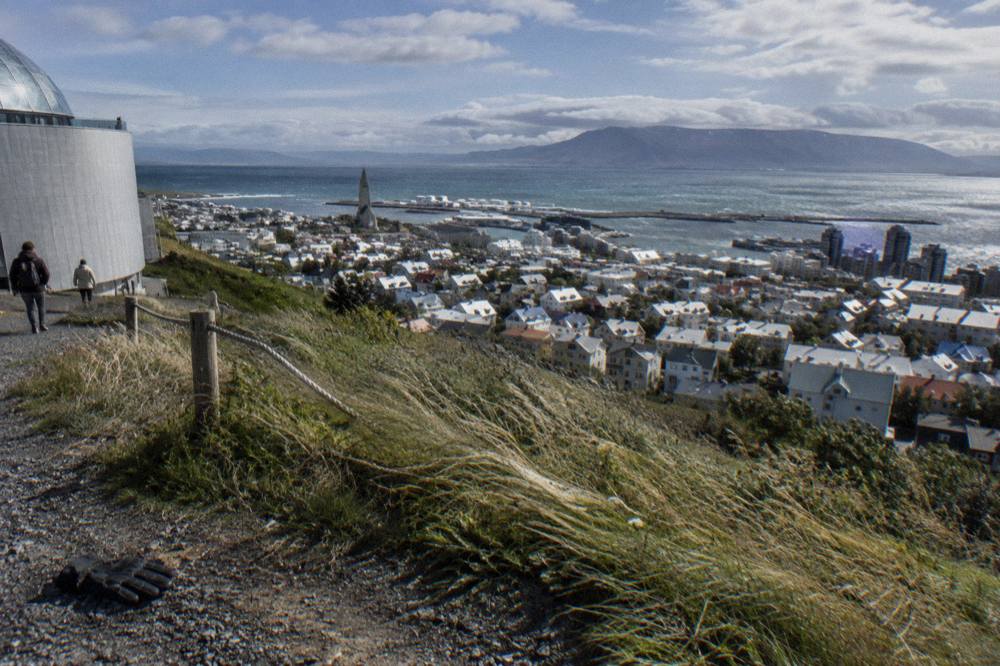
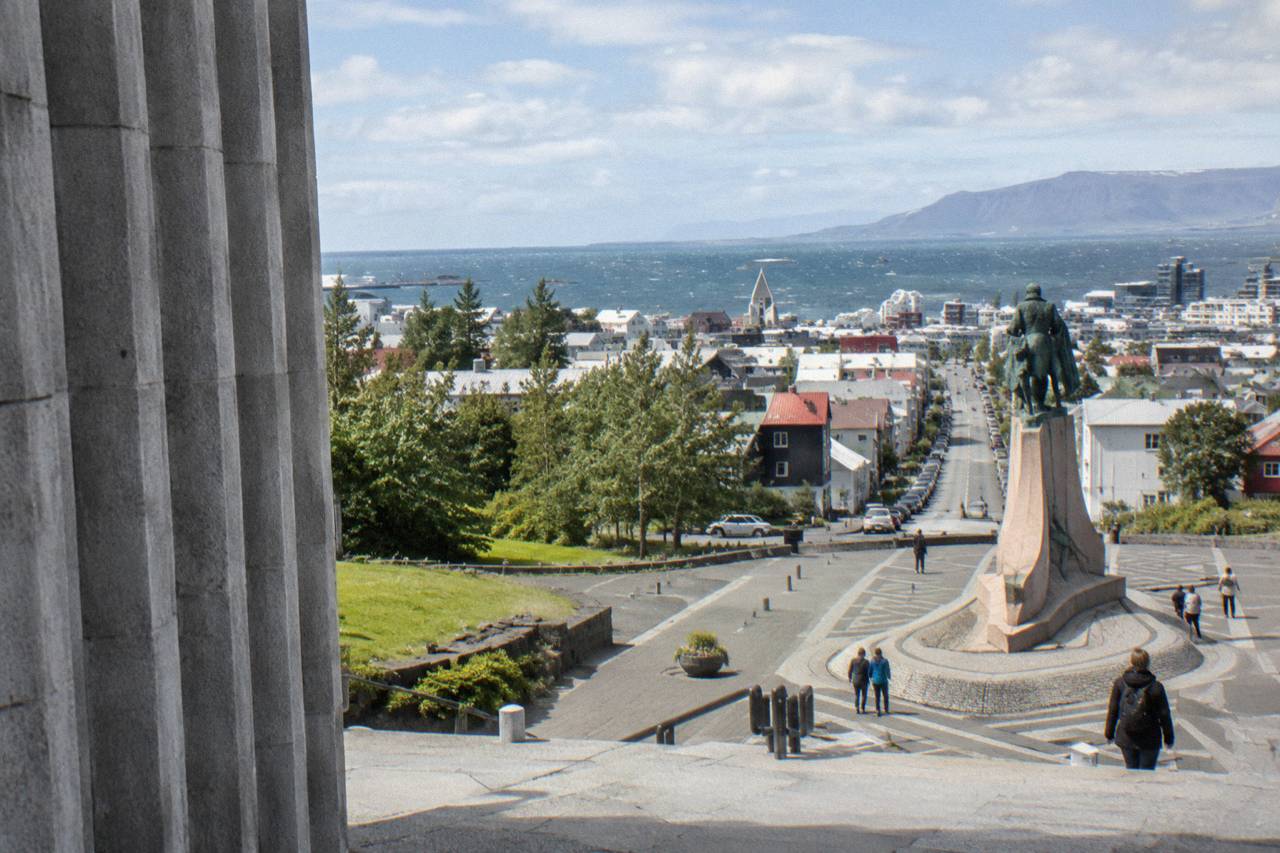
Start at the top of the hill rather than the bottom, because Hallgrimskirkja, the white Lutheran church that dominates every Reykjavik postcard, gives you the city's layout in one glance from its tower. The tower is ticketed at the church shop on site, with no advance booking, and the church's own site carries the current price and the daily closure list for services, which is the detail most visitors miss: the nave and tower restrict access during mass, concerts and ceremonies, and these vary day to day. Winter hours run 10:00 to 17:00 with last tower entry at 16:45. Once you are down at street level, the walk is a gentle descent almost the whole way to the water.
The physical demands are low. Downtown Reykjavik sits on flat coastal land, the pavement network is continuous, and even in winter the city centre is cleared and gritted quickly because everything of civic importance happens within this same rectangle. There are kerbs and cobbles in the oldest lanes, so wheelchair users and pushchair pushers will meet a few bumps around the pond, but the main spine, Skolavordustigur, Laugavegur, Bankastraeti, Austurstraeti, is smooth going. Wear shoes with grip from November through March, when ice on the sloping side streets can be treacherous, so watch your footing on the way down.
Time budgeting matters more than distance. Three hours covers the loop at museum-free pace with photo stops. Add an hour if you go up the church tower, another hour if you visit one museum properly, and another half hour if you detour to the Grandi harbour district west of the centre, where the Saga Museum and a food hall sit among the fishing sheds. A full day with two museum entries, a pool swim and a long lunch is entirely possible inside this same footprint, and many people do exactly that without ever feeling rushed.
What Is The Best Self-Guided Walking Route Through Downtown Reykjavik?
The route that works best is a one-way loop: Hallgrimskirkja at the top, down Skolavordustigur's art galleries to the Laugavegur shopping street, west along Laugavegur and Bankastraeti to the Old Harbour, east along the waterfront past the Sun Voyager to Harpa, then inland through Austurvollur and the Tjornin pond back toward the church, a loop of about 4 to 5 kilometres that most walkers finish in 3 to 4 unhurried hours.
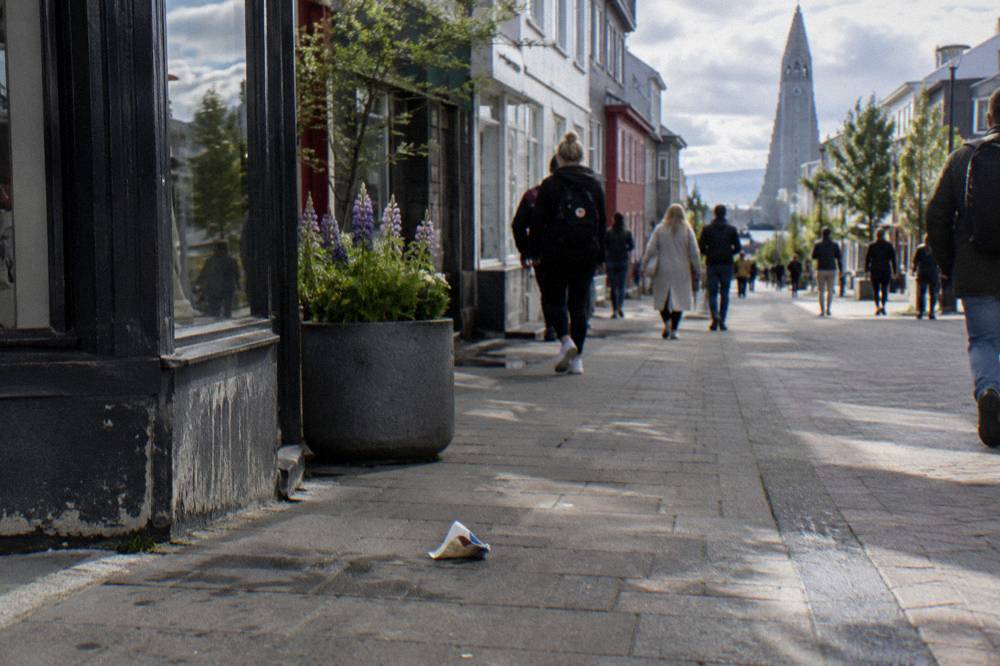
Begin at Hallgrimskirkja and walk down Skolavordustigur, the gallery street that leads straight from the church steps to Laugavegur. This two-block descent is where the city's design scene lives, small galleries, homeware shops and studios in low colourful houses, and it doubles as your orientation walk: everything in central Reykjavik hangs off this axis. At the bottom you hit Laugavegur, the main shopping street, old, central and still the commercial spine of the capital. Walk it west, not east, because west takes you toward the harbour and the water, while east takes you into residential streets you will enjoy more later if time allows.
Halfway down Laugavegur's lower section, the street name changes to Bankastraeti and then Austurstraeti, and you arrive at the small square of Austurvollur, flanked by the parliament building, Althingi, one of the oldest parliaments in the world, and the modest-domed cathedral. This is the political heart of the country in a space smaller than most city car parks, which tells you a lot about Iceland's scale. From Austurvollur, drop two blocks south to Tjornin, the pond that anchors the south edge of the centre. City Hall sits half in the water at its northwest corner, and there is a small island in the pond that is off limits to people and reserved entirely for nesting birds, a fact that delights children and surprises adults who assumed it was decorative.
From the pond's north shore, cut back northwest toward the sea and you reach the Old Harbour, the working fishing port that built this city. The harbour is still operational, so expect the smell of diesel and the sound of gulls rather than a prettified waterfront. Follow the quay east past Harpa and you meet the Sun Voyager, the stainless steel dream-boat sculpture that is the city's most photographed object after the church, positioned to face the midnight sun of the north. Keep walking east along Sæbraut and Harpa appears, the glass concert hall whose hexagonal facade was designed to echo the basalt columns of the Icelandic landscape. Harpa's foyers are open to wander during opening hours, and the building is at its best from outside at dusk, when the faceted glass catches whatever light the sky is offering.
Close the loop by walking up Kirkjustræti from Harpa's west side, past the cathedral and back to Austurvollur, then retrace two blocks up to Laugavegur or head uphill south-east to the finish at the church. The full circuit, walked without stops, is under 90 minutes. With the tower, the pond, the harbour and Harpa given real attention, it fills a morning or an afternoon comfortably. A detailed stop-by-stop version of this same centre, with a printable map and opening details for each sight, is in the Reykjavik walking tour map guide.
If you would rather have the same streets unpacked by someone who lives here, a paid walk starts to make sense: the small-group flagship covers the full centre at a walking pace, the guided city walk is a similar loop in a larger format, and the 60-minute express version compresses the essentials for tight schedules.
When Does A Guided Reykjavik Walk Beat Walking Alone?
A guide adds real value in three situations: when you want the history and folklore behind buildings that carry no signage, when your time is short enough that inefficiency costs you sights, and when you want local recommendations you can ask questions about instead of reading off a screen. A self-guided walk wins on cost and flexibility, but it leaves the city's stories, the elves, the cod wars, the bankruptcy murals, entirely to your imagination.
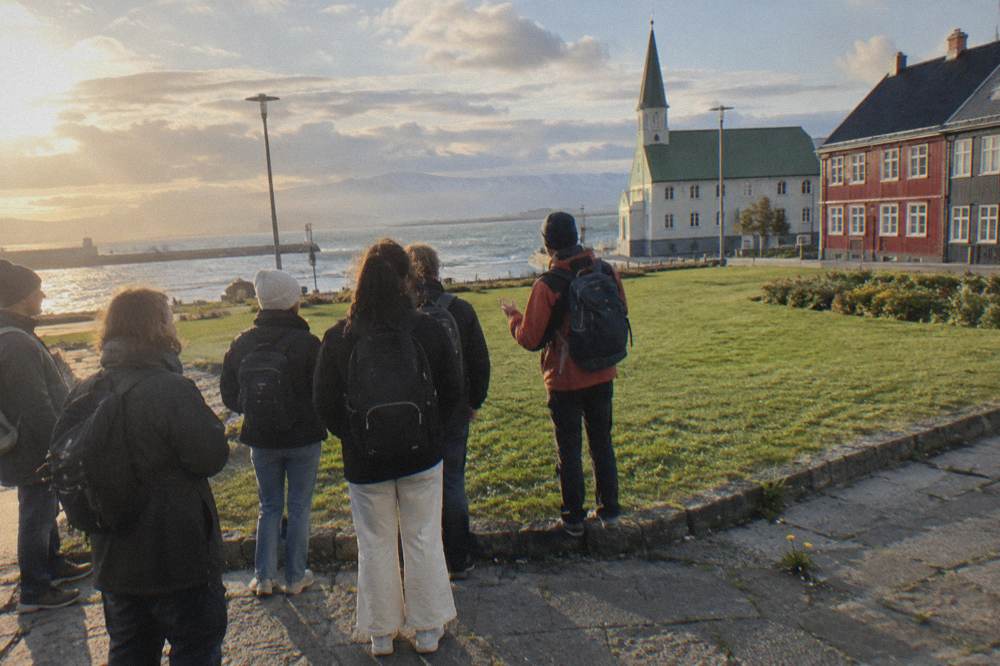
Be specific about what you lose alone. Downtown Reykjavik has very few interpretive signs in English, and the ones that exist are terse. The murals that cover the walls around Hverfisgata are a running commentary on Icelandic identity, financial crash, music scene, humour, but only if someone decodes them, which is why the Reykjavik street art walking tour guide exists as its own topic. The same goes for folklore: a few road projects have famously been rerouted around suspected elf habitat, and that story attaches to specific downtown addresses that no plaque marks. A guide who tells it standing outside the relevant corner shop delivers something no route card can.
The economics are still worth stating plainly. The small-group walk with a local guide, rated 4.9 across 5,260 reviews, the most reviewed city walk available in the capital, runs about 2 hours and is listed from $50.08 per person. That is roughly the price of one museum entry and a coffee for a product that covers the entire centre, history included, with a person you can interrogate about restaurants afterwards. Check availability if that format appeals, or read on to compare it against the pure DIY route. More context on what guided walks cost across formats is in what a walking tour in Reykjavik costs.
For travellers on a genuinely tight clock, the calculus shifts further toward guided. A cruise passenger with four hours ashore, a topic covered in depth in the Reykjavik tours from the cruise port guide, wastes the first hour of a DIY walk just getting oriented. The express walk with a local compresses the centre into 60 to 90 minutes from $89, which is expensive per hour but cheap per sight if the alternative is wandering half the loop before working out which direction the church is.
The middle option above, a guided city walking tour of about 144 minutes rated 5 across 106 reviews from $52, suits travellers who want the full loop at a slower cadence than the express version and a smaller commitment than a themed tour. The honest summary is this: if you enjoy reading a guidebook as you go and your day is open, walk alone and pocket the money. If your curiosity is social, or your time is bounded, or the city's stories are the reason you came, pay for the two hours and let someone else hold the map. For everything between, the tours listed here run from $40.38 to $784 per person across seven categories.
What Does A Self-Guided Day Of Sightseeing In Reykjavik Cost?
A bare walking day costs almost nothing beyond food, but a realistic day adds up: the Saga Museum is 4,000 ISK for adults, a public pool swim is 1,500 ISK, and the 24-hour Reykjavik City Card at 6,100 ISK bundles 17 museums, 8 pools and city buses, breaking even at two museums plus a swim. The route itself, the harbour, Harpa's foyers, the pond and every street view, is free.
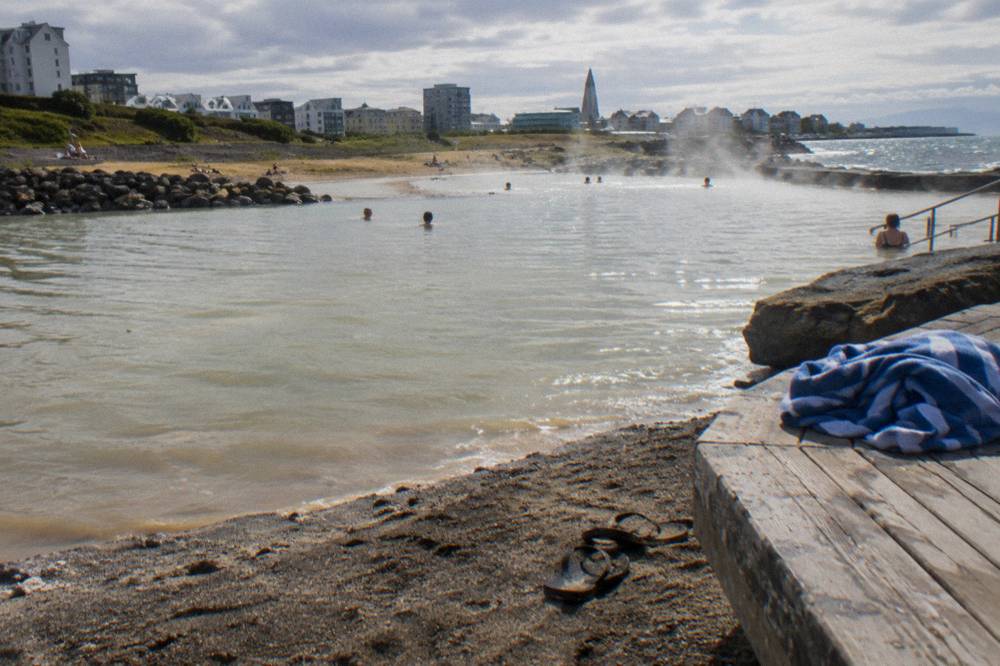
The free layer of the city is genuinely substantial. The loop itself, the Sun Voyager, Harpa's open foyers during opening hours, Austurvollur, Tjornin and its bird island, the harbour quays, and the graffiti of Hverfisgata cost nothing and occupy most of a day if you let them. The Settlement Exhibition downtown keeps daily hours of 10:00 to 17:00 and is included free with the City Card, as the Reykjavik City Card worth it guide works through in detail. The city's official card prices, per Visit Reykjavik's City Card page, are 6,100 ISK for 24 hours, 8,500 ISK for 48 hours and 10,500 ISK for 72 hours, and children under 18 enter the covered museums free with a cardholding adult.

The paid entries that fit naturally on this route are few, and any of them can be skipped without cutting the walk short. The Saga Museum at Grandagardur 2 on the Grandi side of the harbour, a wax-figure walkthrough of the sagas with an audio guide in English, charges 4,000 ISK for adults, 3,400 ISK for students and seniors, 1,200 ISK for children 6 to 12, and 9,200 ISK for a family of two adults and two children, open 10:00 to 17:00 daily. A swim in one of the city's geothermal pools, the single best-value paid activity in Reykjavik by common consent, is 1,500 ISK for an adult per the city's own pool fees page, with children under 10 free with a guardian. Hallgrimskirkja's tower is ticketed at the church shop only, and the church's site carries the current figure and the service closures, so check there before you queue.
| Item on the DIY route | Typical cost | Notes |
|---|---|---|
| The walking loop itself | Free | 4 to 5 km, all pavement |
| Hallgrimskirkja tower | Ticketed at the church shop | No advance booking, closed during services |
| Saga Museum entry | 4,000 ISK adult | Audio guide included, 10:00 to 17:00 |
| Public geothermal pool | 1,500 ISK adult | Under-10s free with guardian |
| Reykjavik City Card, 24 h | 6,100 ISK | 17 museums, 8 pools, city buses |
| City bus single fare | 690 ISK | Contactless accepted, children 11 and under free |
Two money facts shape the rest of the day. Iceland is close to cashless and tipping is not expected or customary anywhere, on tours included, so a card and small change for the church shop cover everything. And if you extend the DIY day beyond the centre, the Straeto pricing page is the reference: the adult single fare is 690 ISK with contactless, the old 24-hour and 72-hour day passes are no longer sold, and fares are capped instead at no more than three charged rides a day or nine a week.
How Does Reykjavik Weather Change A Self-Guided Walk?
Weather changes the walk more than the route does: from November through January daylight shrinks to between 4 and 7 hours, with sunrise near 9:10 and sunset near 17:10 in early November, so the tower and the outdoor stops belong mid-day, while summer stretches past 21 hours of daylight, and rain on 9 to 15 days a month means a waterproof layer in every season.
The daylight arithmetic deserves a full sentence of planning. On 1 November the sun rises at 9:10 and sets at 17:10, giving just under eight hours of usable light, and by the winter solstice the day shrinks to about four hours. The practical consequence is schedule, not cancellation: in deep winter, do the church tower and the outdoor stretches between 11:00 and 15:00, and push Harpa, the Settlement Exhibition and a long lunch into the dark edges of the day. In June the opposite problem arrives, over 21 hours of daylight, and the walk can begin at 6 a.m. in full sun or end at midnight in twilight. Monthly detail, including normal temperatures and rain days, is in the Reykjavik weather by month guide.
Rain is the constant, not the exception. Reykjavik is relatively dry for its latitude but records 9 to 15 days per month with a millimetre or more of rain, and winter precipitation often arrives as sleety wind-driven drizzle that soaks a jacket seam in twenty minutes. The locals' uniform of a real waterproof shell over wool, and shoes with actual grip, exists for a reason, and the what to wear on a Reykjavik walking tour guide covers it piece by piece. Ice underfoot on the sloping streets around the church is the one genuine safety issue on this route from November to March, and rainy-day plans are covered in Reykjavik tours in the rain.
| Season | Daylight on the 15th | What it means for the walk |
|---|---|---|
| January | About 5 hours 25 minutes | Middle-of-day walking, indoor stops at the edges |
| March | About 11 hours 42 minutes | Comfortable full-day walking returns |
| June | About 21 hours | Any start time works, midnight sun near solstice |
| September | About 13 hours | Long days, first aurora-season nights |
| November | About 6 hours 31 minutes | Tower and harbour by day, Harpa and museums after dark |
| December | About 4 hours 13 minutes | Shortest days, Christmas lights extend the evening walk |
One winter detail that surprises people is that this is also the aurora season, running from mid-August to late April on any clear dark night, and the harbour end of the loop, away from the brightest shopfronts, is a plausible place to glance up from. Weather never cancels this route, it only reshuffles the order of the stops, which is the quiet advantage a DIY walk has over a timed departure.
What Should You Not Miss On A Self-Guided Reykjavik Walk?
The five stops that most reward your full attention are the Hallgrimskirkja tower view, the Sun Voyager at the water's edge, Harpa's glass foyer, the Tjornin pond with its protected bird island, and the Old Harbour's working quays, because together they cover the city's architecture, mythology, music scene, wildlife and economic history in under five kilometres of flat walking, and each one is free to see from the outside.
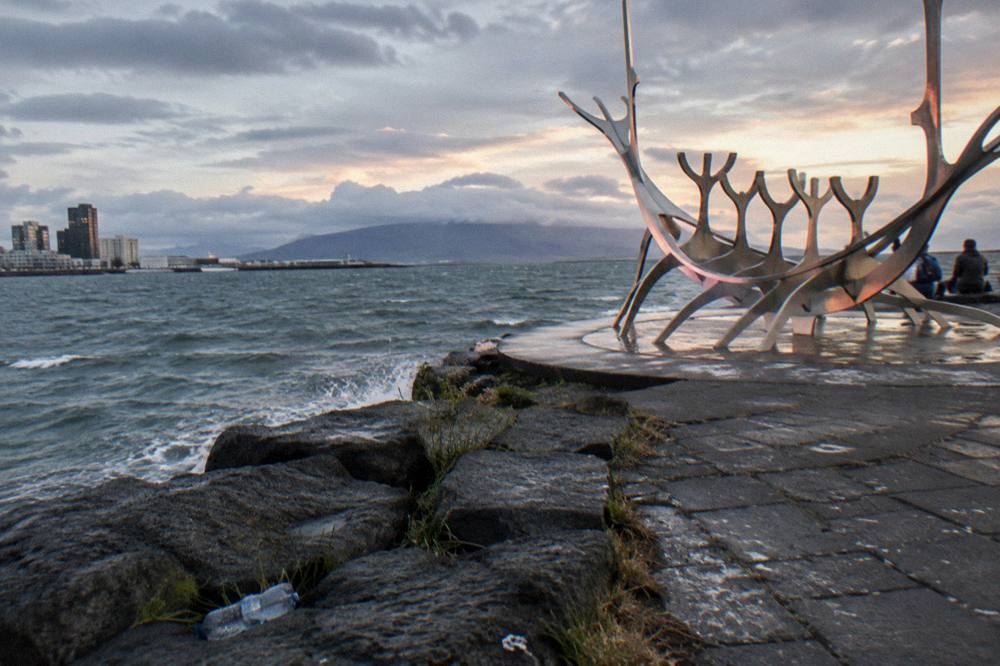
Give the tower view the first slot of the day, before the weather shifts, because it is the only place you can see the whole route at once: the coloured roofs of the centre, the pond, the harbour, the Esja mountain range across the bay. The Sun Voyager, often mislabelled a Viking ship, is a dream boat, and knowing that reframes what you are photographing. Harpa rewards a slow look at how the hexagonal glass modules change with the sky, and its foyers host free exhibitions that rotate through the year. The pond delivers close-up whooper swans, greylag geese and arctic terns in season, and the bird island off limits to humans sits in the middle of them. The harbour, finally, is the unglamorous truth of this city, trawlers, fish sheds and the smell of salt, and the Grandi strip west of it holds the Saga Museum and a food hall if your legs are still willing.
| Stop | Free to see | Paid extra | Realistic time |
|---|---|---|---|
| Hallgrimskirkja tower | Church exterior | Tower ticket at the shop | 30 to 45 minutes |
| Skolavordustigur galleries | Yes | None required | 20 to 30 minutes |
| Tjornin pond and City Hall | Yes | None | 20 to 30 minutes |
| Old Harbour quays | Yes | Optional boat tour | 20 to 30 minutes |
| Sun Voyager | Yes | None | 10 to 15 minutes |
| Harpa foyers | Yes | Optional guided tour times | 30 to 45 minutes |
Foods belong on this list too, since a walking route through Reykjavik passes the whole edible city. The classic hot dog stand near the harbour has been serving since 1937, and the centre's food halls, open from late morning, turn lunch into a sit-down without breaking the route; the what to eat in Reykjavik guide maps the classics. If a full tasting walk appeals more than a single stand, the food tour options, including one rated 4.9 across 2,124 reviews from $147, are compared in the Reykjavik food tour guide.
For the smaller details, the folklore corners and the saga context, the Reykjavik folklore and saga walking tours guide picks up exactly where a self-guided route runs dry. The pattern across this whole page is the same: the walk you can do alone is real and good, and the layer above it, stories, tastings, themed streets, is what the paid options exist to add. If that balance has settled, here again are the three walks that pair most naturally with this route. If your route stretches into the evening, our guide to evening safety in downtown Reykjavik covers the real risks after dark, how winter changes things, and the guided night walks built for nervous travellers.
Common Questions About Self-Guided Walking Tours In Reykjavik
What Does A Self-Guided Walking Tour Of Reykjavik Actually Involve?
A 3 to 4 hour, 4 to 5 kilometre loop on flat pavement from Hallgrimskirkja down to the harbour and back through the pond, with no bookings needed beyond individual museum entries.
What Is The Best Self-Guided Walking Route Through Downtown Reykjavik?
Hallgrimskirkja, Skolavordustigur, Laugavegur west, Austurvollur and Tjornin, the Old Harbour, the Sun Voyager, Harpa, then back up to the church, walked in that order so the route runs downhill to the water.
When Does A Guided Reykjavik Walk Beat Walking Alone?
When you want the unmarked history and folklore, when time is short enough that getting oriented wastes sights, and when you want a local to ask about restaurants, museums and day trips as you go.
What Does A Self-Guided Day Of Sightseeing In Reykjavik Cost?
The walk is free; realistic paid extras are the Saga Museum at 4,000 ISK, a pool swim at 1,500 ISK, and optionally the 24-hour City Card at 6,100 ISK, which bundles museums, pools and buses.
How Does Reykjavik Weather Change A Self-Guided Walk?
Daylight is the big variable, from about 4 hours in December to over 21 in June, so in winter put the tower and outdoor stops between 11:00 and 15:00 and carry a waterproof shell in every season.
What Should You Not Miss On A Self-Guided Reykjavik Walk?
The Hallgrimskirkja tower view, the Sun Voyager, Harpa's foyer, the Tjornin pond with its bird island, and the working Old Harbour quays, all free to see from the outside.