Is It Safe To Walk Around Downtown Reykjavik At Night?
A direct answer on evening safety in downtown Reykjavik, the real risks after dark, winter darkness, and guided night walking options for nervous travellers.
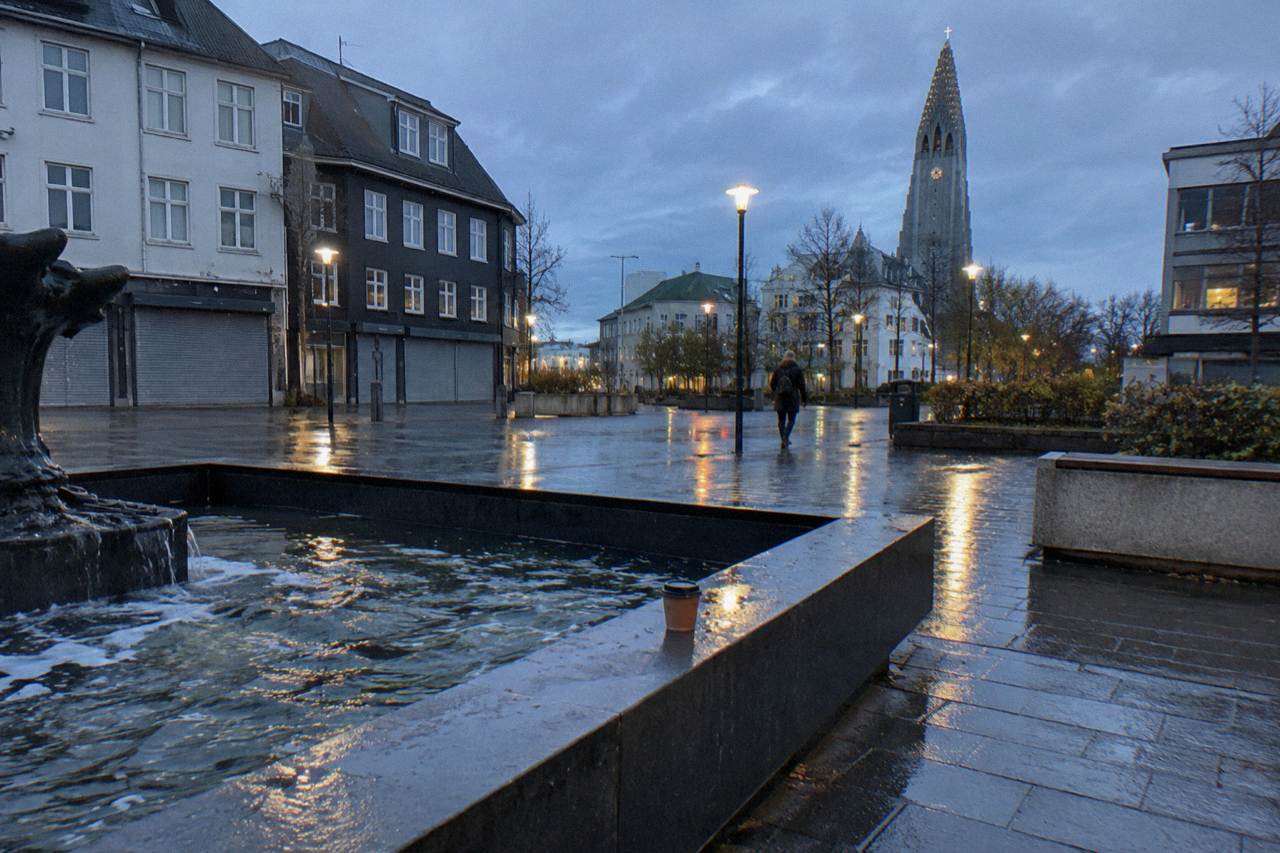
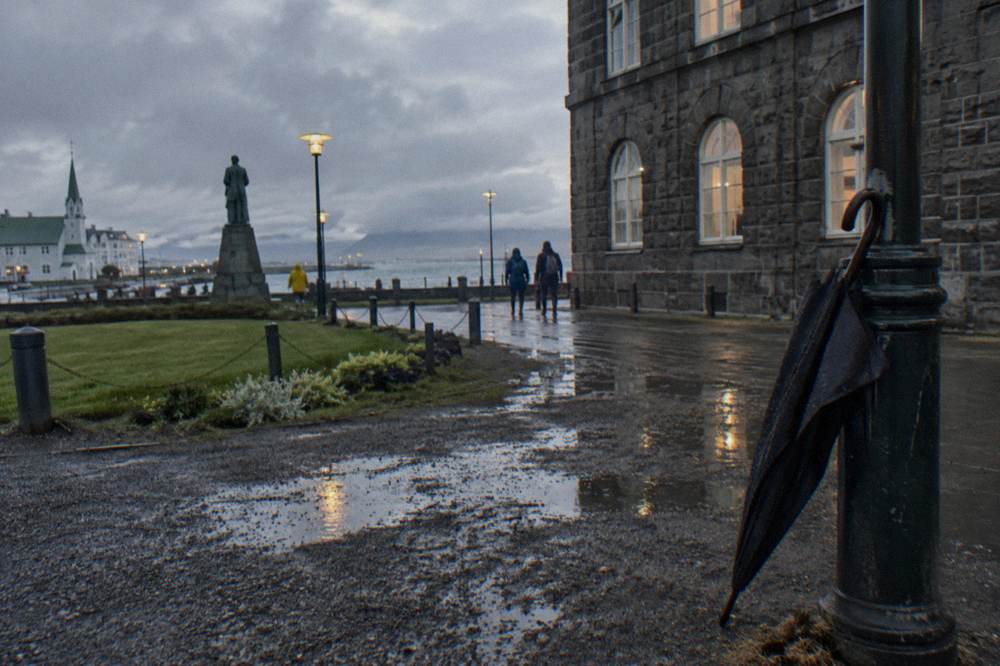
Yes, downtown Reykjavik is safe to walk around at night by the standards of almost any European or North American capital. Violent crime against visitors is rare, the city centre is compact and well lit, and the main things to plan for are weekend revellers spilling out of bars, slippery winter pavements, and serious darkness from November through January. Most visitors who take normal city precautions have no trouble at all.
That direct answer comes with context worth having. Reykjavik is a small capital, and the downtown core a visitor walks at night is even smaller: Laugavegur and its side streets, the harbour edge, Austurvollur square, and the pond. Distances are short. A walk from the far end of Laugavegur to the Harpa concert hall at the harbour is about 20 minutes at an easy pace, and you are rarely more than a block or two from a lit commercial street.
The worries travellers bring to this question are usually three: crime, getting lost, and the dark. Crime is the least of them. Iceland consistently ranks at the top of global peace indices, and while no city is crime-free, incidents involving visitors at night in the centre are overwhelmingly petty: an unattended bag lifted from a bar, a phone left on a cafe table. Getting lost is nearly impossible downtown; the Hallgrimskirkja church tower is visible from most of the centre and works as a landmark in every direction. The dark is the real planning issue, and it is the one section of this article worth reading closely before a winter trip.
If the idea of walking dark streets alone still does not appeal, a guided evening walk solves it neatly. The Reykjavik Midnight Sun Ghost Walk runs about an hour and a half through the city centre's ghost stories and stranger history, from $62 per person, with a guide who knows every alley.
What Are The Real Risks After Dark?
The honest risk list for downtown Reykjavik at night is short: alcohol-fuelled weekend rowdiness around Laugavegur and the bar strip after midnight, ice underfoot from November through March, gusty wind that can catch a car door or an unsteady walker, and disorienting darkness in deep winter. Violent crime, mugging and harassment are rare enough that locals do not plan around them. Pickpocketing exists but is uncommon.
The weekend rhythm matters more than most visitors expect. Reykjavik's downtown bars fill late, often not until after midnight on Friday and Saturday, and the runtur, the bar round Icelanders treat as a nightly circuit on weekends, empties onto the street around closing time. The result is noise, singing, occasional arguments and a pavement scattered with late-night food wrappers. It is festive more than threatening, but a solo walker pushing a stroller or simply wanting quiet may prefer side streets a block off Laugavegur after midnight on weekends.
Weeknights are a different city entirely. On a Tuesday in February the centre can feel close to deserted by nine in the evening, with a few locals walking dogs around the pond and the glow of a handful of open restaurants. Visitors sometimes find that emptiness more unsettling than crowds, though the underlying safety picture is unchanged. Empty and safe are the same street here.
Ice is the injury risk that actually sends people to hospital. Freezing rain and thaw-freeze cycles leave downtown pavements glazed between November and March, and the city salts unevenly. Studded or grippy footwear matters more than any other single decision on this page; the question of what to wear on a Reykjavik walking tour covers it in detail. December's mean temperature in Reykjavik is 0.8 degrees Celsius, which sounds mild, but it hovers right at the freezing point where ice forms.
Which Streets Feel Safest After Dark?
Laugavegur, Bankastraeti and Austurstraeti, the main shopping spine, stay lit and busy into the evening. The harbour area around the Harpa concert hall is well lit and calm. The pond and the streets immediately around Hallgrimskirkja are quieter but perfectly walkable. The blocks furthest east along Laugavegur, where bars thin out, feel emptiest late at night, and the area is still safe, just less populated.
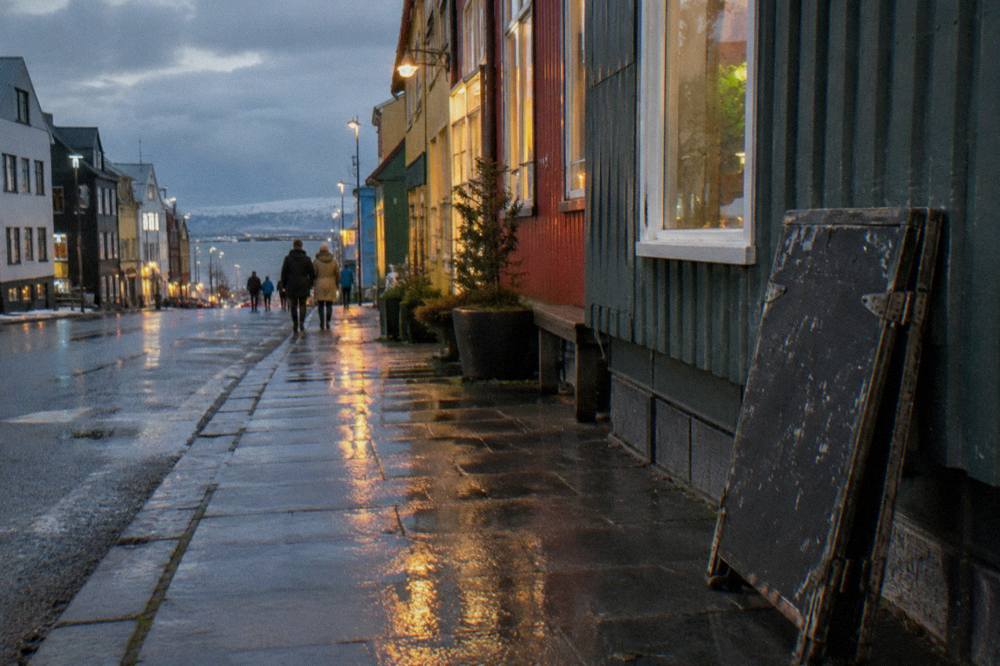
A rough mental map helps. Think of downtown as one long line, Laugavegur running east from the pond down to the bar district, with the harbour and Harpa at the north end. Everything on that line is lit, signposted and walked by locals at all hours. Two blocks north or south of it you are into residential streets with Victorian-era corrugated-iron houses, streetlights and very few people. Those streets are safe; they are simply quiet, and a nervous walker will prefer the spine.
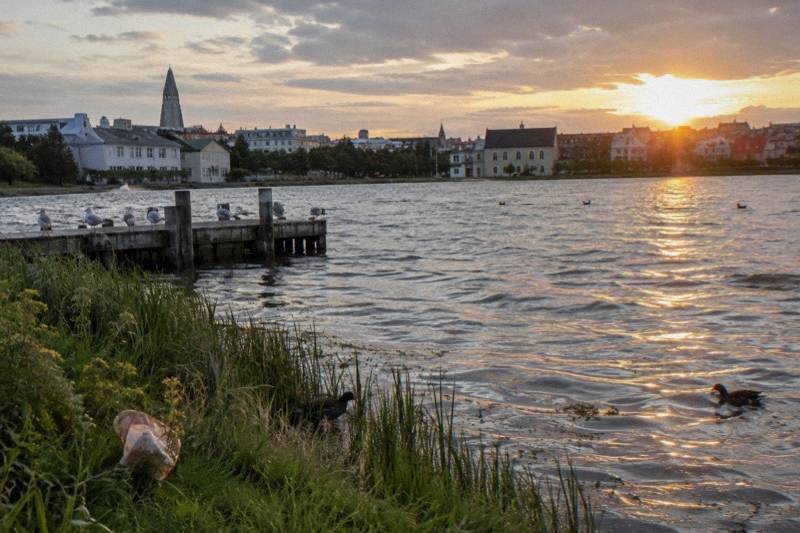
The pond, Tjornin, is a lovely evening walk in every season, with City Hall at its north end and the cathedral to the south. In deep winter it freezes and locals skate on it, though the ice safety is never promised and signs govern access. Around the pond the lighting is decent and the walk from the National Theatre to City Hall takes ten unhurried minutes.
The one spot worth a small note is the far eastern stretch of Laugavegur and the streets beyond Hlemmur, the old bus terminal turned food hall. By day Hlemmur Matholl is a destination, open daily from late morning into the evening with a dozen vendors. By midnight the surrounding blocks are among the quietest in the centre. Nothing about them is dangerous; they are simply where a taxi or a short bus ride is the better choice at 1 a.m. in January. For a fuller picture of the centre's layout, the self-guided downtown walking routes article maps the same streets for daytime.
How Bad Is The Winter Darkness?
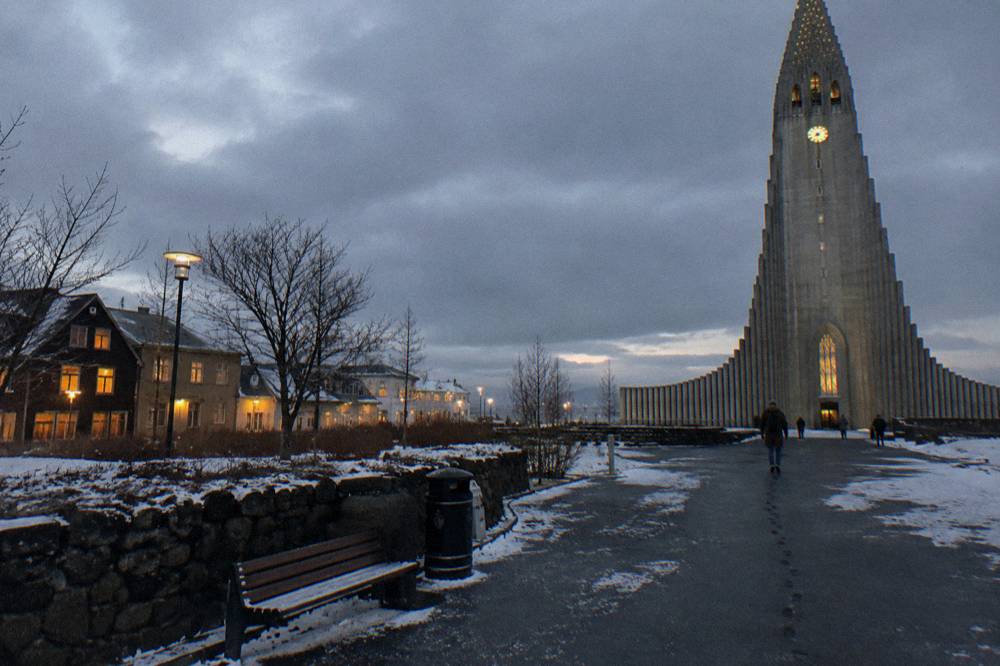
Reykjavik loses daylight fast in autumn: the sun rises at 9:10 and sets at 17:10 on 1 November, and by mid-November the day is down to about six and a half hours. On the winter solstice the city sees roughly four hours of daylight. This means most evening walking happens in full darkness for a third of the year, which changes what you wear, where you walk and how you plan.
Visitors from southern latitudes consistently underestimate this. A 4 p.m. sunset in November means that a 5 p.m. dinner reservation, a stroll after and the walk home all happen in the dark, and the dark here is genuinely dark, with long stretches between streetlights on residential blocks. The compensation is substantial: this is aurora season, running from mid-August to late April whenever skies are clear and dark, and downtown's darker edges are close to spots where the lights are sometimes visible over the water.
Practical adjustments are simple. Carry a phone with charge, since it is your light, map and emergency call in one. Wear something reflective or light-coloured if you plan to walk along any road edge, because drivers face the same darkness. Give yourself permission to take the bus for legs that feel pointless on foot: the adult single fare on the capital-area network is 690 ISK with contactless payment accepted, and night buses run the same 690 ISK fare with no discounts. Full fares and the contactless details are on the transit operator's pricing page.
Winter also changes the ground under you. Winter tyres become mandatory on Icelandic vehicles from 1 November, which helps with the traffic, but pedestrians get no such upgrade, and the freeze-thaw glaze on downtown pavements is the single most likely way an evening walk goes wrong. Treat every dark patch on a winter pavement as ice until proven otherwise.
Is It Safe To Walk Alone At Night In Reykjavik?
For solo travellers, including women walking alone, downtown Reykjavik at night is generally a calm, low-stress place to explore on foot. Street harassment is uncommon, groups on the bar strip are loud but rarely directed at passers-by, and the standard advice is simply to stay on lit main streets late at night and trust your instincts on quiet blocks. That said, no destination can promise an experience.
It is worth being precise about what "safe" means, because the word gets used loosely in travel writing. Iceland's low crime statistics are real and reflect everyday life; the country's police do not carry firearms routinely and the prison population is tiny. But statistics describe populations, not your Tuesday night. The practical approach is the same as in any unfamiliar city after dark: main streets late, a charged phone, a vague sense of your route home, and a willingness to step into an open shop or restaurant if something feels off. In Reykjavik that last fallback is easy, because late-night venues dot the entire bar strip. More city options are listed on Reykjavik City Tours.
The one group worth a specific note is travellers who have had a few drinks themselves. The combination of weekend crowds, ice and alcohol is where most minor incidents, slips, lost phones, wrong turns, actually happen. Splitting the evening so the walk home is sober and deliberate removes nearly all of the residual risk.
For those who would simply prefer company in the dark, the evening walking options are good. The folklore and ghost walking tours article covers the full field; the best-reviewed evening-adjacent option is the Folklore Walking Tour, meeting the elves, trolls and ghosts of Iceland, a 90-minute walk rated 4.8 across 758 reviews from $52.36 per person, which leans into the same dark-stories territory as the ghost walk.
What About Reykjavik's Bar And Nightlife Areas?
The bar strip centred on Laugavegur's lower end and the streets around it is loud, crowded and busy with security and taxis from late evening until the small hours on weekends. It is safe in the sense that violence is rare and staff are present everywhere, but it is also the one place where a night walk involves weaving through very drunk people. Visitors who want quiet should route a block north or south.
The runtur deserves its own explanation because it shapes every weekend night downtown. Rather than settling into one bar, many Icelanders move between several over the course of a night, so foot traffic peaks at the moments between venues and again at closing. The street scene is cheerful: singing, groups arguing affectionately about football, queues at the hot dog stand. The stand, Bæjarins Beztu Pylsur, operating since 1937, is the classic post-bar stop and a hot dog costs 920 ISK, according to its current delivery menu.
If the bar scene itself is the attraction rather than an obstacle, a guided crawl is a structured way into it. The Pub Crawl Tour with Drinks and Games runs about three hours, rated 4.9 across 17 reviews, from $111 per person, with games and drinks built in and a guide handling the between-bar logistics. For solo travellers it converts a potentially awkward night into a ready-made group. The evening and night tours overview places it among the other after-dark options.
What Practical Numbers Should A Night Walk Be Planned Around?
The figures that matter for an evening in downtown Reykjavik are the bus fare, 690 ISK per adult single including night buses, the city card, from 6,100 ISK for 24 hours covering buses, pools and 17 museums, and the fact that tipping is not expected anywhere in Iceland. A short table collects them, with the caveat that prices move and official pages are the final word.
The city card earns its place in this list because a card that already covers the buses makes the walk-home decision effortless: if feet get cold, hop on any capital-area bus without thinking about fare. The 24-hour card costs 6,100 ISK, the 48-hour card 8,500 ISK, and the 72-hour card 10,500 ISK, per the official Visit Reykjavik card page. Note one limit: the card excludes the airport bus route.
| Item | Figure | Notes |
|---|---|---|
| Adult bus single, day or night | 690 ISK | Contactless accepted; discounts for young, elderly and disabled riders |
| Children on buses | 11 and under free | Accompanied, capital-area services |
| Reykjavik City Card, 24 hours | 6,100 ISK | Buses, pools, 17 museums, Videy ferry |
| Reykjavik City Card, 48 hours | 8,500 ISK | Same inclusions, two-day countdown from activation |
| Hot dog at the classic stand | 920 ISK | The traditional post-bar stop, operating since 1937 |
| Public pool adult admission | 1,500 ISK | A warm finish to a cold walk; card covers it |
Two payment notes round this out. Almost everything in Reykjavik, including buses and the hot dog stand, takes cards, so carrying large amounts of cash is unnecessary. And tipping is not customary or expected in Iceland, service charge is built into prices, which removes one small source of night-out anxiety for visitors from tipping cultures.
What Should You Do If Something Feels Wrong?
If something feels wrong, take the same practical steps you would in any small city: step into any open venue, head for the lit main spine of Laugavegur, or flag one of the taxis that circulate the bar district after midnight. If you need urgent help, Iceland has a single national emergency number for police, fire, and ambulance, answered in English around the clock, and response times in the capital area are short because the area itself is small.
That emergency number is worth saving in your phone before your first night out; every local knows it by heart. Beyond it, the genuinely useful resources are weather and road ones, because in Iceland the conditions outside are far more likely to complicate an evening than any person. The Icelandic Met Office at vedur.is publishes weather warnings that matter for winter nights, and road conditions, if your walk strays beyond the centre, are at road.is. For a consolidated official view of travel safety advice, safetravel.is is the official source.
It is also worth saying what not to worry about, because travel forums carry a residue of generic big-city advice that fits Reykjavik poorly. There are no districts downtown that locals would call no-go zones. There is no meaningful pickpocketing industry aimed at tourists. Guard your card details here: ATM skimming and card fraud deserve more caution than street crime does. The risks in this article, ice, wind, dark and drunk crowds, are mundane ones, and each has a mundane fix.
One seasonal footnote belongs here. From 1 December 2026 the capital-area bus operator plans reduced services on some routes, so the late-night bus fallback may thin out on certain lines over the winter; check the operator's site for the routes that matter to your stay.
Is A Guided Evening Walk Better Than Going Alone?
A guided evening walk is not safer in any meaningful way, downtown at night does not need a guide for protection, but it is richer and warmer company for travellers who feel uneasy walking dark streets solo. Evening-format walks in the centre include a 90-minute ghost walk from $62, a 90-minute folklore walk rated 4.8 across 758 reviews, and a three-hour pub crawl rated 4.9 across 17 reviews.
The distinction matters. Buying a guide to feel safe is buying something the city already provides free. Buying a guide to have stories attached to the dark alleys, a group to wander with, and a fixed end time is a genuine upgrade, and the ghost walk format is built exactly for it. The Reykjavik Midnight Sun Ghost Walk covers the city centre's hauntings in about an hour and a half; it is a newer offering with only nine reviews so far, rated 4.9, from $62 per person. The booking page lists the meeting point and season.
Mid-winter visitors get one more nudge toward a guide: in December the dark arrives before most people finish work, and every walk is a night walk whether planned as one or not. A booked evening tour gives that darkness structure instead of letting it feel like an obstacle. Between the ghost walk, the folklore walk and the pub crawl, the trio below covers nervous, curious and sociable travellers respectively.
Common Questions About Night Safety In Downtown Reykjavik
Is It Safe To Walk Around Downtown Reykjavik At Night?
Yes. Violent crime is rare, the centre is compact, lit and busy, and the real hazards are ice, wind, darkness and weekend bar crowds. Normal city precautions are more than enough for most visitors.
Is Reykjavik Safe For Solo Female Travellers At Night?
Downtown Reykjavik is widely reported by solo female travellers as comfortable to walk at night, with uncommon street harassment. Staying on lit main streets late at night and keeping a charged phone are the sensible basics.
Are There Areas Of Reykjavik To Avoid At Night?
There are no districts downtown that locals treat as off-limits. The quieter blocks east of Hlemmur and side streets off the main spine feel emptiest late at night, but emptiness is not danger here; a bus or taxi is simply the comfier choice.
Do Buses Run Late At Night In Reykjavik?
Night buses run in the capital area at the standard 690 ISK adult fare with no discounts. From 1 December 2026 some capital-area routes are planned to see reduced service, so check the operator's site for late-night lines.
What Is The Emergency Number In Iceland?
Iceland uses a single national emergency number for police, fire and ambulance, answered in English around the clock. Ask your hotel front desk for it and save it in your phone before your first night out. For weather and travel warnings, safetravel.is is the official source.
Is It Too Dark To Walk In Winter?
Dark, yes; too dark, no. Expect roughly four hours of daylight at the winter solstice, wear grippy footwear for ice, carry a charged phone as a light, and consider a guided evening walk for company.