What Should I Not Miss In Reykjavik?
The sights, streets, harbourside stops and small details first-time visitors to Reykjavik most often regret skipping, with tour options that cover them in one walk.
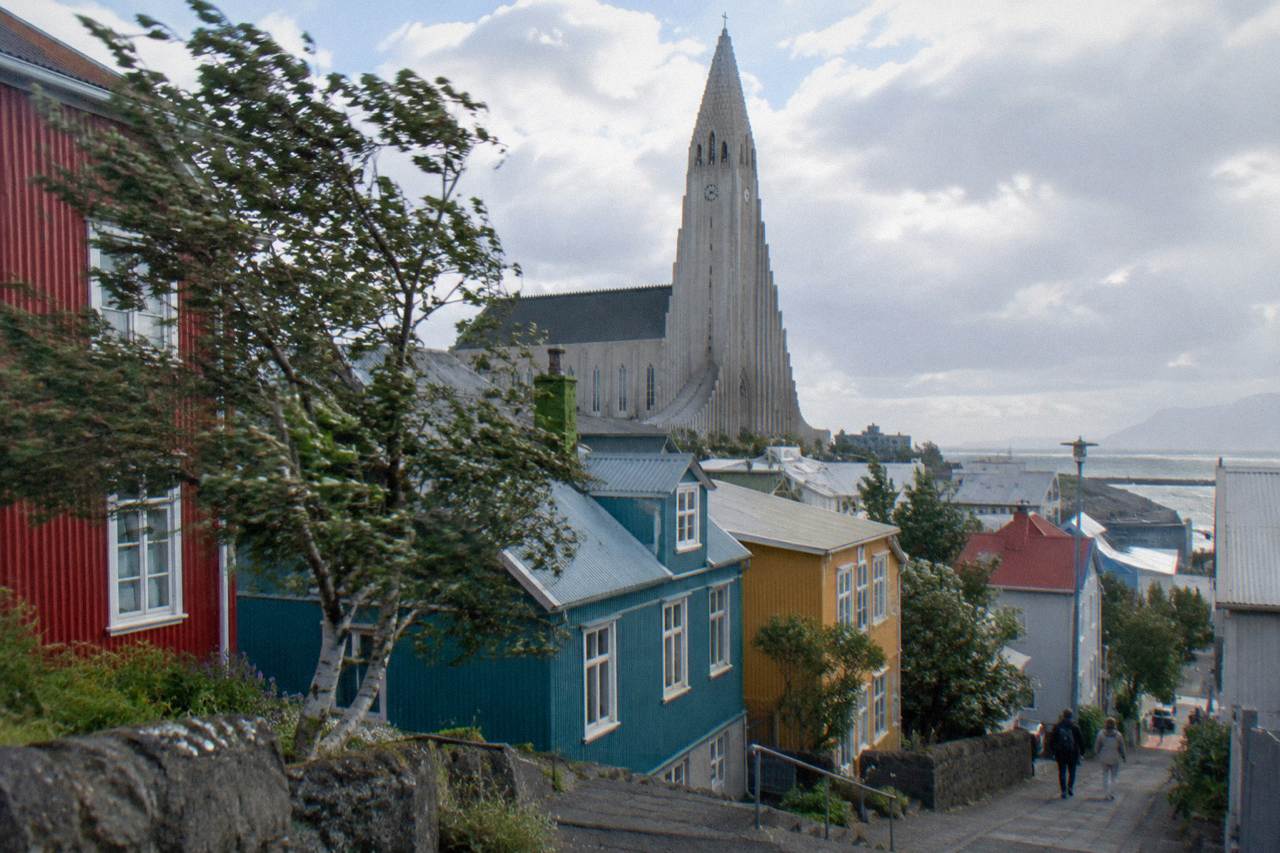
The five things not to miss are the Hallgrimskirkja church and its tower view, the rainbow street of Skolavordustigur running down to it, the old harbour at Grandi with its food halls and whale-watching boats, Laugavegur's shopfronts and street art, and the Settlement Exhibition's buried longhouse. A two-hour small group walking tour covers most of these in one loop, from $50.08 per person.
That list is short on purpose. Reykjavik is a compact capital where the centre walks end to end in minutes, so the danger is not running out of sights but spreading a single day so thin that nothing lands. Almost everything worth seeing clusters in three zones: the church ridge above the old town, the shopping spine of Laugavegur, and the flat harbour edge. Link those three on foot and you have seen the city most visitors mean when they describe it.
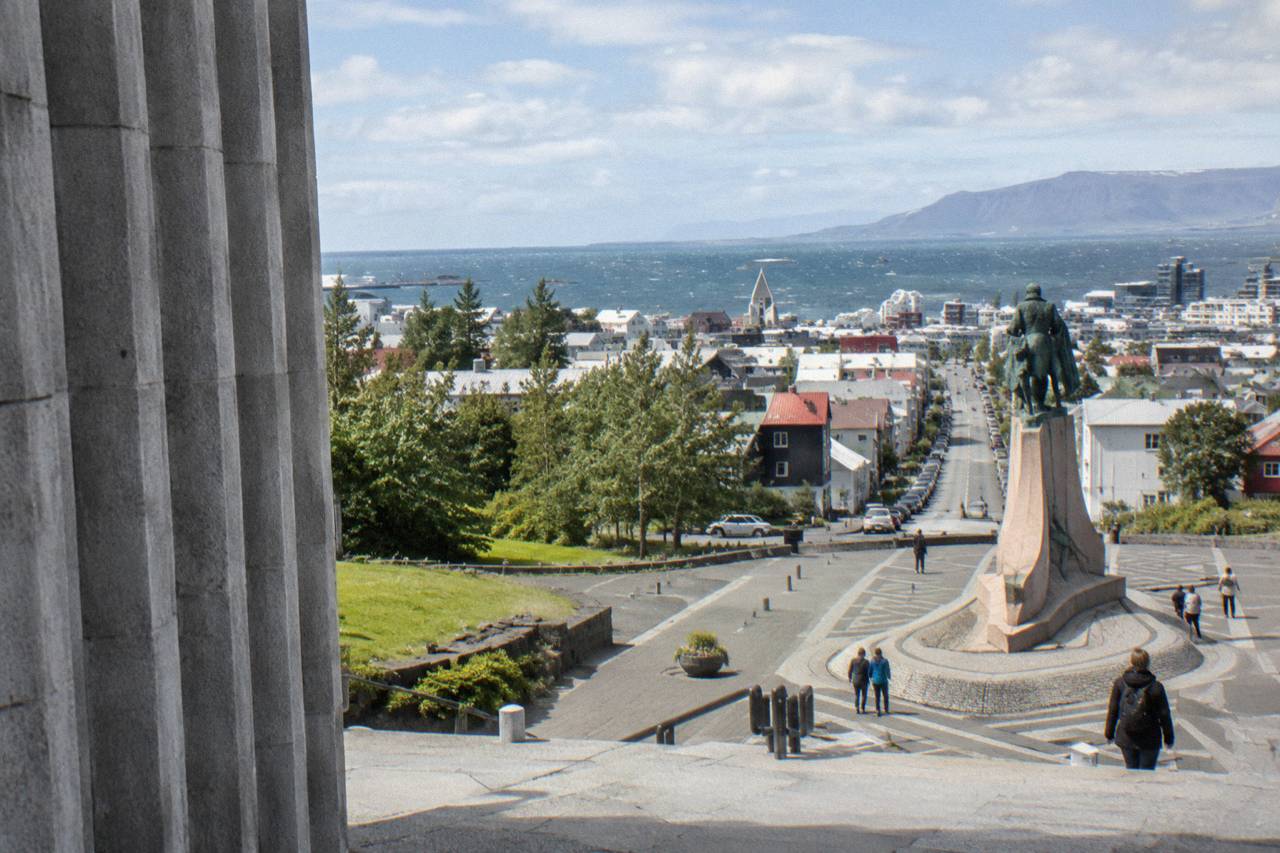
The church tower deserves its slot at the top. Winter hours run 10:00 to 17:00 with last tower entry at 16:45, and access is restricted during services and concerts, so check the church's own opening hours page before you plan around it. Tickets are sold only in the church shop, with no advance booking, so ask the current price at the counter. From the top, the multicoloured roofscape of the old town tilts down toward the water, and on a clear day the Snæfellsnes peninsula sits on the horizon.
A guided walk is the efficient way to absorb all of this at once. The small group option runs about two hours and is rated 4.9 across 5,260 reviews, from $50.08 per person, and a local guide will point out details, such as carvings, house plaques and hidden statues, that a self-guided wander usually walks straight past. Details on the two-hour small group walk page cover meeting point and schedule.
Which Old Town Streets And Landmarks Matter Most?
Prioritise Skolavordustigur, the rainbow-striped street climbing to Hallgrimskirkja, then the old timber houses around Aðalstræti by Ingólfstorg and the Lake Tjornin waterfront with its city hall. These three sit within ten minutes of each other and together hold most of the historic centre's character. The church square itself is the natural navigation landmark for the whole visit.
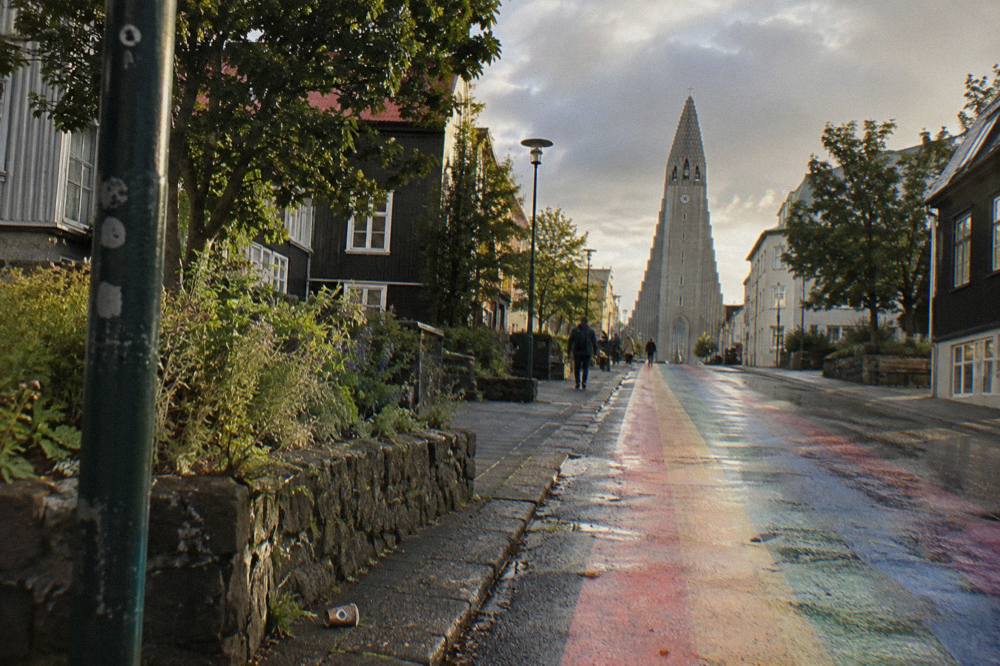
Skolavordustigur is the street you have already seen in photographs without knowing its name. Rainbow paint covers its lower block as the street climbs from Laugavegur toward the church steps, lined with design shops, jewellers and small galleries selling Icelandic wool and ceramics. The paintwork is a deliberate civic gesture rather than a leftover installation, and it has become the single most photographed stretch of pavement in the country. Walk it upward rather than down so the church grows in front of you. The galleries here are also the best place in the city to buy actual Icelandic design rather than imported souvenirs, and most are small enough that the maker is standing behind the counter.
Austurvollur, the small square by the parliament, is the quiet counterpoint. The square's collection of old timber houses includes what is commonly described as the oldest house in the city, and the surrounding lanes still carry the feel of a Danish trading town scaled down to village size. Heads of state have been received here. It takes five minutes to cross and rewards slowing down, particularly in the low afternoon light when the corrugated iron walls shift from grey to gold.
Lake Tjornin anchors the south edge of the centre. The pond hosts whooper swans and greylag geese through winter, and the modern city hall juts out over the water on its northern shore, free to enter, with a large relief map of Iceland inside that is worth ten minutes on its own. The lake loop takes about twenty minutes and connects naturally to the walk back toward Laugavegur. For a fuller run-through of the centre's stops, the things to do in the city centre guide maps them in walking order.
Is The Harbour District Worth Your Time?
Yes, the Grandi harbour district on the west side of the centre justifies at least half a day. It combines Grandi Mathöll with Hlemmur Mathöll at the east end of Laugavegur, the Saga Museum's wax-figure sagas, and the departure piers for whale and puffin watching. The walk from the old harbour along the water is flat, scenic and about fifteen minutes end to end.
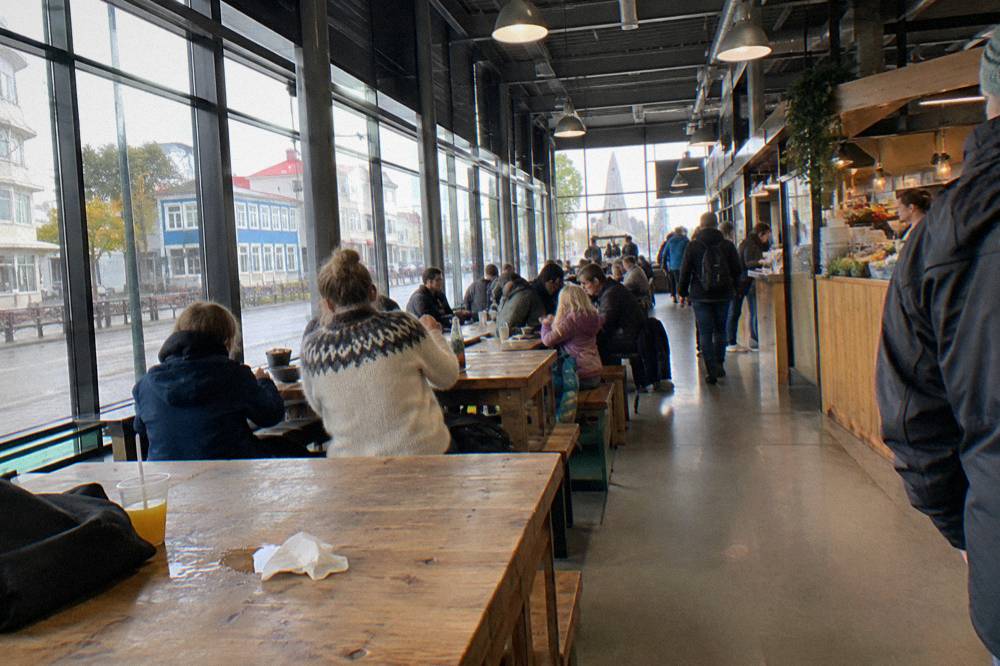
Grandi was the working heart of the fishing fleet for generations, and its low warehouses and salt-store buildings now house studios, galleries and eateries. Grandi Matholl, the street-food hall at Grandagardur 16, opens daily at 11:00 and closes at 21:00, with communal seating and windows over the water. Vendors range across traditional Icelandic plates and international dishes, which makes it the easiest place in the city to sample small portions rather than commit to one restaurant. It also closes for occasional holiday dates, so its own site is the place to confirm before you cross town.
The Saga Museum sits at the same harbour address cluster. Admission is 4,000 ISK for adults, 3,400 ISK for students and seniors, 1,200 ISK for children aged 6 to 12 and 9,200 ISK for a family of two adults and two children, per the museum's admission page. Seventeen wax-figure scenes narrate the sagas and early history with an audio guide, and a typical visit runs 45 to 60 minutes. It is indoor, heated and unhurried, which in Icelandic weather is a feature rather than a footnote.
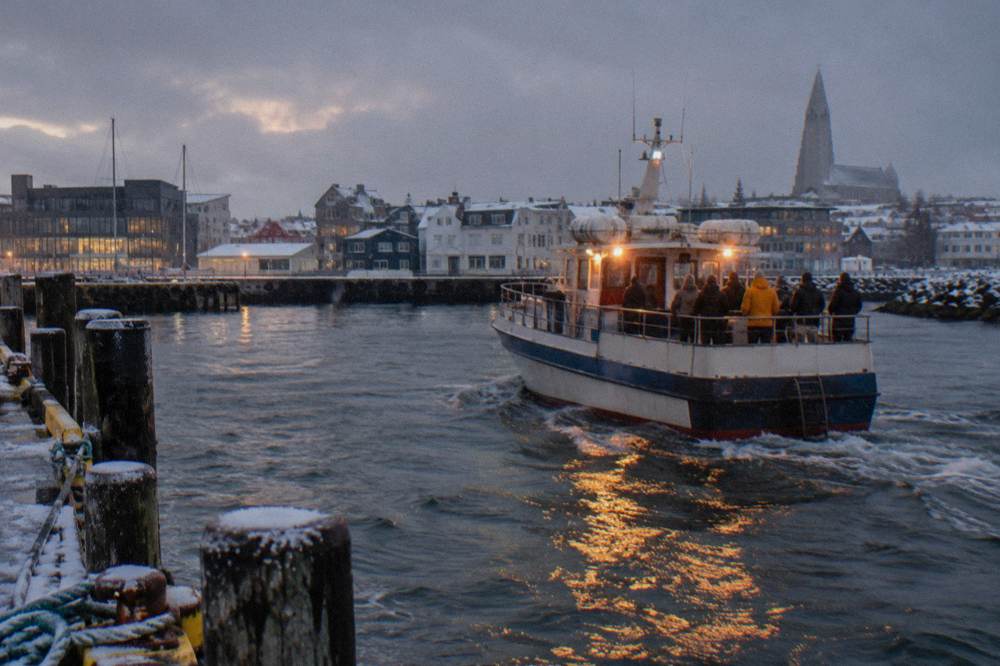
The harbour is also where the boats leave. Whale watching runs year-round from the old harbour piers, and operators report daily departures through the late-October shoulder season, so the sea option is genuinely available even on a winter city break. Sightings are never promised, and weather can shift a departure, but the range of sailings, from a one-hour puffin trip to a three-hour classic whale watch, makes this a comfortable first boat trip. The whale and puffin watching RIB tour, bookable in the warmer months, covers both the mammals and the seabird colonies in about two hours, rated 4.7 across 494 reviews, from $190 per person.
Where Do The Food Stops Fit Into A First Visit?
Put Hlemmur Matholl at the east end of Laugavegur and the Grandi food halls at the harbour on your route, and treat the hot dog stand near the harbour as a rite of passage rather than a meal. A guided food tour stitches six or more tastings across the centre into one three-hour walk, from $149 per person, and is the most efficient way to eat the city on a short stay.
Hlemmur Matholl occupies the city's former main bus terminal, a landmark building converted into its first food hall. It opens daily around 11:00 and runs into the late evening depending on the vendor, with names including a bistro, a pizzeria, a grill, an Indian kitchen and a gelato counter under one roof. Because it sits where Laugavegur meets the eastern junctions, it works as either the start or the finish of a shopping-street walk. One dated exception: the hall has closed for specific maintenance days in autumn, so check its own site before crossing town for it.
The classic hot dog stand, operating since 1937, still serves the pylsa with its customary crisp onion, raw onion and remoulade toppings, and queues of locals and visitors intermingle at the counter. It is a two-minute detour from the harbour end of the centre. Beyond it, the Grandi halls cover everything from lamb soup to gelato, and the rye-bread ice cream that several tours stop for is a genuine local signature rather than a tourist invention.
A food tour turns these scattered stops into an itinerary. The classics option runs about three hours, rated 4.8 across 23 reviews, from $149 per person, and lists tastings of six or more dishes and drinks, including the Icelandic donut called kleina, the hot dog, seafood soup, dried fish and a smoked-lamb platter. Longer variants run up to four hours, with all food and drinks included. Where a specific tasting matters to you, check the booking page for the current stop list, since vendors change.
Which Museums Deserve A Slot If You Only Have One Day?
Choose the Settlement Exhibition if your day allows only one museum, because its excavated Viking-age longhouse ruin is the physical origin of the city and cannot be seen anywhere else. Open every day 10:00 to 17:00, it sits on Aðalstræti in central Reykjavik, a few blocks north of the lake., and the card itself covers 17 museums plus pools and buses.
The Settlement Exhibition's centrepiece is a hall built around the actual archaeological remains of a longhouse from the settlement era, interpreted with ambient sound and layered projections showing how the site evolved. It is compact, dark and atmospheric, and a visit takes well under an hour, which is exactly why it fits a one-day plan. The exhibition is part of the Reykjavik City Museum family, and the official museum page confirms hours and holiday closures. Because the ruin sits below street level in a purpose-built hall, it also reads as a piece of the modern city rather than a distant diorama, which is precisely the point.
The Reykjavik City Card stacks well against single admissions if museums and pools both appeal: 6,100 ISK for 24 hours, 8,500 ISK for 48 hours and 10,500 ISK for 72 hours, per the official card page. It includes museum entry, the geothermal pools, unlimited capital-area buses and the Videy island ferry, and children under 18 enter museums free with an adult card. The one exclusion worth knowing is the airport bus route 55. Whether the maths works is assessed in detail in the city card worth it guide.
If a second museum fits, the Saga Museum at the harbour is the natural pair, since it covers the same saga material the Settlement Exhibition implies, in vivid wax rather than archaeology. Whales of Iceland, the life-size whale model exhibition, also sits in the Grandi district, open 10:00 to 17:00 daily and closed 25 December, adult admission 4,300 ISK. Doing either one plus the Settlement Exhibition, with the harbour walk between them, is a full and varied afternoon.
What Does A Perfect One-Day Route Look Like?
Start at 10:00 at Hallgrimskirkja, walk the rainbow street down to Laugavegur, eat at Hlemmur Matholl around noon, spend the afternoon between the Settlement Exhibition and the Grandi harbour halls, and finish with a boat trip or an evening walk back along the water. The loop is an easy walk with one uphill stretch and needs no transport until your legs say otherwise.
Timing matters less than sequencing. Morning light favours the church tower, since the sun climbs from the south-east and lights the old town roofs you look down on. Midday belongs to Laugavegur's shops, which open later than many visitors expect, generally around 10:00 or 11:00 in this city. The afternoon suits the harbour, when boat departures cluster and the food halls hit their stride from 11:00 onward. In late October the sun sets around 17:10, so an outdoor finale on the waterfront catches the last light rather than fighting it after dark.
| Time | Stop | Why it earns the slot |
|---|---|---|
| 10:00 | Hallgrimskirkja tower | Panorama of the whole centre; queue before tours arrive |
| 10:45 | Skolavordustigur | Rainbow street, design shops, downhill photo angle |
| 11:30 | Laugavegur and Hlemmur Matholl | Street art, shops, lunch at the food hall |
| 13:00 | Lake Tjornin and Settlement Exhibition | Lake loop plus the longhouse ruin |
| 14:30 | Grandi harbour walk | Food halls, Saga Museum, boat piers |
| 16:00 | Whale watching or harbour coffee | Boats run year-round; sunset around 17:10 in late October |
Weather will edit this table, and it should. Reykjavik's December mean temperature sits around 0.8 C with roughly 95 mm of precipitation in the month, and nine to fifteen days per month register a millimetre of rain or more at any time of year, so a waterproof layer is a planning assumption, not an accessory. When rain closes in, swap the outdoor legs inward: the Settlement Exhibition, Saga Museum and the food halls form a sheltered spine from the lake to the harbour with only short exposures between. The tours in the rain guide runs the same logic in more depth.
Two practical notes round out the day. Tipping is not expected or customary anywhere in Iceland, service charges are included, so the price on the menu or the booking page is the price you pay. And tap water is safe and excellent throughout the city, safe to drink straight from the tap, so a refillable bottle saves money from the first hour.
Which Tours Actually Cover These Sights?
The small group walking tour is the anchor: about two hours, rated 4.9 across 5,260 reviews, from $50.08 per person, covering the old town, harbour and landmark streets in one guided loop. Add a food tour for the eating stops or a RIB boat trip for the harbour perspective, and you have covered nearly every item on the not-miss list without planning a single leg yourself.
| Tour | Length | Rating | Price from |
|---|---|---|---|
| Small group walking tour | ~2 hours | 4.9 across 5,260 reviews | $50.08 per person |
| Food tour with 6+ tastings | ~3 hours | 4.8 across 23 reviews | $149 per person |
| Whale and puffin RIB boat tour | ~2 hours | 4.7 across 494 reviews | $190 per person |
The walking tour earns its anchor status through the review pool: 5,260 reviews at 4.9 is the deepest track record of any city walk available, and the small group format keeps the guide audible on busy pavements. It is also among the cheapest full introductions to the city at roughly the price of a single museum admission plus a coffee in some capitals. If your day allows only one booked activity, this is the defensible default, and it leaves the afternoon free for the harbour. Check availability on the tour page for the departure that suits your morning.
The boat option is the counterweight. Seeing the coloured roofscape from the water reframes the whole city, and the RIB format reaches the feeding grounds faster than a conventional vessel, which matters when daylight shrinks toward four hours in deep December. Operators run puffin season roughly May to August and whale trips year-round; the listing describes each departure's inclusions, and the booking page lists the meeting point. Sightings depend entirely on the animals and the weather, and no operator can promise either, so book the boat for the ride and treat anything surfacing as a bonus.
Stacking all three is unnecessary for a single day. The sensible combinations are the walk plus the boat, which covers sight and sea, or the walk plus the food tour, which covers sight and stomach, accepting that the two walking formats overlap in the centre. Travelers with two days can run the walk on day one, then spend day two on the harbour and a boat without duplication. For the fullest picture of the options, Reykjavik City Tours puts guided walks, food tours, boat trips and more side by side.
Common Questions About Reykjavik
What Should I Not Miss In Reykjavik?
The church tower at Hallgrimskirkja, the rainbow street of Skolavordustigur, Laugavegur's shops and street art, the Settlement Exhibition's longhouse, and the Grandi harbour with its food halls and boats. A two-hour small group walking tour from $50.08 per person ties most of these together in one loop.
What Should I Not Miss In Reykjavík?
The same short list: the church and its tower view, the rainbow street, Laugavegur, Lake Tjornin and city hall, the Settlement Exhibition, and the harbour district of Grandi. Add a food tour or a harbour boat trip if the day has room.
Can You See Reykjavik In One Day?
Yes. The centre is compact and flat, and the main sights link into a five-kilometre loop walkable in a day at a relaxed pace. Museums are short visits by design, and the food halls make lunch fast without settling for a snack.
Is The Harbour District Walkable From The Centre?
Yes, Grandi lies about fifteen minutes on foot from the old harbour piers and twenty from the church. The route is flat and follows the water, passing the Saga Museum, Whales of Iceland and two food halls along the way.
Do I Need A Tour Guide For Reykjavik?
You can walk the centre alone with a map, but a guide adds context the plaques do not carry, and the small group walk costs from $50.08 per person, about the price of a museum ticket. Many visitors take the guided walk first, then revisit favourites alone.
When Is The Best Time To Visit The Harbour Boats?
Whale watching runs year-round with daily departures, while puffin tours run roughly May to August during the nesting season. Sightings are never guaranteed, and winter departures depend on weather, so keep one flexible slot in your itinerary.