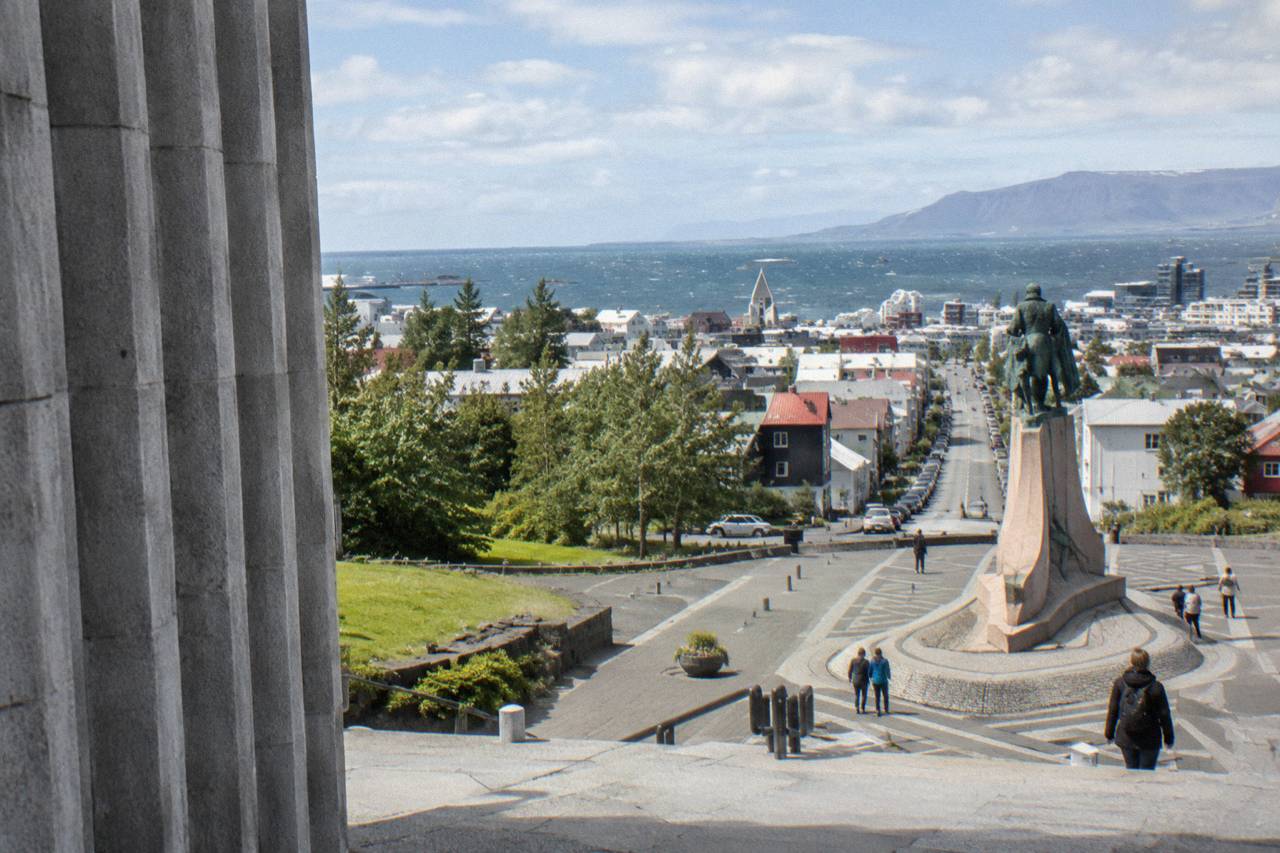
Can I Wear Jeans In Reykjavik?
A direct answer to whether jeans work in Reykjavik, with month-by-month weather facts, fabric advice, and what to wear on a city walking tour.
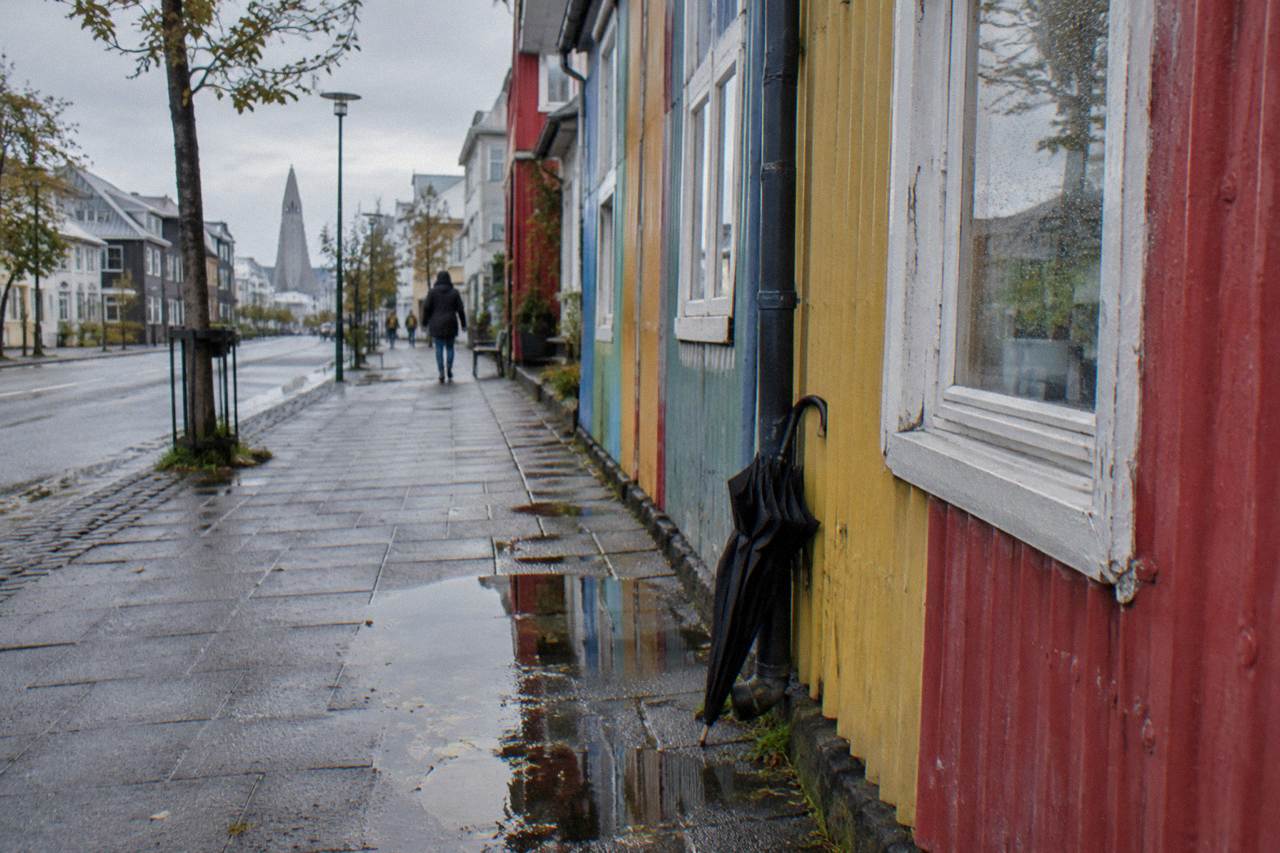
Yes, you can wear jeans in Reykjavik, and plenty of residents do exactly that every day of the year. The honest caveat is weather, not fashion or etiquette: denim absorbs rain, dries slowly, and loses its comfort in the constant coastal wind. Jeans are a fine choice on a dry day with a waterproof shell over them, and a poor choice as your only leg layer for a wet afternoon of walking.
The question earns a direct answer because Reykjavik's weather has a specific character that catches visitors out. This is not a city of dramatic downpours. It is a city of frequent light rain, sudden wind shifts, and temperatures that hover in a narrow band for most of the year. Reykjavik's December mean temperature is 0.8 °C, and January's mean is 0.7 °C, which is milder than many visitors expect for a place this close to the Arctic Circle. The ocean moderates everything. What the ocean does not moderate is moisture. Between 9 and 15 days per month in Reykjavik register at least 1 mm of rain, which means a visitor spending a week in any season will probably meet rain on several of those days.
That is the real test for denim. Cotton jeans hold water against your skin, and in wind that stays damp for hours. On a walking tour that lasts two or three hours, wet jeans stop being a style question and become a comfort and, in winter, a mild safety question. Cold, wet fabric against your legs while you stand still listening to a guide is the exact situation that makes people cut a day short.
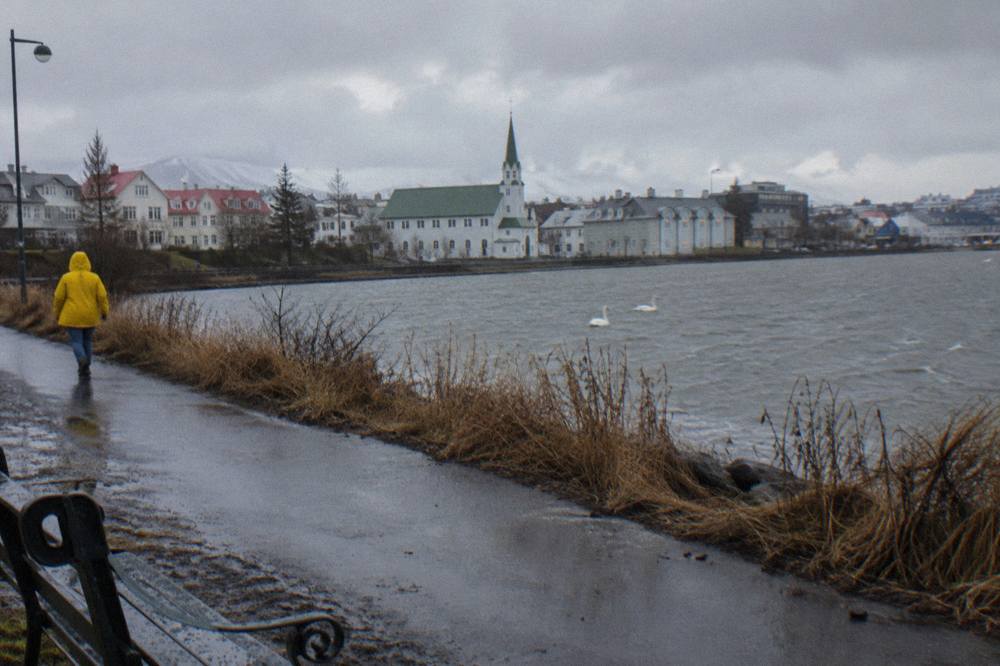
None of this means you need to leave jeans at home. It means jeans should be one item in a layered plan rather than the whole plan. The sections below cover what the weather actually does month by month, why denim specifically struggles, what fabrics do the job better, and how to dress for the city walking tours that make up most of a first visit. If a walking tour is already on your list, the practical answer to this question is mostly about what to wear on that tour.
What Is The Weather Actually Like Month To Month?
Reykjavik runs cool and damp year round, with winter means just above freezing and summer means around 11 to 13 °C, so the clothing problem shifts from cold plus wet to merely wet plus windy. Daylight swings are extreme, from about 21 hours in June to just over 4 hours in December, and rain falls on 9 to 15 days every month, which is why layers matter more than any single garment.
The seasonal shape is easy to summarize. Winter, meaning November through March, brings mean temperatures between roughly 0.5 and 2 °C, short days, and a mix of rain, sleet and snow that often lands as slush in the city centre because the ocean keeps surface temperatures near the coast mild. The shortest day of the year, around 21 December, offers only about 4 hours and 7 minutes of daylight. By mid-January the 15th of the month already has about 5 hours 25 minutes, and the gains accelerate fast through February and March.
Summer is the other surprise for visitors who imagined an Arctic chill. Mid-June delivers about 21 hours of daylight, and July mean temperatures sit around 11 to 13 °C. That is pleasant walking weather, but it is rarely shorts weather, and the wind on the waterfront at Grandi or along the Sæbraut path can drop the felt temperature sharply even on a bright July afternoon. The middle seasons, May and September, are widely considered the most changeable: bright mornings, showers by noon, clear evenings.
| Period | Typical feel | Mean temperature | Daylight on the 15th | What it means for jeans |
|---|---|---|---|---|
| January | Cold, windy, mixed precipitation | 0.7 °C | 5 h 25 min | Risky as an outer layer, fine under a shell |
| March | Raw but brightening | Around 1 to 2 °C | 11 h 42 min | Wear with thermal base layer |
| June | Mild, windy, almost no night | Around 10 to 11 °C | 21 h 02 min | Comfortable most days |
| September | Cool, showery | Around 8 °C | 13 h 03 min | Fine with rain cover at hand |
| December | Damp cold, very short days | 0.8 °C | 4 h 13 min | Workable only with proper layering |
Rain in Reykjavik deserves its own paragraph because it drives the whole jeans question. The city's precipitation is usually light and wind-driven rather than heavy, which is deceptive. A waterproof jacket sheds a 20 minute shower easily, but that same wind pushes fine rain sideways under umbrellas, which is why locals mostly do not carry them, and soaks trouser legs from the knee down. Denim absorbs that sideways rain readily. A quick check of the day's forecast on the Icelandic Met Office's own site, vedur.is, is standard practice before choosing the day's outfit, and locals treat the forecast as a wind forecast first and a rain forecast second.
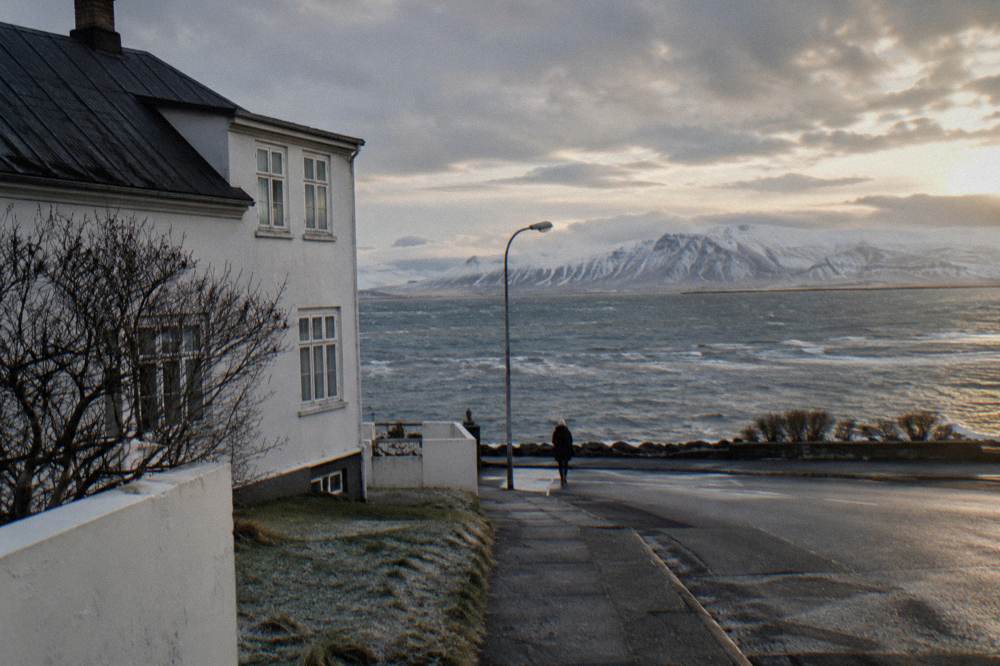
The wind is the factor that never appears in a packing list and always appears in the weather. Reykjavik sits on a peninsula with open water on three sides, so gusts funnel between buildings downtown and scream along the waterfront. Wind makes wet fabric feel dramatically colder than the air temperature suggests, and wet jeans in wind are the classic recipe for a miserable hour. That, in one sentence, is why this question gets asked so often.
Why Does Denim Struggle In Reykjavik Conditions?
Denim's weakness is water behaviour: cotton absorbs many times its weight in moisture, holds it against the skin, and dries slowly, so a pair of jeans soaked by wind-driven rain can stay damp for the rest of the day. In wind near freezing, that trapped moisture pulls heat out of your legs steadily, which is why guides consistently recommend layered quick drying fabrics instead.
The physics is straightforward and worth understanding, because it explains every piece of clothing advice about Iceland in one go. Cotton is hydrophilic, meaning it takes water into its fibres rather than letting it bead on the surface. Once denim is wet it clings, loses its shape, and dries slowly, often needing hours in still indoor air. In Reykjavik, where a shower can arrive and pass within 20 minutes and leave you walking in wind for the rest of the afternoon, those hours of dampness are exactly the wrong property in a trouser.
Cold compounds it. A fabric's insulation comes from trapped air, and water displaces that air while conducting heat away from your body far faster than still air does. Wet jeans in a 3 °C wind do not just feel cold, they actively cool you. On a short walk between a café and a shop that is an irritation. On a two hour standing-and-walking tour of the city centre it is the difference between enjoying the stories and counting the minutes.
There is a second, smaller problem: salt. Winter sidewalks in Reykjavik are gritted, and slush splashes onto hems. Jeans with raw or dark indigo dye can show salt lines and splash marks that survive washing, which is a cosmetic matter, but worth knowing if your jeans are new. Jeans with a synthetic stretch content tend to cope a little better with both water and salt than pure heavy cotton denim.
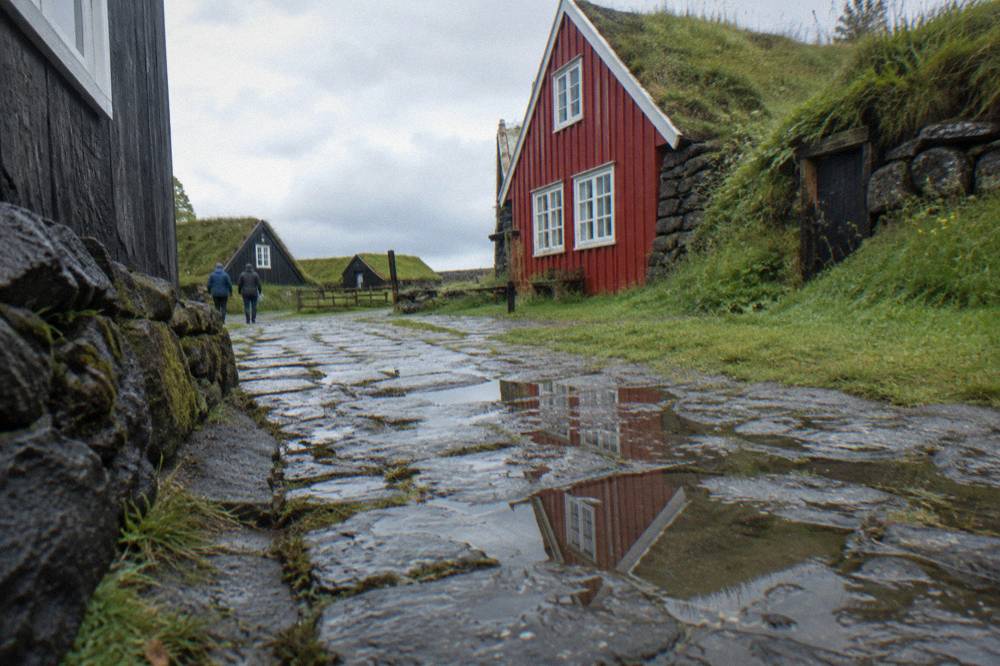
To be fair to denim, on a genuinely dry day jeans are entirely comfortable in Reykjavik at any time of year. Winter dry days with sun on snow, of which there are plenty between systems, are actually lovely walking conditions. The mistake is not wearing jeans, it is wearing jeans as the plan with no rain layer and no alternative. Locals who wear jeans daily wear them with a proper waterproof shell, often rain trousers in winter, and they keep spare socks at work. That is the practical local answer in one line.
What Fabrics Work Better Than Jeans?
Quick drying synthetics and wool outperform denim on every measure that matters in Reykjavik: softshell trousers, fleece-lined leggings under rain pants, and merino base layers all keep working when damp. Wool insulates even wet, synthetics dry in under an hour indoors, and a packable waterproof shell turns any outfit into a rain-ready one.
The replacement list is short and none of it is exotic. Softshell trousers, the kind sold for hiking, block wind, shed light rain, and stretch for walking, and they are an easy choice for a city walking tour or a casual evening out in town in the colder half of the year. Fleece-lined leggings or long johns under a lighter trouser give the same warmth with more flexibility, and can be stripped off indoors. Merino wool base layers are the premium option: merino manages moisture well, resists odour over multi-day wear, and, unlike cotton, keeps insulating when damp. In summer, a pair of quick drying travel trousers or even lighter jeans with stretch content handles everything, with a rain shwell in the daypack. For more ideas once you have packed, browse Reykjavik City Tours.
| Fabric | When wet | Drying time indoors | Best Reykjavik use |
|---|---|---|---|
| Heavy cotton denim | Stays wet, loses comfort | Many hours | Dry days, with shell over |
| Stretch denim with synthetics | Absorbs less, dries faster | A few hours | Summer city days |
| Softshell | Beads light rain, blocks wind | Under an hour | Autumn to spring walking |
| Merino base layer | Insulates while damp | An hour or two | Winter layer under anything |
| Waterproof rain trousers | Sheds rain fully | Wipe dry | Wet and winter days |
Footwear deserves a mention alongside the trouser question, because the two fail together. Reykjavik's sidewalks in winter are a mix of cleared, gritted and occasionally glazed surfaces, and summer grassy paths such as the ones around Tjörnin pond stay soggy after rain. Waterproof shoes or boots with real tread are the single most useful clothing item for the city, more important than any trouser choice. Trainers survive summer, but a week of light rain will soak them and, like jeans, they dry slowly.
One more practical note: Reykjavik's indoor spaces are heated generously, so the visitor's real clothing challenge is transitions, not absolute cold. You step from a cold, windy street into a warmly heated café, then back out. Layers you can shed and carry are the answer, and that logic extends to legs. A thermal layer under jeans that you can live with indoors beats heavy jeans alone that you cannot adjust.
Do Locals Wear Jeans In Reykjavik?
Yes, jeans are completely normal everyday wear in Reykjavik and nobody will notice or care what you wear, in the city or anywhere in Iceland. Style standards are relaxed, waterproof parkas dominate every season, and the practical question is never acceptability, it is whether your outfit keeps you comfortable through wind and sideways rain.
Reykjavik is a small capital with a strong outdoor culture, and the street uniform reflects it. In winter you will see everything from technical skiwear to people in jeans and sneakers waiting at bus stops, usually with a serious insulated jacket on top regardless of what is on the legs. The jacket is the non negotiable item. Locals spend on outer layers because the wind demands it, and the legs mostly cope. That observation is the honest summary of local practice: jeans yes, with a proper shell and an awareness of the forecast.
Evening dress is similarly relaxed. Bars and restaurants in the city centre range from casual to smart casual, and dark jeans fit everywhere except a handful of finer dining rooms. If an evening out is on the plan, for the specifics, see what to wear to Reykjavik bars. For daytime sightseeing there is genuinely no dress code to satisfy, only weather to survive.
It is worth repeating what guides say about this, because it reframes the whole question. The visitors who have a bad clothing day in Reykjavik are rarely underdressed for cold in the absolute sense. They are dressed in fabrics that cannot handle the cycle of light rain, wind, and heated interiors. A pair of jeans plus a good jacket is a defensible outfit. Jeans alone with a fashion jacket is the version that fails.
What Should You Wear On A Walking Tour?
For a Reykjavik walking tour, wear layered quick-drying clothing, a wind and waterproof outer layer, warm waterproof footwear, and bring a hat and gloves outside of midsummer, since tours run in all weather and involve standing still in wind. Jeans work fine under a rain shell, but stretch or softshell trousers are the safer choice for wet days.
City walking tours are the most popular way to see Reykjavik, and they concentrate the clothing question, because a tour means two to three hours outdoors with regular standing stops. The most reviewed option on offer, a small group walk with a local guide rated 4.9 across 5,260 reviews, from $50.08 per person, runs about two hours, which is short enough that ordinary clothes cope if the weather cooperates. A fuller guide to all the options, durations and price ranges is on the Reykjavik walking tour guide page, and a shorter look at what to pack for the conditions is in what to wear on a Reykjavik walking tour.
Tours depart in rain as a rule, since Reykjavik rain is usually light enough to walk through, and whatever tour you pick, plan on bringing your own layers. The packing logic is simple: a base layer you can sit in indoors, a warm mid layer such as a fleece, and a shell jacket that stops wind and rain. Legs get the same treatment scaled down. On dry days, jeans with a base layer underneath in winter are fine. On days with rain in the forecast, softshell or rain trousers earn their space in the daypack.
Footwear for a tour deserves the last word again because tours cover real ground. A typical city route strings together the harbour, the oldest streets, the lake and the main church, much of it on paving but with puddles and, in winter, slush bands at every crossing. Waterproof boots make the difference between a relaxed stroll and a damp, distracted one. For the fullest picture of how the seasons change this advice, including month-by-month temperature and daylight figures, see the site's Reykjavik weather by month guide.
How Does The Answer Change Between Winter And Summer?
In summer, jeans are a genuinely reasonable choice for city wear, needing only a light rain layer in the daypack. In winter, jeans still work but only as part of a system: thermal base layer underneath, waterproof shell over, and a willingness to change plan if steady rain sets in, because a soaked pair will not dry before evening.
Winter, taken here as November through March, is the season that makes or breaks denim. The mean temperatures hover just above freezing, but the felt temperature on the waterfront can sit far below it, and precipitation arrives as rain, sleet or snow depending on the hour. Daylight is short, with sunrise on 1 November at 09:10 and sunset at 17:10, narrowing to about 4 hours of daylight by late December, so most of your walking happens in darkness and often in wind. The aurora season, running from mid-August to late April, gives a reason to be outside on clear winter nights, and standing still watching the sky is exactly when leg insulation matters most, as the site's piece on Reykjavik evening and night tours covers in more detail.
Summer flips the calculation. Mean temperatures of 10 to 13 °C, nearly round the clock daylight, and lighter rain mean jeans or anything else is comfortable, and the main hazard is wind chill on exposed paths rather than cold. Even then, the smart pack includes a rain shell, because the showers are brief but reliable. Midsummer visitors walking at midnight in daylight, one of the city's genuinely strange pleasures, still want a jacket.
One seasonal footnote that affects clothing logistics rather than clothing itself: the city's hop-on hop-off sightseeing bus is suspended from 2 March to 23 May 2026, having been suspended from 2 March to 23 May in 2026, so in that window walking is even more the default way to see the city centre and shoe and trouser choices carry more weight. The site's Reykjavik tours in winter guide covers what still runs in the coldest months.
The bottom line, stated once more plainly: wear the jeans if you like them, but give them a base layer in winter, a shell in any season, and a backup plan on days the forecast shows steady rain. That is the same advice a local would give you over coffee, minus the argument about which brand of waterproof jacket is worth the money.
Common Questions About Wearing Jeans In Reykjavik
Can I Wear Jeans In Reykjavik?
Yes. Jeans are normal everyday wear in Reykjavik and no one will comment. The practical condition is weather: denim soaks up wind-driven rain and dries slowly, so wear jeans with a waterproof shell over them, add a thermal base layer in winter, and switch to quick drying trousers if steady rain is forecast.
Will Jeans Be Warm Enough In An Icelandic Winter?
On their own, often not. Reykjavik winter means temperatures hover just above freezing but wind chill can pull the felt temperature well below. Jeans over a merino or synthetic thermal layer handle normal city days; heavy denim alone with no wind layer is where visitors get cold.
Do I Need Waterproof Trousers In Reykjavik?
They help between November and March and on any day with steady rain in the forecast. For most summer city visits a waterproof jacket and quick drying trousers are enough, since showers are usually brief. Tours run in rain, so check the forecast before you leave.
What Shoes Should I Wear With Jeans In Reykjavik?
Waterproof shoes or boots with decent tread, in any season. Winter sidewalks mix cleared pavement with gritted and occasionally icy patches, and summer grass around Tjörnin stays wet after rain. Trainers work on dry summer days only.
Is There A Dress Code In Reykjavik Restaurants And Bars?
No formal one. City centre venues range from casual to smart casual and dark jeans fit almost everywhere. Comfort and weather readiness matter more than style, and a good outdoor jacket is the local uniform at every hour.