Do They Accept US Dollars In Iceland?
No, US dollars are not accepted in Iceland. Here is how the Icelandic krona, cards and contactless payments actually work for visitors in Reykjavik, with real prices.
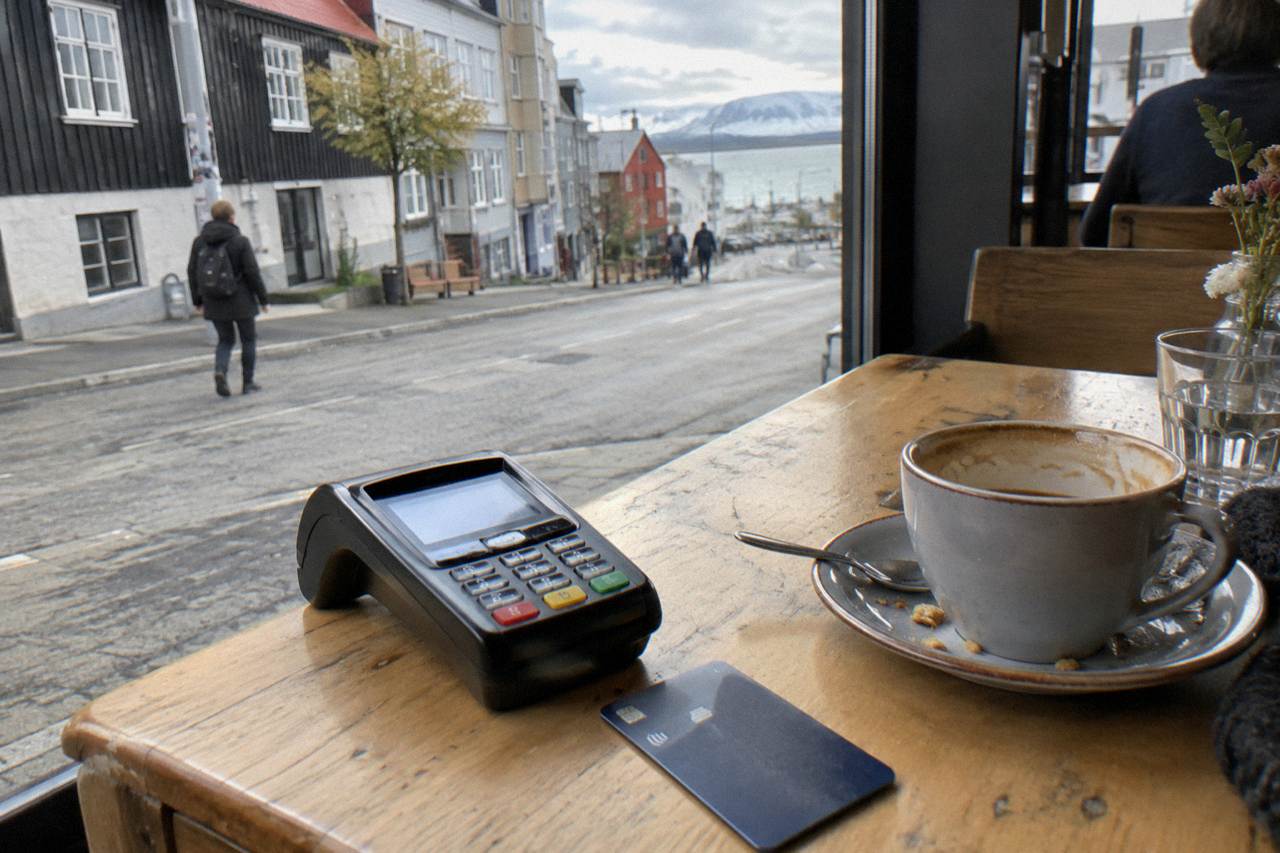
No, US dollars are not accepted as payment in Iceland. The currency is the Icelandic krona (ISK), and almost every shop, cafe, museum, bus and tour operator in Reykjavik prices exclusively in it. In practice you will barely need cash at all, because debit and credit cards with contactless are accepted nearly everywhere, including street hot dog stands and public buses.
That surprises visitors who have travelled in Mexico, Canada or parts of the Caribbean, where dollars are quietly taken alongside the local currency. Iceland never developed that habit. Prices are posted in kronur, card terminals handle the conversion through your bank, and the few genuinely cash-only situations are rare enough that many residents go months without touching a banknote.
The practical consequence is simple: you do not need to buy dollars, and you mostly do not need to buy kronur either. What you need is a card that works internationally, ideally one with low or no foreign transaction fees, and a rough sense of what things cost in ISK so a menu price of 2,400 does not alarm you. In krónur the price stays fixed, while any dollar figure shifts with the daily rate and no fixed figure should guide your budget.
Some visitors still like a small amount of cash for peace of mind, and that is fine. The point of this article is to show you exactly where cash matters in Reykjavik, where it does not, and what a realistic day of spending looks like in kronur, using verified local prices rather than guesses. If you are also weighing whether the city is expensive overall, the companion piece on Reykjavik travel costs breaks down accommodation and food budgets separately.
One habit worth forming before you land: get a feel for the krona's rough scale rather than chasing exact rates. Prices in Iceland look bigger than they are, because one krona is a small unit. Once you internalise that a hot dog costs 920 ISK, a pool entry 1,500 ISK and a museum ticket 4,000 ISK, the numbers stop feeling abstract and start feeling like a normal price ladder. That mental map also protects you from the classic arrival panic, standing in a shop converting every tag price into dollars on a phone while a queue forms behind you.
How Much Cash Should You Actually Carry?
Most visitors can carry none at all and be fine for an entire trip. Card acceptance in Reykjavik is close to universal, tipping is not expected, and the main public transport system takes contactless payment directly at the door. A small reserve of a few thousand kronur per person is a reasonable comfort cushion for a market stall, a public toilet or an emergency, but it is a safety measure, not a necessity.
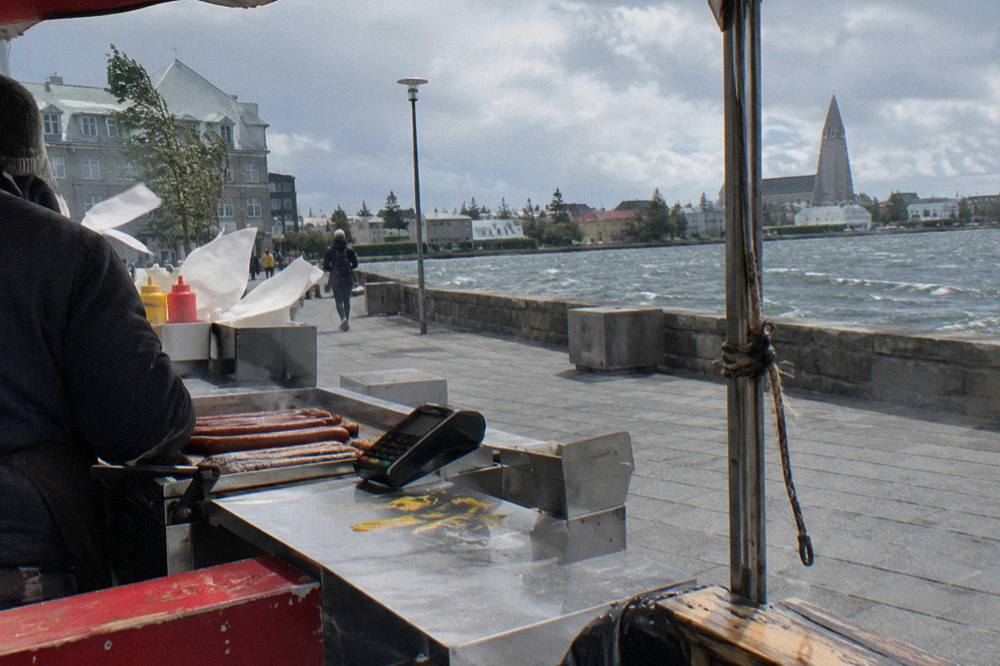
The reason is structural. Card payments are widely accepted across Reykjavik, so you rarely need cash, and the infrastructure reflects it. The classic example visitors love: the hot dog stand by the harbour. Bæjarins Beztu Pylsur, operating since 1937, lists a pylsa at 920 ISK on its current menu, and it takes cards. When a curbside hot dog stand is card-ready, the rest of the city follows.
Where cash still has a niche, it is small. A farmers market or Christmas market stall may prefer it. Some public toilets in lesser-visited spots are coin-operated. Church collection plates take coins. And a handful of very small rural kiosks outside the capital, the kind a Ring Road driver might stop at, occasionally lean on cash. None of those apply to a standard Reykjavik city break.
Digital wallets deserve a mention here, because they behave exactly like cards in Iceland. Phone and watch payments are accepted anywhere contactless cards are, which is effectively everywhere a tourist goes. If your physical card is locked away in a hotel safe, a wallet on your phone still pays for the bus, the pool and the pastry. The only preparation that matters is telling your bank you are travelling, so a fraud filter does not freeze the card on its first Icelandic transaction, which remains the most common money problem visitors actually report.
A quick comparison of where cash and cards stand, based on verified prices and payment rules:
| Situation | Payment that works | Cash needed? |
|---|---|---|
| Restaurants and cafes | Any major card, contactless | No |
| Hot dog stands and street food | Cards accepted at the stand | No |
| City buses (Straeto) | Contactless card or Klapp | No |
| Airport Flybus transfer | Card online or at terminal | No |
| Paid walking and food tours | Card at booking | No |
| Public swimming pools | Card at reception | No |
| Small market stalls | Card usually, cash sometimes | Rarely |
| Church tower ticket at Hallgrimskirkja | Sold in the church shop on site | Check the church's site |
The final row deserves a note. Hallgrimskirkja's tower is ticketed at the church shop, with no advance booking, and the church publishes its own hours and prices, so treat its site as the source of truth rather than any figure printed second-hand. Winter hours run 10:00 to 17:00 with last tower entry at 16:45, and access tightens during services and concerts.
Where Cards Do Not Work In Reykjavik
Honestly, almost nowhere. The main friction points for visitors are not card refusal but card fees: foreign transaction fees from your own bank, and dynamic currency conversion, where a terminal offers to charge you in dollars instead of kronur. Always decline that offer and pay in ISK, because the terminal's dollar rate is worse than your bank's.
Dynamic currency conversion is the single most expensive trap for American visitors, and it is not an Icelandic invention. It is a terminal feature that appears worldwide. The screen asks whether you want to be charged in USD or ISK. Choosing dollars sounds friendly and costs you several percent in an unfavorable exchange margin. Choosing ISK lets your own bank do the conversion at a rate close to the mid-market one. This one habit saves more money than any amount of cash planning.
Beyond that, think about fees before you fly. A card charging a 3 percent foreign transaction fee adds roughly 3 percent to every hotel night, meal and tour. Over a week that can exceed the cost of a full day of activities. Cards with no foreign transaction fee are common now, and it is worth calling your bank before departure to confirm which of your cards charges what.
If you do want some kronur in hand, the cheapest route is usually a local ATM withdrawal with a debit card that rebates or waives international fees, not an exchange desk at the airport. Withdraw once, moderately, rather than repeatedly, since per-withdrawal fees add up. And keep the receipts mindset: Iceland's tap water is safe and free, which quietly removes a daily expense that budgets in other capitals assume.
For the airport transfer itself, the Flybus between Keflavík and the BSÍ terminal costs 3,999 ISK one way for an adult, 5,299 ISK with a hotel drop-off leg, with children 1 to 5 free, all payable by card. If you are mapping the full car-free picture, the guide to getting around Reykjavik without a car covers buses, scooters and walking distances in detail.
Prepaid travel money cards are a middle path some visitors like: load kronur before departure at a fixed rate and spend like a local card. They suit travelers who want rate certainty more than the best rate, and they fail the same way cash does if the single card is lost, so treat one as a backup rather than the main instrument. Whatever mix you settle on, keep at least two independent payment methods on you, which is the real lesson of card-first destinations: the risk is not rejection, it is one frozen card and no fallback.
A short, genuinely useful tour can also anchor a low-spend day. The express city walk option below runs about an hour, costs from $89, and books by card like everything else.
That leaves one more question travelers ask: how much should the day actually cost? The next section puts verified local prices into a realistic sample day.
Tipping, Free Walking Tours, And When Cash Helps
Tipping is not expected or customary in Iceland, at restaurants, in taxis, or on guided tours, because service charges are built into prices. The one place cash in kronur genuinely helps is a tip-based free walking tour: those guides work for tips, so if you take one, bring a few thousand kronur in notes or be ready to tip by card where the operator allows it.
This is the nuance behind the cash question that most generic advice misses. Free walking tours are free to join but not free of cost to the guide, and the tip is how the model works. Never treat a tip amount as required; decide based on the walk you got. For everything else, leave the tipping reflex at home. A restaurant bill already includes service, and adding 20 percent on top marks you as a visitor more than any accent does. There is a fuller treatment of the free-walk model, including how it compares with paid options, in the free walking tour guide for Reykjavik.
The tipping rule has a second edge worth knowing: it keeps paid tours honest about their total price. A paid city walking tour from $50.08 per person is the whole cost, with nothing expected on top. The most reviewed city walk option in the city, rated 4.9 across 5,260 reviews, runs about two hours in small groups, and that small group walking tour is a good example of a fixed card-bookable price with no cash dimension at all. Check availability
Where cash still earns its pocket space, ranked by how often it actually matters:
| Cash use | How often it comes up | Sensible amount |
|---|---|---|
| Tip on a free walking tour | Once per free tour taken | A few thousand ISK |
| Small market or festival stall | Occasional, seasonal | Small notes |
| Coin-operated public toilet | Rare in the centre | A few coins |
| Church collection or candle | Personal choice | Coins |
| Emergency backup if a card fails | Very rare | A few thousand ISK |
Notice what is absent: taxis, restaurants, shops, museums, pools, buses and every bookable tour. All card territory. Each tour on Reykjavik City Tours is priced by its operator through the live listing, and card payment is the norm across Reykjavik., which is why the cash question almost always resolves to "bring almost none."
A Sample Day Of Spending In Kronur
One adult can spend a comfortable Reykjavik day on a few small verified line items in kronur: 690 ISK bus rides, a 1,500 ISK pool entry, a 4,000 ISK museum ticket and a 920 ISK hot dog, every one payable by card. A guided walking tour from $50.08 or a food tour from $136.58 just stacks another card-bookable price on top.
Working through it with real figures makes the budget tangible. Start with breakfast from a bakery, where coffee and a pastry together typically cost around a thousand kronur depending on the bakery and the pastry. Bus fares into and around the centre are 690 ISK per single adult ride, with a fare cap meaning you never pay for more than three rides a day or nine a week at the adult rate. Note that the old 24-hour and 72-hour day passes are no longer sold, and Strætó has announced reduced services on some capital area routes from 1 December 2026, so check schedules for that change if you travel in deep winter.
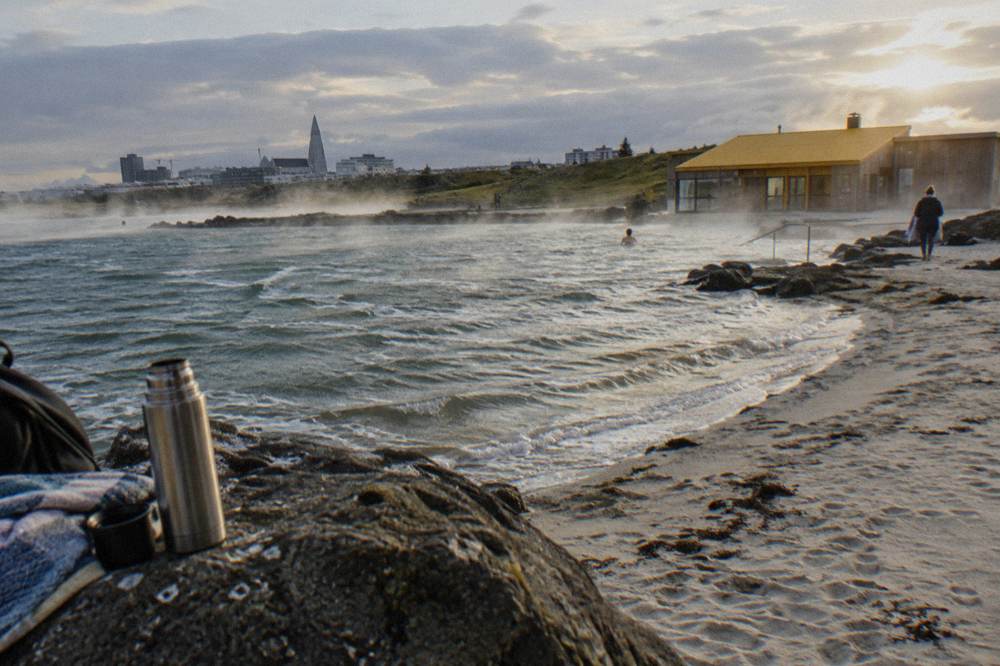
The pool is the best value in the country. At 1,500 ISK for an adult, with children under 10 free, you get hot pots, a lap pool and a slice of daily Icelandic life. Museums vary: the Saga Museum on the Grandi harbour side charges 4,000 ISK for an adult, with a family ticket priced at 9,200 ISK. Whales of Iceland, the life-sized whale model exhibition, charges 4,300 ISK for an adult, giving you a second anchor point for what museum pricing looks like here. Lunch from a food hall, and both Hlemmur Mathöll and Grandi Mathöll operate daily in the 11:00 to 21:00 window with holiday exceptions, covers a generous plate at prices set by each vendor, so check the boards on the day.
| Item | Verified price | Notes |
|---|---|---|
| Bakery breakfast | Around a thousand ISK | Card accepted everywhere |
| Single bus fare (adult) | 690 ISK | Contactless, children 11 and under free |
| Public pool admission | 1,500 ISK | Children 0 to 9 free with guardian |
| Saga Museum adult entry | 4,000 ISK | Family ticket 9,200 ISK |
| Whales of Iceland adult entry | 4,300 ISK | Open 10:00 to 17:00 daily |
| Food hall lunch | Set by each vendor | Halls open daily 11:00 to 21:00 |
| Classic hot dog | 920 ISK | Card taken at the stand |
| 24-hour Reykjavík City Card | 6,100 ISK | Museums, pools and buses bundled |
The City Card row is where arithmetic starts mattering. At 6,100 ISK for 24 hours, 8,500 for 48 and 10,500 for 72, it pays off when you stack two or more paid attractions plus buses in a day; a pool and a single museum roughly break even, and it excludes the airport route 55. There is a fuller breakdown in the guide to whether the Reykjavik City Card is worth it.
Season and daylight shape the spend as much as prices do. In late October the sun rises around 9:07 and sets around 17:13, so an outdoor day compresses into about eight usable hours, which naturally pulls the budget indoors toward museums, pools and food halls. Midwinter days shorten further, to roughly four hours of daylight around the solstice, and that favors exactly the kind of spending on this table: one indoor attraction, one long cafe stop, one warm pool soak. Summer travelers invert the equation, with daylight past 22:00 stretching the walking day and shrinking the paid-attraction count, since the city itself becomes the main sight.
If the day leans toward food rather than museums, the tasting walk below stacks six or more Icelandic tastings into about three hours from $149 per person, rated 4.8 across 23 reviews.
For a deeper comparison of the food walk options, including the most reviewed tour in the city at 4.9 across 2,124 reviews, see the best Reykjavik food tour rundown.
Getting Kronur And Spending Them Home
Withdraw ISK once from a local ATM with a low-fee debit card if you want a cushion, decline dollar conversion at every terminal, and spend down remaining coins before departure, since exchanging small kronur back abroad is rarely worth the fee. Unspent notes can be donated at airport collection points or kept as souvenirs.
The end-of-trip question is the mirror of the arrival one, and it has a pragmatic answer. Exchange desks in your home country give poor rates both directions, and coins are usually not convertible at all. That argues for the smallest possible cash float in the first place, which the card-first reality of Reykjavik makes easy. If you tipped a free walk guide and bought a market pastry, you have probably used most of it already.
Refunds deserve a sentence too, because they run through the same pipes. If you cancel a tour or a booking changes, refunds go back to the original card rather than being handed over in cash, and the timing depends on your bank rather than the operator. Check the booking page for each tour's cancellation terms before you pay; many city walks can be cancelled without charge up to a day ahead, but the exact window is the operator's to state, not something to assume.
A few final structural facts that affect the wallet rather than the day plan. Iceland's standard VAT is 24 percent, with a reduced 11 percent rate applying to accommodation, certain transport and tours, and food; posted prices include it, so there is no checkout surprise. Hotels and guesthouses add a lodging tax of 800 ISK per night per unit, already in the bill. Entry rules are unchanged for now: Iceland is in the Schengen area, your passport should be valid at least three months beyond departure, and the ETIAS travel authorisation is not yet operational, so no extra fee applies here.
Two official pages are worth bookmarking for live payment and price details: Strætó's pricing page for bus fares and the fare cap, and the Flybus price list for airport transfers. For bundled attraction pricing, the official City Card page lists every included museum and pool.
The short version of the whole article: dollars are not accepted, kronur are barely necessary, cards do everything, tips are optional except on free walks, and the numbers above are the ones that actually leave your account.
Common Questions About Cash In Reykjavik
Do They Accept US Dollars In Iceland?
No. Iceland uses the Icelandic krona exclusively, and every shop, restaurant, museum and tour operator in Reykjavik prices in ISK. Cards with contactless are accepted nearly everywhere, including hot dog stands and buses, so visitors neither need dollars nor kronur in most cases.
How Much Cash Should I Bring To Reykjavik?
Almost none. A cushion of a few thousand ISK per person covers a market stall, a tip on a free walking tour and emergencies. Everything else, including the 690 ISK bus fare and the 1,500 ISK pool admission, can be paid by card.
Should I Tip In Iceland?
Tipping is not expected or customary in restaurants, taxis or on paid tours, because service charges are included in posted prices. The exception is a tip-based free walking tour, where the guide works for tips and a contribution in kronur or by card is appropriate.
Is It Better To Pay In USD Or ISK When A Terminal Asks?
Always choose ISK. Declining dynamic currency conversion and letting your bank set the rate avoids a poor exchange margin embedded in the terminal's dollar offer, which typically costs several percent per transaction.
Where Can I Withdraw Icelandic Krona?
Local ATMs with a debit card that has low international fees are the cheapest option, and one moderate withdrawal beats several small ones. Airport exchange desks work in a pinch but give worse rates than an ATM withdrawal.
Do I Need Cash For The Bus Or The Airport Transfer?
No. City buses accept contactless cards directly, and the Flybus between Keflavík and the BSÍ terminal, at 3,999 ISK one way for an adult, is paid by card online or at the terminal.