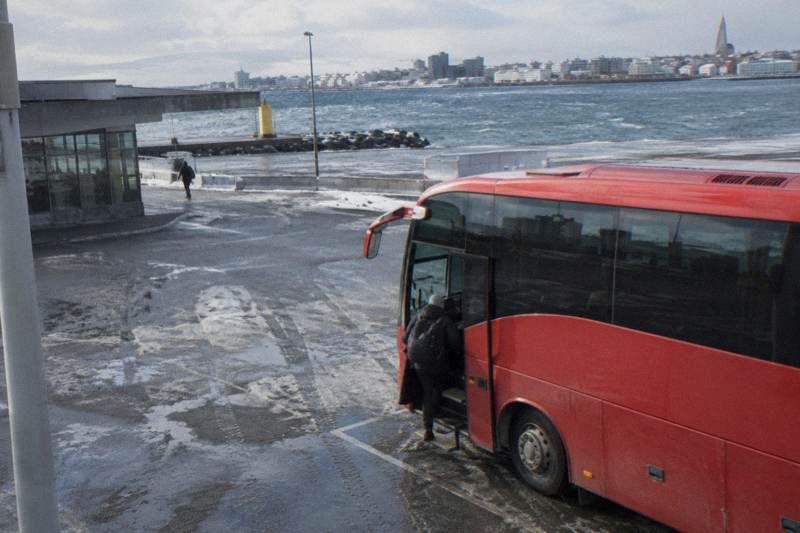
What Is The Best Way To Get Around Reykjavik?
Walking covers most of central Reykjavik, buses and a hop-on hop-off loop fill the gaps, and here is how the costs and options compare.
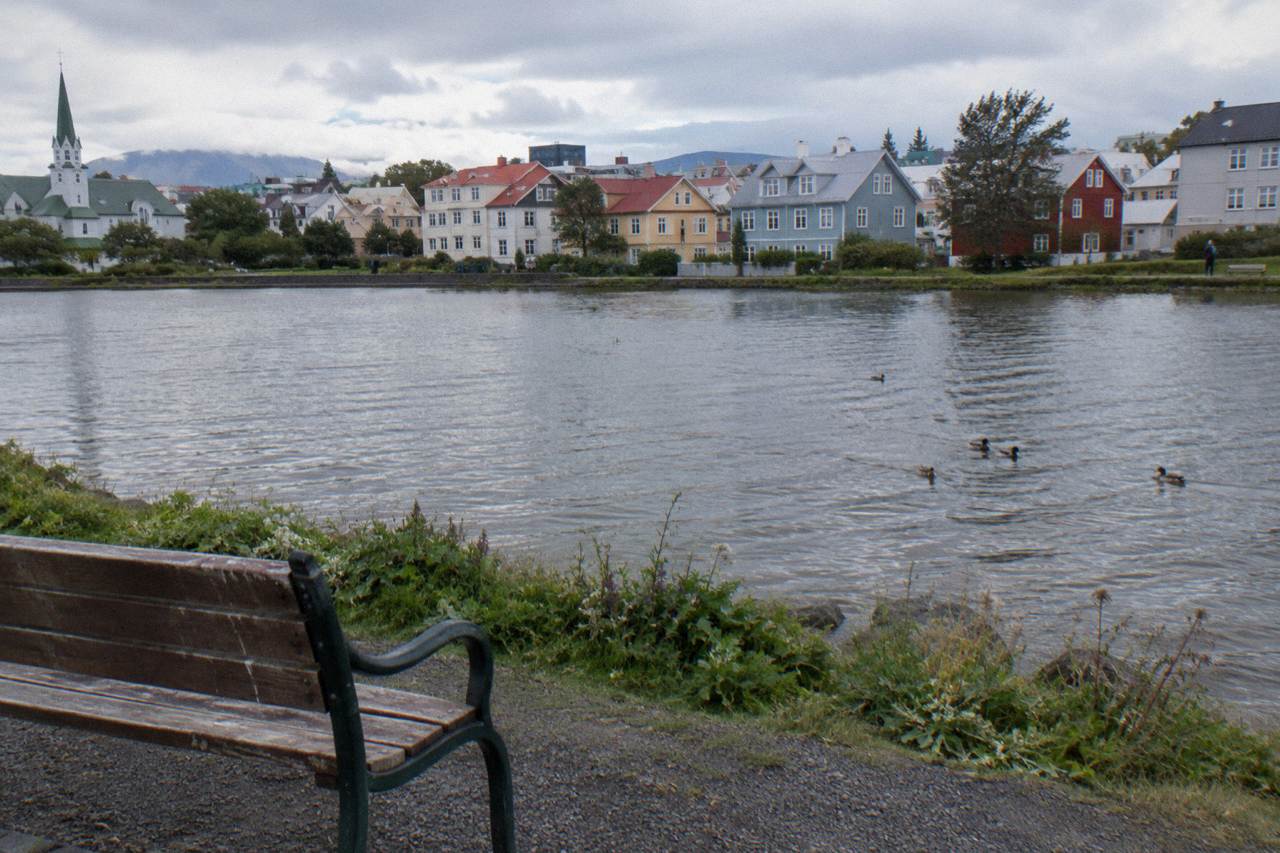
The best way to get around Reykjavik is on foot for the compact city centre, backed by the Strætó city buses or a hop-on hop-off loop for anything beyond easy walking distance. A single adult bus fare is 690 ISK, the centre takes under 30 minutes to cross on foot, and a 24-hour Reykjavik City Card at 6,100 ISK bundles the buses with museums and pools. Cars are unnecessary for most city stays.
That is the short version, and it holds for the great majority of visitors. Reykjavik's centre is genuinely small: Laugavegur, the main shopping street, runs right through the heart of the city, and the walk from the Hallgrímskirkja church down to the Old Harbour takes roughly 15 minutes at a normal pace. Almost every restaurant, gallery, bar and shop a first-time visitor wants sits inside that rectangle or one block beyond it. The city was a trading post centuries before it was a capital, and it grew outward from a single cluster of buildings, which is why the interesting parts stayed dense rather than spreading along a strip.
The distances grow once you add the things that make a longer stay interesting. The geothermal pools at Laugardalur, the domestic animals at the family park, the Saga Museum on the Grandi harbour peninsula and the Árbær open-air museum all sit outside the walkable core, and late-October daylight, with sunrise at 9:07 and sunset around 17:13, compresses the hours you want to spend outdoors. That is where the buses, the hop-on hop-off loop and an e-bike earn their place. Weather compounds the daylight squeeze: December brings a mean temperature of 0.8 °C and about 95 mm of precipitation on average, so the farther legs of a day trip get less pleasant on foot than the summer equivalent.
This article works through the options in the order most travellers actually need them: how far walking alone gets you, what the bus system costs after its 2026 fare changes, when the hop-on hop-off loop makes sense, and whether a car, a bike or a scooter is ever worth it inside the city. Local buses and scooters price in Icelandic krónur; tours are typically priced in US dollars. Where a detail such as an exact stop list or a seasonal schedule is not fixed, the advice is to check the booking page on the day, because schedules in a small northern city genuinely do move with the season.
Is Walking Really Enough For Central Reykjavik?
Yes, walking covers central Reykjavik almost entirely. The historic core, from the pond at Tjörnin to the Old Harbour piers and from Hallgrímskirkja to the Harpa concert hall, spans roughly 2 by 1.5 kilometres, crossable on foot in 20 to 30 minutes. Pavements are surfaced and maintained year-round, and street naming is signposted, so navigation without a map app is workable.
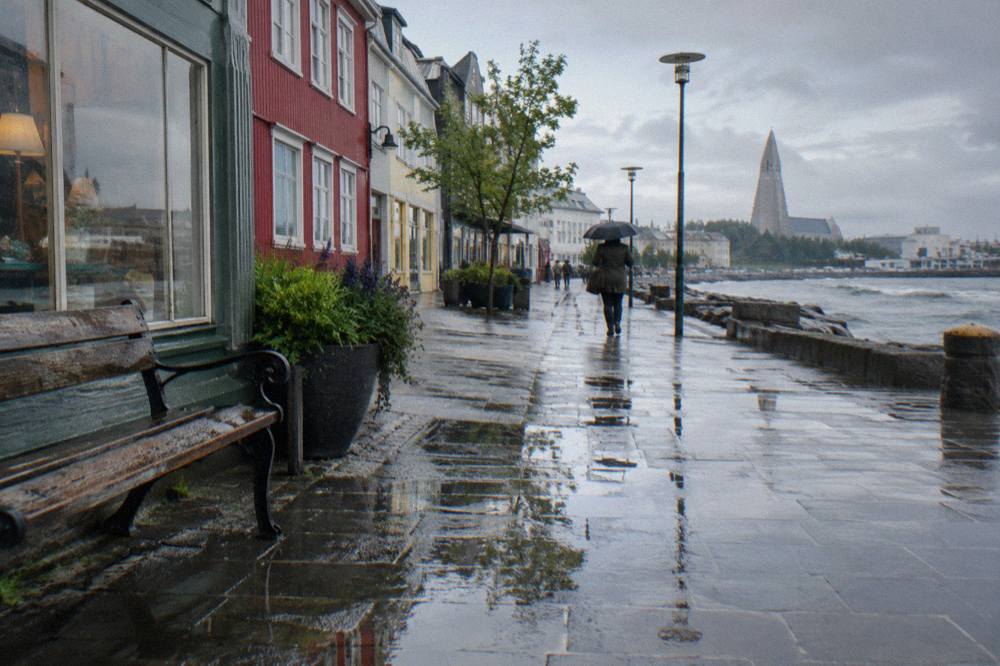
The honest caveat is winter footing. Ice underfoot is a real factor from November through March, and the city grits and clears its main walking routes but not every side street instantly. Visitors packing for a winter walk should follow the advice in our Reykjavik walking tour guide, which covers studded footwear and layering in detail. Rain also falls on 9 to 15 days in a typical month, so a shell jacket lives in the daypack. None of this argues against walking; it argues for walking prepared, which is a different thing.
Walking is not just the cheap option, it is also the one that matches how the city is built. Reykjavik's centre rewards slow movement: the street art changes block by block, the cats of the downtown residential streets are a local fixture, and the harbourfront path west toward Grandi is flat, wind-exposed and quietly beautiful. A guided small-group walking tour, from $50.08 per person and rated 4.9 across 5,260 reviews, covers this same core in about two hours with a local interpreting it, which suits a first afternoon. The self-guided walking tour itinerary does the same ground for free if you would rather go at your own pace and read as you go.
For anything timed or distant, walking alone breaks down in three places: the pools and park at Laugardalur, about 3 kilometres east of the centre; Árbær Open Air Museum, further southeast; and the perimeter attractions along the Grandi peninsula in a steady headwind. Those are bus, bike or loop-bus territory. Grandi deserves special mention because it looks close on the map and feels long in a January wind: the peninsula stretches the harbour district into a flat expanse where the two museums at its far end sit a short walk from the Harpa concert hall along the waterfront.
How Does The Hop-On Hop-Off Bus Fit In?
The hop-on hop-off bus runs a single loop of Reykjavik's main sights on a 24 or 48-hour ticket, from $53.49 per person, with departures roughly every 45 minutes in the winter schedule from about 9:30 to a last departure at 16:15 from Harpa, and a full loop of about 80 to 85 minutes. It suits visitors who want the perimeter without planning bus routes.
The service operates daily except for a suspension from 2 March to 23 May 2026, with an audio guide in eight languages. The concept is standard: stay on for the full loop as a cheap orientation circuit, or step off at any stop and catch a later bus on the same ticket. The bus loops through the city, so check the live listing for the current route and stops, which is exactly the ground walking struggles to cover. The 48-hour version suits a slower trip where you spread the stops across two days rather than racing the clock.
Two honest cautions come with it. First, the loop is a sightseeing circuit, not a commuter service: intervals of 45 minutes mean it beats walking only for the long legs, and a service interruption can strand a plan, so check the operator's status on the day. The service has had seasonal pauses before, including a suspension that ran from early March to late May in 2026, so a spring visitor should verify it is running before building a day around it. Second, the 2026 winter schedule ends mid-afternoon, and in late October the last departure at 16:15 lands before dark, so this is a daytime tool. Evening plans still belong to walking or a taxi. The full picture, including how the ticket compares with the City Card, is in our Reykjavik hop-on hop-off bus guide.
For a like-to-like price anchor: the 24-hour hop-on hop-off ticket from $53.49 sits close to a 24-hour Reykjavik City Card at 6,100 ISK, and the City Card throws in 17 museums, 8 pools and the Strætó buses, per the official card page at Visit Reykjavik. If museum entries are on your list, the card usually wins; if you want the audio commentary and the fixed sightseeing loop, the bus tour wins. Cruise passengers on a single shore day lean toward the loop for exactly this reason, a timing question the cruise port tours guide covers separately.
What Does Public Transport Cost After The 2026 Changes?
A Strætó adult single fare is 690 ISK, with young people 12 to 17 and seniors 67+ at 345 ISK, disabled riders at 207 ISK and children 11 and under free. The 24-hour and 72-hour day passes were discontinued on 16 July 2026 and replaced by fare capping: you never pay for more than 3 rides a day or 9 a week at adult fare.
That fare-capping change matters for visitors. Under the old system a day pass paid for itself after a few rides; now the card system does the arithmetic automatically, so there is nothing to buy in advance and nothing to optimise. Tap a contactless card or the Klapp card on boarding and the cap applies on its own. The 30-day pass at 12,000 ISK is aimed at residents and rarely makes sense for a short visit. If you have an old guidebook recommending a day pass, that advice is simply out of date now, and the capped system is more generous than the pass it replaced for anyone riding three or fewer times a day, which covers nearly every visitor pattern.
| Strætó fare type | Price | Notes |
|---|---|---|
| Adult single | 690 ISK | Contactless or Klapp, capital area only |
| Young 12-17 / senior 67+ | 345 ISK | Half fare |
| Disabled rider | 207 ISK | With valid card |
| Child 11 and under | Free | Free of charge |
| Night bus single | 690 ISK | No discounted fares |
| Fare cap | Max 3 rides/day, 9/week | Automatic, replaces day passes |
The official fare table lives on the Strætó pricing page, and it is worth a glance before arrival because the operator adjusts prices periodically. One reduction to plan around: Strætó has announced reduced service on some capital-area routes from 1 December 2026, so late-winter visitors should expect slightly thinner frequency on minor lines.
Practically, the buses you are most likely to ride are the ones along Laugavegur and out to Laugardalur, and the airport route 55, which the City Card pointedly excludes. Buses accept contactless payment directly, so a foreign card works and no local ticket is needed. Announcement quality and stop visibility are adequate but not lavish; a maps app tracking your position against the stop names is the normal approach for a first visit. The night bus runs at the same 690 ISK fare with no discounts, which matters on a weekend when the bars empty, though most visitors staying central will simply walk home instead.
When Do Bikes And Scooters Make Sense?
E-bikes and scooters make sense on Reykjavik's flat, traffic-calmed waterfront paths, when the weather is dry and the wind is low. The city has no protected lane network to speak of beyond the coast path, so the e-bike's real home is the shoreline: the ride from the Old Harbour west along Grandi and out toward the Seltjarnarnes lighthouse is the standout stretch.
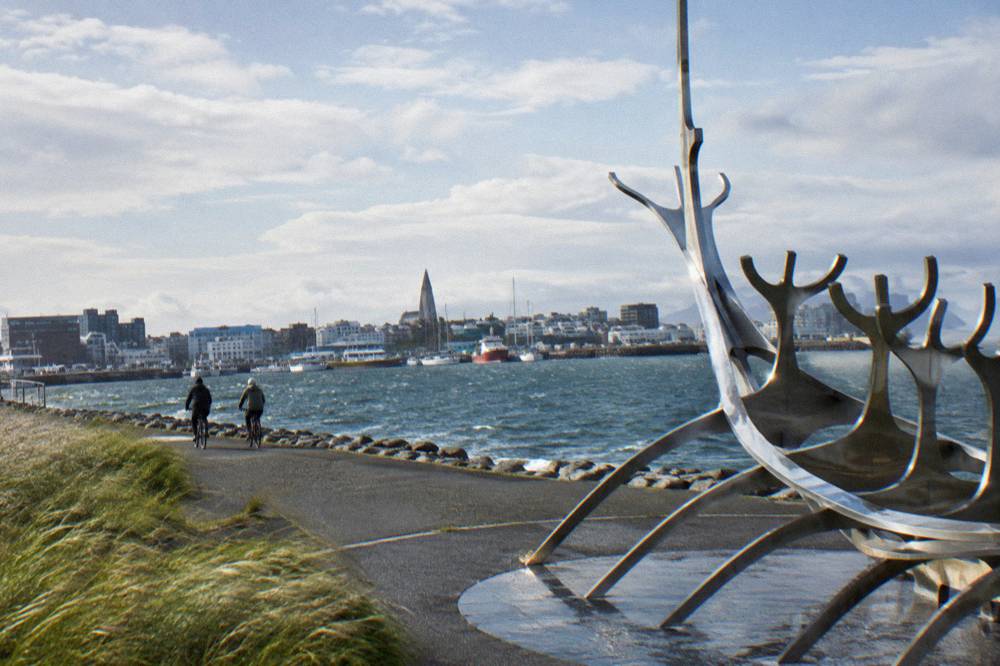
A guided e-bike tour of the coast and city, from $134 per person for about two hours, packages that ride with a guide and a route; it carries 7 reviews so far, too few for a dependable rating, so read the operator's description closely on the booking page and weigh it as a route choice rather than a reviewed product. Independent rental exists too, and the same wind caution applies: a 15 kilometre-per-hour headwind turns a pleasant flat ride into a grind, and Reykjavik gets those regularly. The e-bike part of the equation matters more here than in most capitals, because the motor flattens both the rare hill and, more importantly, the constant coastal headwind.
Scooters are the spontaneous option. Hopp operates in the city at 115 ISK to start plus 45 ISK per minute, so a ten-minute ride costs roughly 565 ISK, and riders must be 18 or older, per the operator's Reykjavik page. For a one-way hop from a restaurant back to a hotel, that undercuts a taxi. For anything longer, the per-minute meter passes the bus fare quickly, and riding a small-wheeled scooter on icy winter pavement is a poor idea by any measure.
Seasonal honesty: cycling in December means darkness, salt spray and ice, and the tour operators that offer summer city rides thin out or pause. The winter solstice brings only about 4 hours and 7 minutes of daylight, which squeezes any ride into a narrow midday window even before the weather is considered. From May through September, when daylight stretches past 18 hours in late June, the bike and scooter answer is genuinely competitive. From November through March, treat both as fair-weather backups to the bus and your own feet.
Do You Need A Car Inside Reykjavik?
No, a car is unnecessary for staying inside Reykjavik, and it is often a burden there: central parking is metered and scarce, one-way streets confuse, and winter storms close roads without warning. A car pays off only for day trips beyond the city, and even then the classic excursions run as tours with transport included.
The arithmetic on the airport run shows the shape of the problem. Flybus from Keflavík to the BSÍ terminal costs 3,999 ISK one-way per adult, about 5,299 ISK with a hotel drop-off leg, youth 6 to 15 from 1,999 ISK and ages 1 to 5 free, per the official Flybus price list. A rental car for the same job costs more per day than either, sits idle for the whole city portion of the trip, and adds airport navigation to the arrival. Odd-sized luggage costs an extra 1,500 ISK on the bus, which is worth knowing if you are travelling with ski gear or a bike box. For most itineraries the combination of Flybus in, feet and Strætó in the city, and Flybus out is the cleanest loop.
Where a car earns its keep is the open country: the Snæfellsnes peninsula, the south coast waterfalls, the highland routes in summer. But those are exactly the drives that tour operators run daily from Reykjavik with a guide who knows the weather calls, and winter driving conditions are genuinely serious, with winter tyres mandatory on Icelandic roads from 1 November and icing on exposed sections of the main routes a regular autumn event. If the whole trip is a city stay with one or two excursions, booking the excursions with transport beats renting for the week.
How Do Guided Tours Work As Transport?
Guided tours are not transport in the commuter sense, but they solve a specific movement problem: they carry you to the places beyond walking range while explaining them, with no route planning on your part. A walking tour covers the core, a bus loop covers the perimeter, and an e-bike tour covers the coastline, so the format you pick depends on which geography you want covered.
This is the framing that surprises visitors who arrive thinking "transport" and leave thinking "tour". The city's guided products map almost one-to-one onto its movement problems. Want the centre decoded? A two-hour small-group walk from $50.08 does that. Want the outer sights without bus timetables? The 24 or 48-hour loop from $53.49 does that. Want the coastline? The e-bike ride does that. A guided walk or a hop-on bus from Reykjavik City Tours spares you learning the bus map on day one.
The reverse also holds: take a guided format on your first day and you often need less transport afterward. A good two-hour walk fixes the city's mental map, the landmark names and the distances in your head, and the rest of the stay becomes walkable by confidence rather than by planning. Visitors combining a short layover with sightseeing get this double benefit; the layover and stopover guide works through the timing.
| Option | Typical cost | Best for | Watch out for |
|---|---|---|---|
| Walking | Free | The 2 km historic core | Ice underfoot Nov to Mar |
| Strætó bus | 690 ISK single | Pools, Laugardalur, museums | Frequency thins on minor routes |
| Hop-on hop-off loop | From $53.49 for 24 h | Perimeter sights, orientation | 45-minute intervals, ends 16:15 in winter |
| Guided small-group walk | From $50.08 | First-day orientation | Book ahead in peak summer |
| E-bike tour | From $134 | Coastline in fair weather | Wind and winter ice |
| Hopp scooter | 115 ISK + 45 ISK/min | One-way short hops | 18+, meter climbs fast |
| Taxi | Metered | Late-night returns | Priciest per kilometre |
One planning note that cuts across every row of that table: tipping is not expected or customary in Iceland, so no option carries a hidden gratuity calculation, and tap water is safe everywhere, so there is no reason to budget for drinks while moving around. Small things, but they remove two of the usual travelling frictions. Another is payment: the country runs on card almost universally, and every option listed above takes contactless, so a wallet can stay in the hotel safe for the whole trip.
Pull it together and the decision tree is short. Staying central and curious: walk, and add one guided walk the first day. Staying longer or wanting pools and museums: add the City Card, and the buses come with it. Wanting the perimeter without a plan: the hop-on hop-off loop. Fair-weather coastline: the e-bike. Late-night one-way hops: a scooter or a taxi. A car, inside the city, is the one option you can safely skip.
Common Questions About Getting Around Reykjavik
What Is The Best Way To Get Around Reykjavik?
Walk the compact centre, and use Strætó buses or the hop-on hop-off loop for anything beyond it. A single bus fare is 690 ISK with automatic daily and weekly fare capping, and the 24-hour Reykjavik City Card at 6,100 ISK bundles buses with museums and pools. A car is unnecessary for a city stay.
Is Reykjavik Walkable Without Using Transport?
The historic core, roughly 2 by 1.5 kilometres between Tjörnin and the Old Harbour, is fully walkable in 20 to 30 minutes end to end. Laugardalur, Árbær and parts of Grandi sit beyond comfortable walking range, so most visitors add the bus or the loop bus for those.
How Much Does The Bus Cost In Reykjavik?
A Strætó adult single is 690 ISK, young riders 12 to 17 and seniors 67+ pay 345 ISK, disabled riders 207 ISK, and children 11 and under ride free. Day passes are no longer sold; instead contactless fares are capped at 3 rides per day or 9 per week automatically.
Do I Need A Car In Reykjavik As A Tourist?
Not for the city itself: parking is metered and scarce in the centre, and winter storms complicate driving. A car helps only for independent day trips into the countryside, and winter tyres are mandatory on Icelandic roads from 1 November. Many visitors use Flybus from the airport and never rent at all.
Is The Reykjavik City Card Worth It For Getting Around?
Partly. Its 24-hour version at 6,100 ISK includes unlimited Strætó buses plus entry to 17 museums and 8 pools, so it usually beats paying separately once two or three entries are planned. It excludes airport route 55, and if you only need one or two bus rides, capped single fares are cheaper.
Are Scooters And Bikes Practical In Reykjavik?
From May to September, yes, especially on the flat coastal path to Grandi. Hopp scooters cost 115 ISK to start plus 45 ISK per minute and require riders to be 18 or older. In winter, ice, darkness and wind make both a poor choice except on dry, calm days.