What Is The Most Famous Building In Reykjavik?
Hallgrímskirkja is the most famous building in Reykjavik, and this guide covers why, how to visit the tower, and the walking tours that pass it.
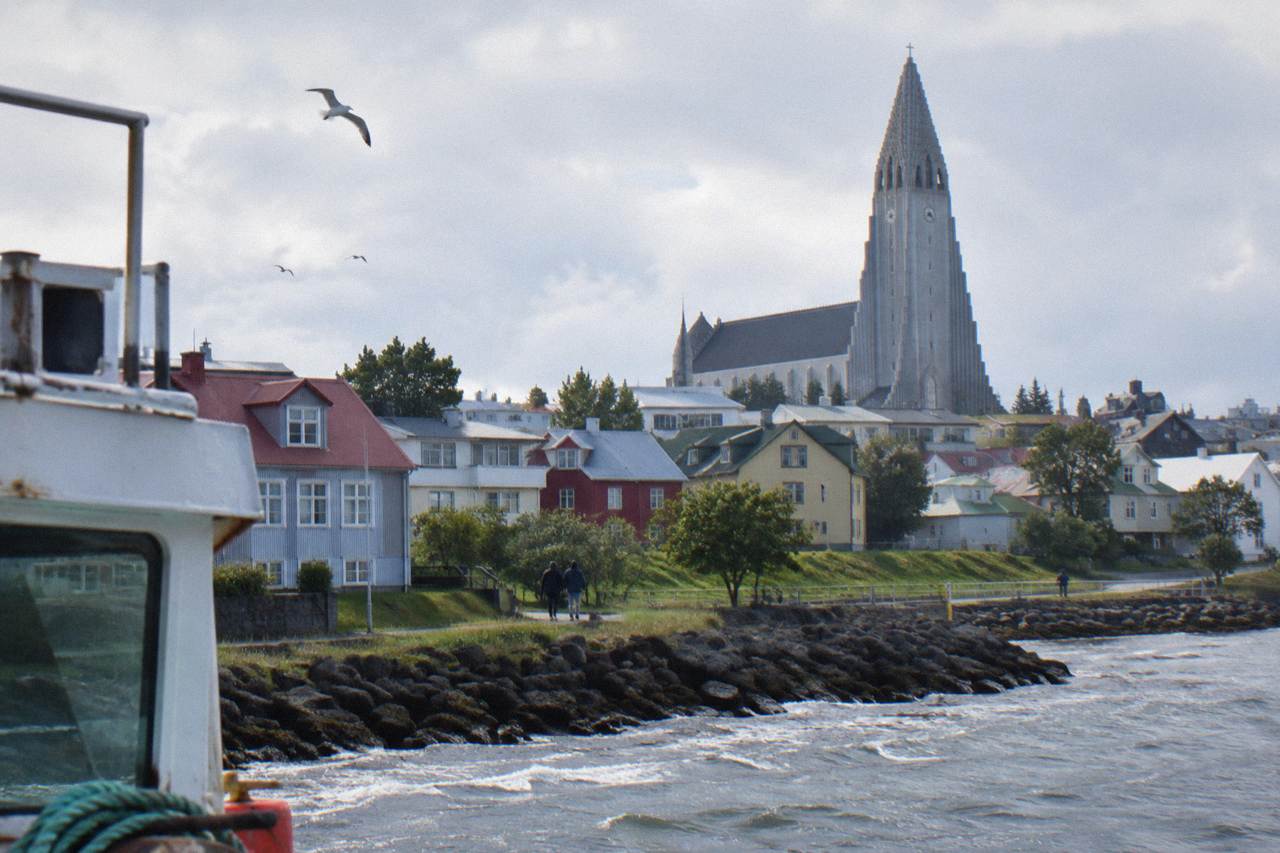
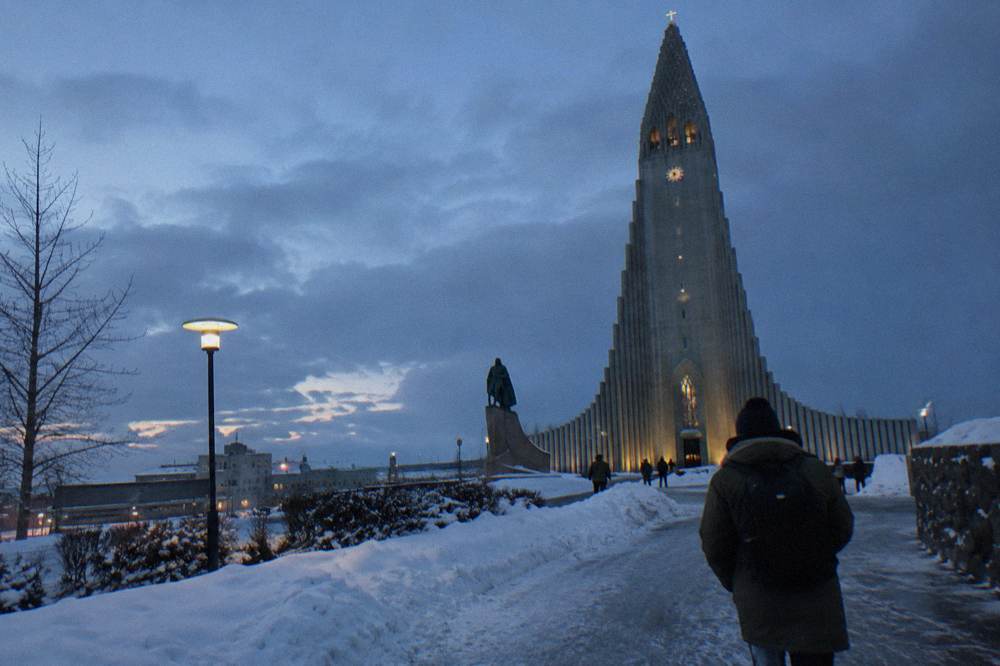
The most famous building in Reykjavik is Hallgrímskirkja, the Lutheran parish church that stands at the top of Skólavörðuholt hill in the city centre. It is the tallest church in Iceland and the single structure every visitor photographs, its stepped concrete tower visible from almost every street downtown and from the harbour below. Nothing else in the capital competes with it for recognition. Locals argue about whether it is beautiful, tourists rarely leave without a picture of it, and its tower doubles as the best viewing platform in the city centre. The church is both an active place of worship and the landmark by which people navigate downtown, since the main shopping street, Laugavegur, runs downhill from it toward the old town.
The building owes its fame to three things working together: scale, position, and silhouette. Reykjavik has almost no high-rise construction in its historic core, so a tower of this size on the district's highest point reads as enormous against two- and three-storey streets. The silhouette, with its sweeping basalt-column-inspired wings on either side of the tower, is unlike any other church in Europe, which is exactly why it travels so well in photographs. And the position, at the head of Skólavörðustígur, gives every walker approaching from below a forced perspective shot that has become one of the defining images of the city.
It is worth being precise about the name, because visitors frequently mangle it. Hallgrímskirkja means "the church of Hallgrímur," honouring the Icelandic poet and clergyman Hallgrímur Pétursson, best known for his Passion Hymns. Icelanders usually shorten it in speech. The name of the street below, Skólavörðustígur, is itself a mouthful, so most people simply say "the big church" and everyone understands.
A guided walking tour is still the simplest way to get the landmark explained rather than just admired from the sidewalk.
The church took decades to build, and the tower was completed before the rest of the building, which is why older photographs of Reykjavik show a finished spire attached to a construction site. That long gestation is part of why the building looks the way it does: the design belongs to the mid-century moment when Icelandic architects were searching for a national style drawn from the country's landscape rather than imported European traditions. The result divides opinion at home and wins admiration almost everywhere else.
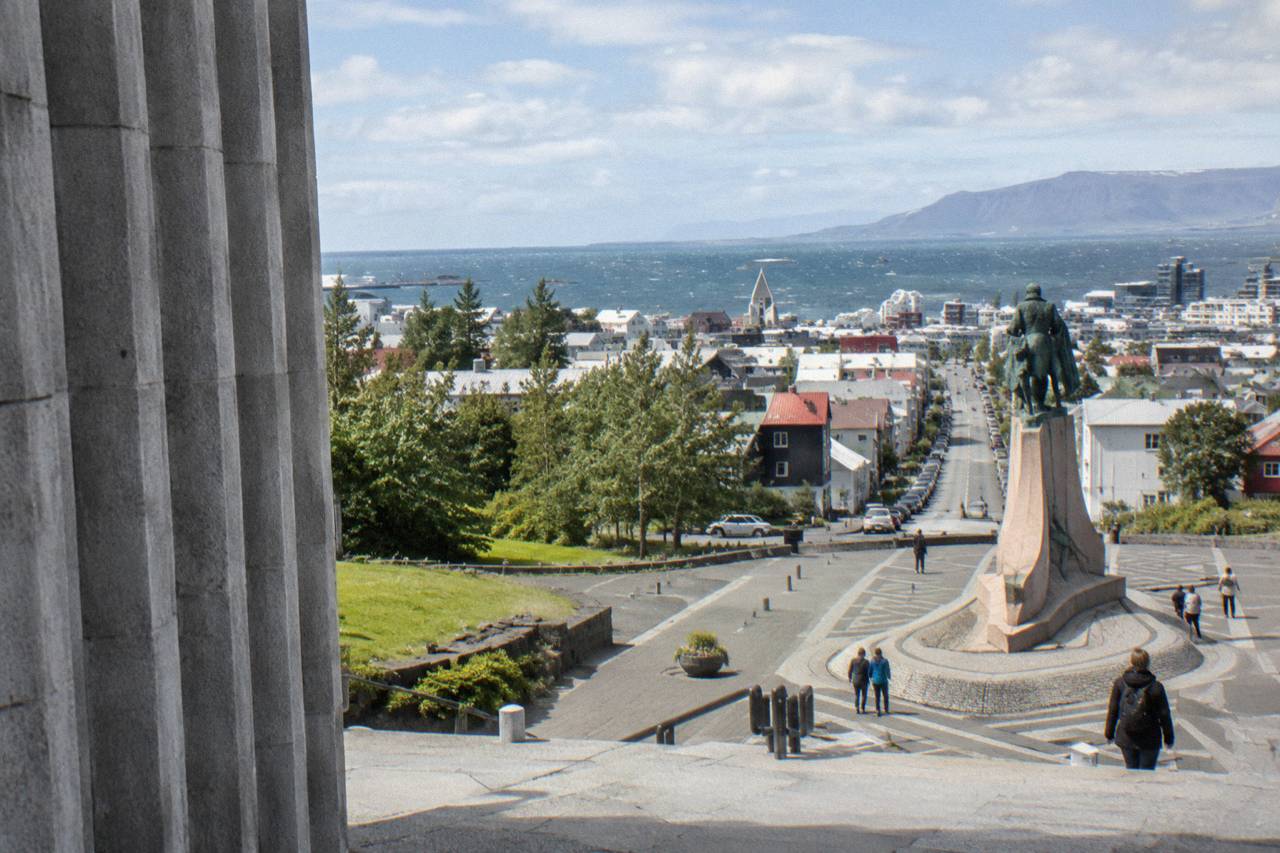
One practical note before the detail: the church sits at the top of a hill, and every approach from the old town is uphill. It is a short climb, a few minutes from Laugavegur, but worth knowing if you are planning a tight schedule or travelling with anyone who struggles with slopes. The reward is that from the church steps the whole downtown grid falls away below you, which makes it the natural first or last stop of any walk through the centre.
Why Hallgrímskirkja Dominates The Reykjavik Skyline
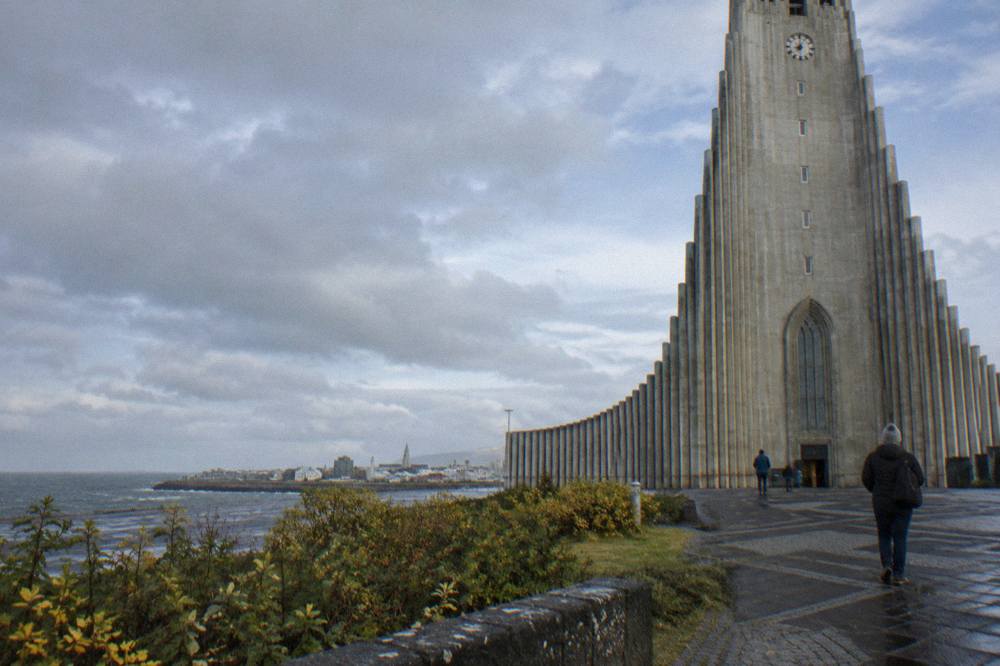
Hallgrímskirkja dominates because of a deliberate planning decision: it was built on Skólavörðuholt, one of the highest points in the city centre, in a district where height limits keep almost everything else low. The tower's basalt-inspired form, drawn from the hexagonal column formations found in Icelandic lava fields, gives it a shape no other capital church shares. The effect is architectural and geographic at once. You cannot stand in downtown Reykjavik and lose sight of it for long; the tower reappears between buildings at the end of streets, above rooftops near the harbour, and at the head of the long pedestrian approach from below.
The designer took his inspiration from a very specific place: Svartifoss, the waterfall in Skaftafell ringed by dark basalt columns, whose geometry the church's side wings echo in concrete. Whether that translation of geology into architecture succeeds is one of Iceland's long-running domestic debates. Some residents consider the grey concrete facade severe, even grim in flat winter light. Others regard it as the most successful Icelandic building of its century precisely because it looks like nowhere else. Visitors, on the whole, come down on the approving side, and the sheer volume of photographs taken from Skólavörðustígur each year is the evidence.
Inside, the surprise for most people is the contrast. The exterior is heavy and monumental; the interior is a bright, austere nave, clean white space with a slender central pillar and a large organ above the entrance. The church also functions as a concert venue, and organ recitals are held there regularly, which is worth checking on the church's own site if you would like to hear the space rather than just see it. Access to the nave is free, subject to closures during services, concerts and ceremonies.
A detail that many visitors miss: the statue in front of the church is Leifur Eiríksson, the Norse explorer who reached North America centuries before Columbus. The statue was a gift from the United States, marking the Icelandic parliament's millennium. So the most photographed square metre in Reykjavik actually pairs two claims to fame: a church that took decades to finish and a Viking who found a continent. Some city walking tours count Hallgrimskirkja among their stops, because the story of the gift, and of the statue's stance facing the sea, opens up the whole subject of Iceland's sense of its own history.
The official information on hours, services and tower access is published by the church itself on its opening-hours page, which is the right source to check before a visit since closures change with the church calendar.
Should you build your walk around seeing it with someone who knows the stories behind it? That is the question most visitors end up asking, and the honest answer is that a good guide turns a photo stop into the best hour of the day.
The small-group walk linked above is the city's most reviewed guided walk, rated 4.9 across 5,260 reviews, from $50.08 per person for roughly two hours. It is the option that spends the most time on exactly the material this article can only summarise: the design argument, the statue, the hill, and the streets that grew around all three. Free cancellation terms are listed on the booking page, so locking in a time costs you nothing if your plans shift.
How To Visit The Tower And The Church Interior
The church nave is free to enter during opening hours, and the tower is ticketed, sold only at the church shop on site, with no advance booking possible. In winter the church keeps hours of 10:00 to 17:00 with last tower entry at 16:45, and access is restricted during services and events, so check the church's site on the day. Tickets for the tower are sold only in the church shop, at the posted price, and no advance booking is taken.; treat the figure on the door as the only reliable one. What is reliable is the mechanics: buy at the shop, take the lift most of the way up, climb a short flight of stairs, and step out onto a narrow viewing deck that circles the tower.
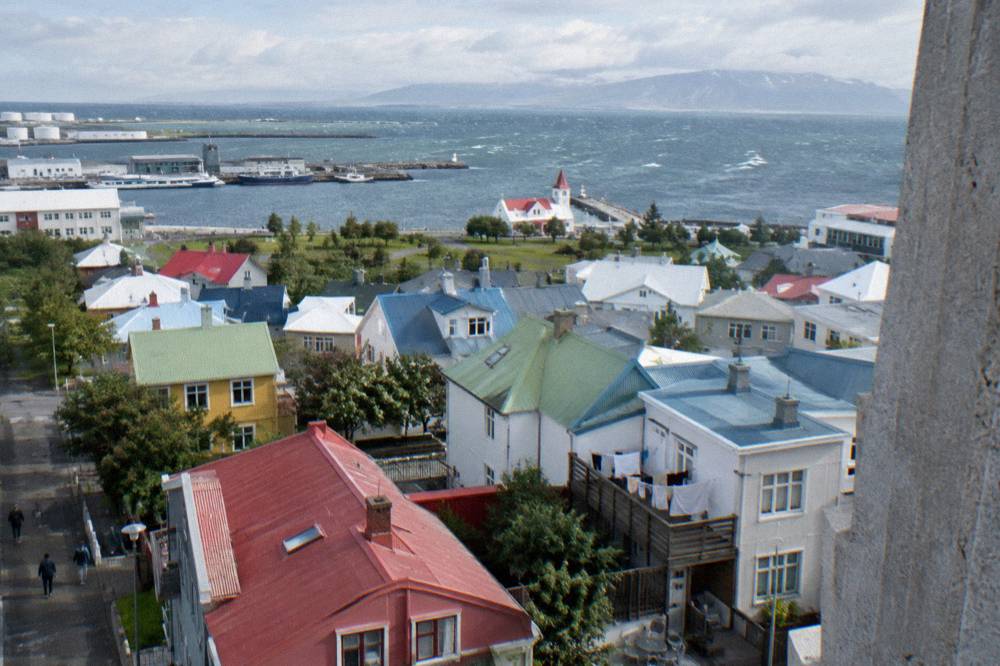
The view justifies the queue. From the deck you look down the length of Skólavörðustígur toward the old harbour, with the coloured rooftops of the centre laid out in a grid and, on clear days, the Snæfellsnes peninsula visible across the bay. Looking inland you can see the moorland that begins almost immediately at the city's edge, a reminder of how small the capital is. The deck is enclosed by mesh rather than glass, which keeps photographs honest but means you shoot through a grid; wide shots of the skyline come out fine, close detail less so.
Timing matters more than most guides admit. The church closes to tourists during worship, and the daily schedule includes regular services and events, with the nave and tower both restricted. Midweek mornings around opening time tend to be the quietest for both the interior and the lift. Organ recitals, when scheduled, are the one event worth rearranging a day for: hearing the organ in that nave is a different experience from looking at it.
For anyone mapping a day around the visit, the practical anchors look like this:
| Practical detail | What to expect |
|---|---|
| Nave entry | No fee listed; free access during opening hours |
| Tower ticket | Sold only at the church shop, no advance booking; current price on site |
| Winter hours | 10:00 to 17:00, last tower entry 16:45 |
| Closures | Nave and tower restricted during services, concerts and ceremonies |
| Getting there | On foot up Skólavörðustígur from the centre, a few minutes' climb from Laugavegur |
Which Walking Tours Pass Hallgrímskirkja
Nearly every guided city walk includes Hallgrímskirkja, usually as a stop near the start or the end, because the hilltop position makes it a natural anchor for a route through the centre. The most reviewed option, a small-group walk rated 4.9 across 5,260 reviews from $50.08, treats the church as one of its principal stops alongside the harbour and the old town streets. For most visitors this is the sensible way to see the building: you arrive with the story of the long construction and the basalt columns already in hand, and the church stops being a silhouette and becomes an argument about what Icelandic architecture should be.
The format differences between the walks matter more than the route, since almost all of them cover the same core streets. Small-group walks cap numbers and give the guide room for questions; larger-format walks cost roughly the same, with the main options sitting between $50.08 and $52 per person, and move at a steadier clip. Duration sits around two hours for most, which pairs well with a tower visit afterwards: finish the walk at the church, buy the tower ticket at the shop, and go up while the guide's commentary is still fresh. To explore the city on foot, compare guided walks on Reykjavik City Tours.
If your interest in the building is specifically architectural or historical rather than general, read the tour descriptions carefully before booking, because depth varies. Some walks give the church ten minutes and a photo stop. Others spend the better part of half an hour on the design, the statue and the hill, and those are the ones worth choosing if the church is the reason you are walking at all. Where a description does not say, check the booking page for the stop list, since operators detail their routes there.
For planning the wider day, the Reykjavik walking tour map guide lays out the streets between the church and the harbour, and the Hallgrímskirkja visit guide goes deeper on the tower and the interior than this article does.
Other Landmarks Worth Knowing In Reykjavik
After Hallgrímskirkja, the buildings most visitors name are Harpa, the glass concert hall on the harbour, and Perlan, the former hot water tanks turned museum and observation deck on the hill above the city. Both are famous, but neither matches the church for instant recognition, and neither occupies the city centre in the same way. Harpa's honeycomb glass facade, lit from within on dark winter afternoons, is the modern counterpoint to the church's grey concrete: one building looks back at Iceland's geology, the other at its light. Harpa sits at the old harbour, a downhill walk of roughly fifteen minutes from the church steps, and the two make a natural pair for a photographer's route.
Perlan works differently. It stands on Öskjuhlíð hill with a glass dome set atop six hot water tanks, a piece of infrastructure turned into an attraction, visible from across the city but experienced as a destination rather than a pass-by. Check Perlan's own website for current admission prices before your visit.; check Perlan's own site before planning a visit. The same caution applies to the guided tours of Harpa: they run at scheduled times, and the current price is on the venue's site.
The Grandi harbour district adds a third cluster. The Saga Museum, at Grandagarður 2, is a wax-figure walk through Icelandic saga history in a self-guided format with an audio guide, typically taking 45 to 60 minutes, open 10:00 to 17:00 daily with holiday exceptions; admission is 4,000 ISK for adults, 3,400 ISK for students and seniors, 1,200 ISK for children aged 6 to 12, and 9,200 ISK for a family ticket, per the museum's own admission page. Whales of Iceland, the life-sized whale model exhibition nearby, charges 4,300 ISK for adults and opens 10:00 to 17:00 daily except 25 December.
For visitors stringing several of these together, the Reykjavik City Card changes the arithmetic: it costs 6,100 ISK for 24 hours, 8,500 ISK for 48 hours or 10,500 ISK for 72 hours, and covers 17 museums, eight geothermal pools, unlimited capital-area buses and the Viðey ferry, per the official Visit Reykjavik card page. Whether it pays off depends entirely on museum density; the details are worked through in the Reykjavik City Card worth it guide. Note that the card excludes the airport bus route, so it is a city tool, not an arrival tool.
Best Time Of Day To See The Church
Late afternoon in winter and early evening in summer give the church its best light, because the tower faces the setting sun across the bay and the concrete facade turns gold at the end of short winter days. In winter the visiting window is tight: on 1 November the sun rises at 09:10 and sets at 17:10, so the last tower entry at 16:45 arrives almost at dusk. By mid-November, daylight shrinks to about six and a half hours. The calculation flips in summer, when the longest day runs over 21 hours and the church can be photographed in decent light at what would be bedtime anywhere else. Mid-August to late April is also aurora season in Iceland, and the church's dark silhouette against a green sky is one of the classic northern lights shots from the capital, though sightings always depend on conditions and are never promised.
The tower deck itself argues for a morning visit in peak season, simply for queue reasons. The lift is small and the deck holds a limited number comfortably; arriving near the 10:00 opening in July means minutes of waiting rather than a half hour. In winter, crowding is rarely an issue at any hour, and the trade is the light: you may go up in blue twilight and come down in the dark.
Weather deserves respect on the deck at any season. Reykjavik's winter mean temperature hovers close to freezing, 0.8 degrees Celsius in December, with rain on 9 to 15 days a month at a millimetre or more, and the exposed viewing platform catches wind straight off the ocean. Warm layers and a windproof outer layer are not optional. The what to wear on a Reykjavik walking tour guide covers the full kit list, and the same clothing logic applies to standing on a tower deck as to walking the streets below.
One seasonal note that affects planning: from 1 November, winter tyres are mandatory on Icelandic roads, a reminder that this is a country that takes its winter seriously even in the capital. City walking itself is unaffected, but any day trip paired with your city days should be booked with operators whose vehicles and schedules are built for the season. The church, at least, is a five-minute uphill walk from the centre of town in any weather.
Getting To The Church Without A Car
The church is a walkable destination from anywhere in downtown Reykjavik, roughly five minutes uphill from Laugavegur and fifteen from the harbour, and no visitor staying in the centre needs a vehicle to reach it. For anyone based further out, capital-area buses charge a 690 ISK adult single fare, with children 11 and under travelling free. The bus system moved to fare capping in July 2026: 24-hour and 72-hour day passes are no longer sold, and instead adult fares cap at three rides per day or nine per week when paying contactless or with the Klapp card, per the operator's official pricing page. For a single visit to the church and back, a single fare each way is all most travellers need.
From Keflavík airport, the Flybus runs to the BSÍ terminal in the city for 3,999 ISK one way for an adult, or 5,299 ISK with an onward hotel leg, with the terminal a short bus ride or a 25-minute walk from the church hill. E-scooters are another option inside the city: the Hopp service charges a 115 ISK start fee plus 45 ISK per minute and requires riders to be 18 or older, workable for the flat streets though the hill up to the church defeats most riders' enthusiasm.
The simplest plan, for most visitors, is to fold the church into a walking day rather than treating it as a destination: arrive in the centre, walk Skólavörðustígur uphill through the design shops and galleries, take the church and tower first, then descend through the old town to the harbour and Harpa. That route is essentially the spine of every guided city walk, which is one reason the walks are popular, and why the ones below are worth a look before you set out on your own.
Whether guided or independent, the church rewards the same two decisions: go up the tower, and give the building more time than a photograph needs. The observation deck is the only place in the centre where the city's scale makes sense, and the nave, quiet and bright, is the only place to understand why the grey exterior causes argument and the interior does not. More on the city's landmarks and streets is gathered in the things to do in Reykjavik city centre guide, and the terrain itself is covered in how walkable is downtown Reykjavik.
Common Questions About The Most Famous Building In Reykjavik
What Is The Most Famous Building In Reykjavik?
Hallgrímskirkja, the Lutheran parish church on Skólavörðuholt hill in the city centre. It is the tallest church in Iceland, visible from almost everywhere downtown, and the building every guided walk uses as its anchor.
What Is The Most Famous Building In Reykjavík?
It is Hallgrímskirkja. The stepped concrete tower, inspired by basalt column formations, has been the capital's defining silhouette for decades.
Can You Go Up The Hallgrímskirkja Tower?
Yes. A lift and a short stair flight reach an enclosed viewing deck. Tickets are sold only at the church shop on site, with no advance booking, and the current price is posted there. Winter hours run 10:00 to 17:00 with last tower entry at 16:45.
Is Hallgrímskirkja Free To Enter?
The nave is free to enter during opening hours, subject to closures for services, concerts and ceremonies. Only the tower carries a ticket, bought on site.
What Other Buildings Should You See Near The Church?
Harpa concert hall on the harbour, roughly fifteen minutes' walk downhill, and Perlan on the hill above the city are the next most recognised. The Saga Museum in the Grandi district charges 4,000 ISK for adults and opens 10:00 to 17:00 daily.
Do Walking Tours Include Hallgrímskirkja?
Almost all guided city walks include it, typically as a major stop. The most reviewed small-group walk, rated 4.9 across 5,260 reviews, costs from $50.08 for about two hours and covers the church along with the harbour and old town.