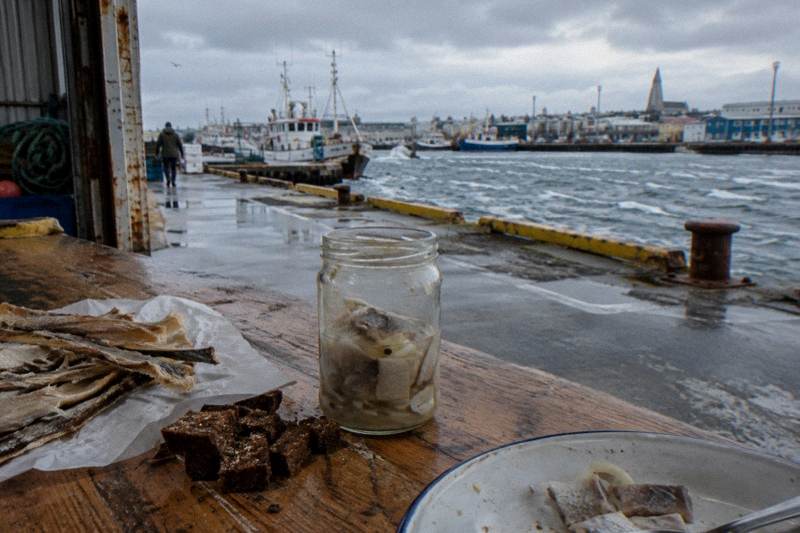
Where Do Locals Eat In Reykjavik?
Where Reykjavik locals actually eat: the food halls, the harbour stands, the neighbourhood cafés and weekend routines, plus the food tours that walk you straight into them.
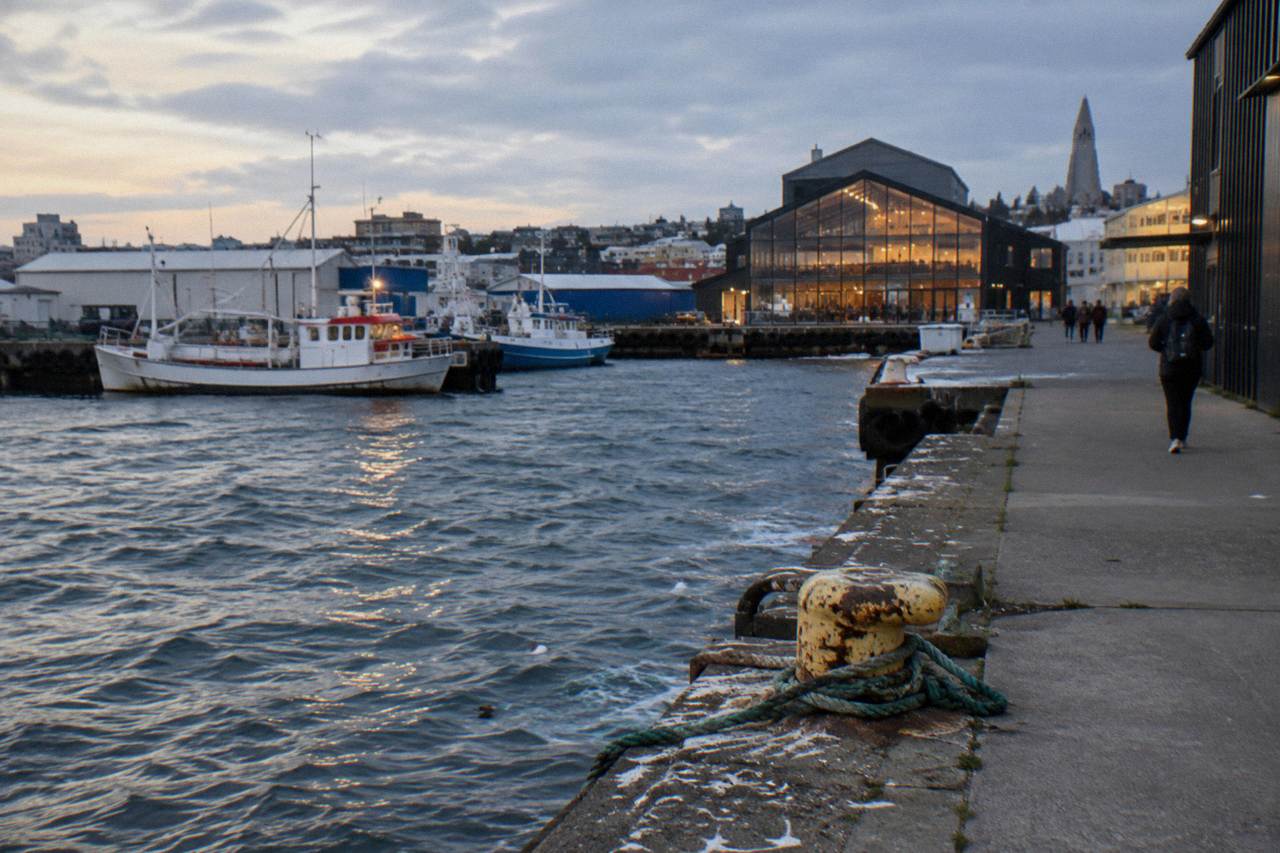
Locals in Reykjavik eat mostly at Hlemmur Mathöll and Grandi Mathöll, the city's two harbour and bus-station food halls, at the long-running hot dog stands around the old harbour, and at small neighbourhood restaurants and cafés on the edges of downtown, away from the main shopping street. Weekends shift toward long brunches and evening grills, and the pool cafeteria is an underrated everyday stop.
The honest answer starts with a correction to the picture most visitors arrive with. Reykjavik residents do not eat dinner on the main shopping street every night. They eat where the parking is easy, the portions are reasonable and the room is full of Icelandic conversation, which usually means one of the food halls, a standalone bistro a few blocks off the tourist spine, or a counter seat near the harbour. The city is small enough that "where locals eat" is a walkable question, not a drive across town, and most of it sits within twenty minutes on foot of the centre.
Two structural things shape the local food scene. First, restaurant alcohol is expensive, so a lot of social eating happens in the early evening or at weekend brunch rather than over long dinners. Second, the food hall arrived in Reykjavik with Hlemmur Mathöll, a converted main bus terminal, and it changed habits quickly: a group of friends can now each order from a different vendor and share one long table, which suits both the weather and the wallet. The old harbour followed with Grandi Mathöll, and between them the two halls anchor most casual local eating in the capital.
For visitors, the fastest route into this world is not research but company. A guided food walk moves you through five or six of these places in one afternoon, with a guide who can say which counter the cooks themselves queue at. The Reykjavik Food Lovers Tour, about 3 hours and rated 4.8 across 1,144 reviews, from $143.41 per person, is built exactly around traditional Icelandic food in the places locals use it, and check availability if that afternoon shape fits your trip. The broader question of what to order once you are inside those rooms is covered in the separate guide to what to eat in Reykjavik.
Which Food Halls Do Reykjavik Locals Actually Use?
Two food halls carry most of the local week: Hlemmur Mathöll on the eastern edge of downtown, open daily from around 11:00 into the late evening, and Grandi Mathöll in the old harbour district at Grandagarður 16, open daily 11:00 to 21:00. Both are licensed, both seat communally, and both mix Icelandic vendors with international kitchens run by residents.
Hlemmur Mathöll is the pioneer. It moved into the shell of Reykjavik's main bus terminal, and the conversion kept the big glass frontage, so the room is bright even in a November afternoon that ends at four. The vendor list shifts, but the pattern holds: a serious bistro counter, a pizza operation, a grill, an Asian kitchen or two, and a gelato stand doing steady trade with families. Locals use it the way a city uses a good market hall, for a fast weekday lunch, for a pre-drink bite, and for the specific Icelandic ritual of meeting eight people at once without booking anything. Hours run roughly 11:00 to 22:00 or 23:00 daily, with individual vendors setting their own last orders, and the hall closes on occasional maintenance days, so check before making a special trip.
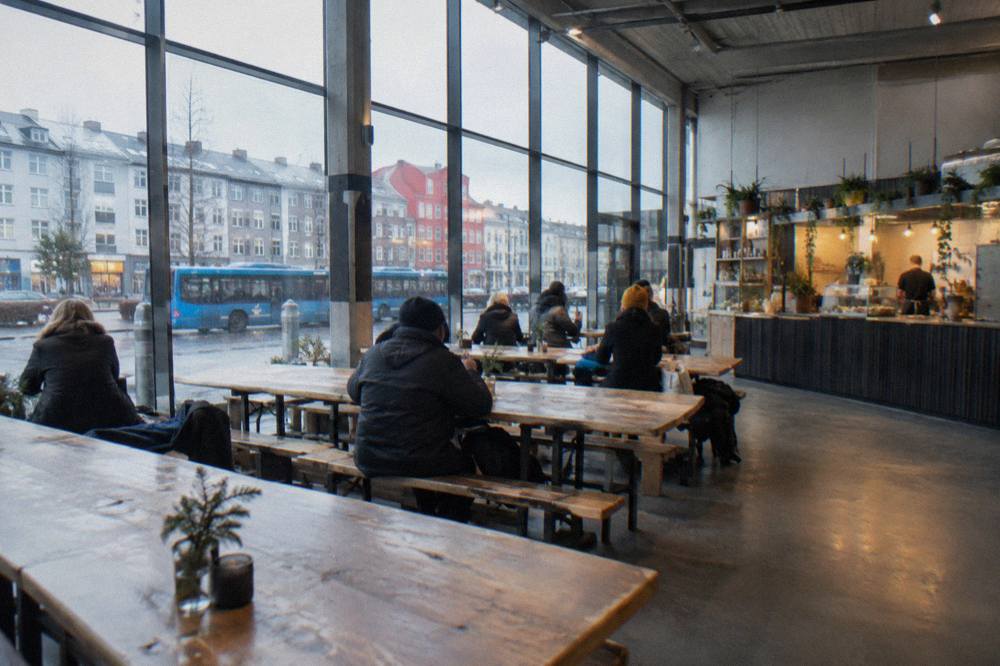
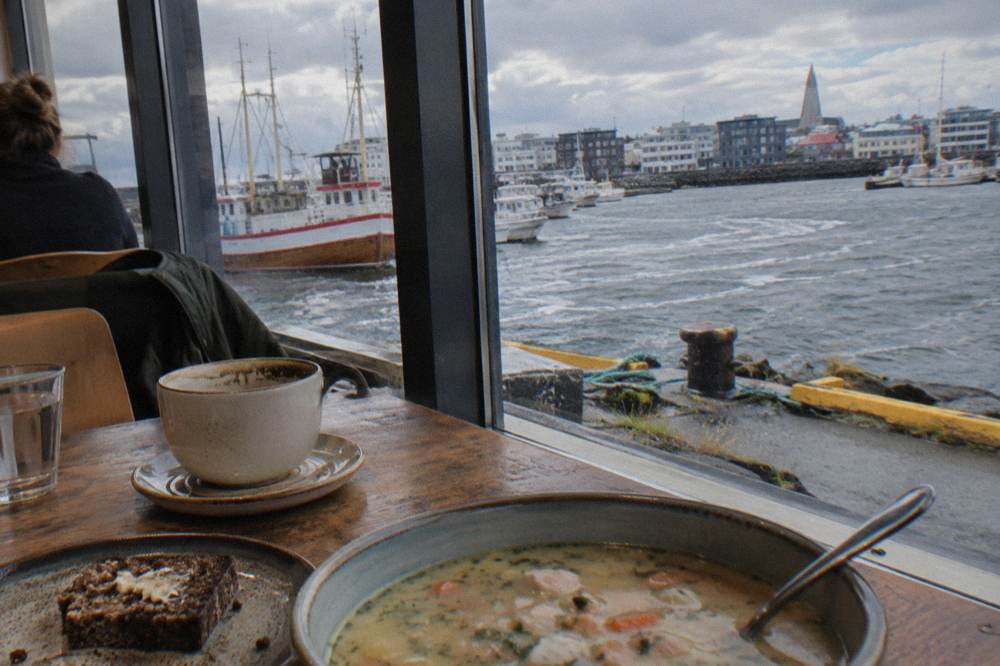
Grandi Mathöll, out in the harbour district, is the saltier sibling. The building sits among fish-processing sheds a short walk from the old harbour, the seafood counters are the point, and the communal tables look out over the water. It runs 11:00 to 21:00 daily, with closures over the main holiday dates in late December and the New Year. Weekend afternoons tend to skew local: kids on gelato, parents on soup and flatbread, and the odd table of anglers arguing over a laptop. Between them, the two halls answer most of the "where do people actually go on a Tuesday" question, and both are inside a 25 minute walk of the city centre.
| Food hall | District | Daily hours | Strength | Local crowd |
|---|---|---|---|---|
| Hlemmur Mathöll | Edge of downtown, former bus terminal | Roughly 11:00 to 22:00 or 23:00 by vendor | Group convenience, late hours, bistro and pizza counters | Weekday lunches, pre-drink bites, families |
| Grandi Mathöll | Old harbour district, Grandagarður 16 | 11:00 to 21:00 | Seafood counters, harbour views | Weekend afternoons, neighbourhood regulars |
A practical note on money, since food halls are where the trip budget either holds or breaks: Iceland is genuinely expensive, and the details are worth a separate read in is Reykjavik very expensive. At a hall, a main and a drink at one counter is a normal, contained spend. At a full-service dinner restaurant downtown, the same calories can run to double once drinks and service are counted, even with tipping not expected anywhere.
The tours above are the compressed version of the same territory. The Reykjavik Food Lovers Tour is the traditional-food walkthrough, the six-tastings classic tour is the dish-by-dish sampler, and the Street Food Walking Tour, from $136.58 and rated 4.9 across 40 reviews, leans toward the counter food and casual rooms this article is really about. Both are walking format, both run about three hours, and both keep you on foot rather than seeing the city through a bus window.
Where Does The Harbour Crowd Eat?
Around the old harbour, eating is standing up: Bæjarins Beztu Pylsur, the hot dog stand running since 1937, is the anchor, joined by the Grandi district's soup counters, fish-and-chips rooms and Grandi Mathöll itself. This is where fishing crews, harbour office workers and tour boat staff take their breaks, and the queues mix all three with visitors.
The hot dog stand deserves its fame precisely because locals never stopped using it. A pylsa with everything, the crispy onion, raw onion, remoulade and sweet mustard combination, is still a standard post-swim or mid-shift meal for people who work in the area, and the stand's location by the old harbour means the line at noon is as likely to be harbour staff as tourists. Eating standing up, in any weather, is an Icelandic skill, and this is where it is practised.
Inside the Grandi district the tone shifts to seafood shacks and soup rooms. The pattern to look for is simple: small menus, one or two things done properly, written up in Icelandic first. Lamb soup and fresh fish soup are the two workhorses, and a bakery flatbread stuffed with smoked lamb or fish appears on most counters in some form. The district is also where the morning fish market trade historically fed the rooms around it, and some of those relationships between boat and kitchen still exist, which is why fresh fish from the old harbour appears on menus all over the city.
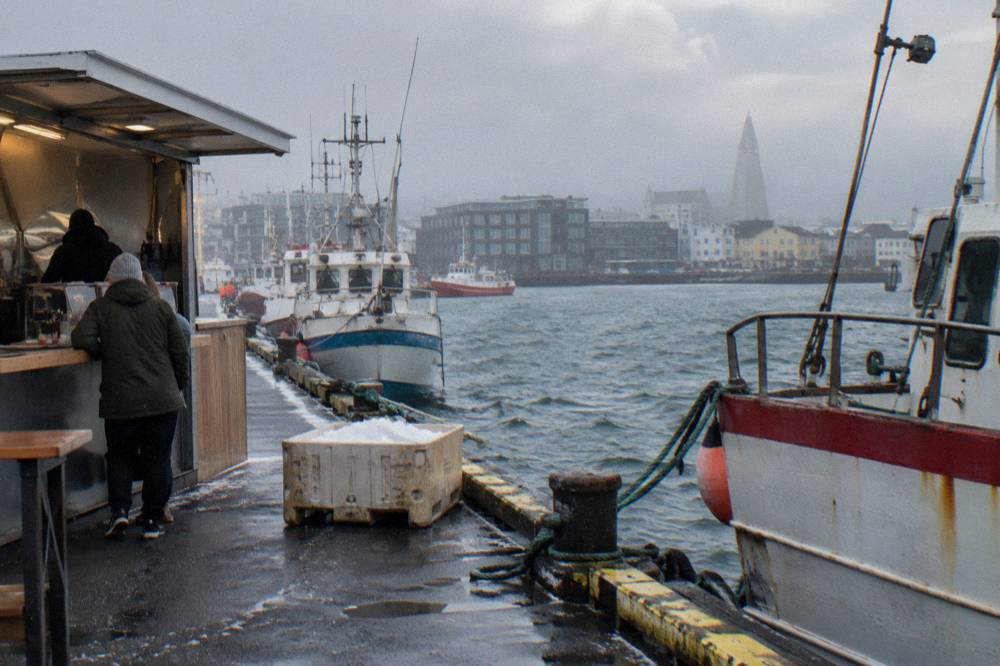
If you want a guide to sort the stands from the tourist traps in one pass, the Street Food Walking Tour, about 3 hours, from $136.58 per person, rated 4.9 across 40 reviews, is built for exactly this layer of the city, the counters, shacks and halls rather than the dinner restaurants. Check the live booking page for the current meeting point before you head out.
Is A Guided Food Tour A Good Way To Find Local Rooms?
Yes, and in Reykjavik it works better than in most cities, because the walkable centre means a 3 hour tour genuinely covers the harbour district, one food hall and several standalone counters in one loop. A guide also translates the menu: fermented, dried and smoked items are easier to order the first time when someone explains what you are looking at.
The strongest argument is time. On your own, finding the local rooms takes two or three evenings of trial, error and expensive misses. On a guided walk, you get five or six stops that have already been filtered, and the guide's commentary fills in the why behind each dish, the preservation traditions, the lamb culture, the fish economy. The Guided Foodie Walking Tour with 6 Tastings is the most reviewed option of this type, rated 4.9 across 2,124 reviews, from $147 per person, and runs about 3 hours across roughly five culinary stops with six to eight tastings. Check availability on the operator's listing if you want the biggest-review version of the format.
There is also a longer, drink-inclusive variant worth knowing about when comparing. The Food Tour that pairs eating with drinking and exploring alongside locals runs about 4 hours, from $223 per person, rated 4.9 across 18 reviews, a smaller review pool but a fuller evening. Whichever format you pick, book the food walks ahead, their group sizes are capped by the tasting venues, so spots on any given departure are limited.
Where Do Locals Eat On Weekends And With Families?
Weekends run on brunch and the swimming pool. Reykjavik families treat the geothermal pool as a social institution, and the pool cafeteria, with its simple soup, bread and hot dog menu, is one of the most genuinely local eating rooms in the city. Saturday and Sunday brunch at a café or bistro is the other fixed ritual, booked or queued before noon.
The pool deserves explaining, because visitors consistently under-use it. Adult admission to a Reykjavik public pool is 1,500 ISK, the hot pots and lanes are the city's living room, and after the soak most people eat something at the pool café, soup, flatbread, a hot dog, coffee. It is cheap by local standards, it is warm, and the rooms are full of neighbourhood regulars. If you do one local thing in Reykjavik, an evening at a pool followed by soup at its cafeteria outperforms most restaurant dinners on both cost and authenticity. Bring a towel and follow the washing rules; they are strictly enforced and strictly reasonable.
Brunch is the weekend centrepiece downtown. From late morning, the café strip fills with groups settling in for an hour or two of eggs, flatbread, smoked salmon and endless coffee. The rooms that do brunch well are mostly the same bistros that anchor the food hall vendor lists, which is a useful shortcut: the bistro counter at the food hall by day is often the brunch room of record by weekend. Families with young children lean toward the food halls and the pool cafeterias rather than dinner restaurants, partly for cost and partly because communal rooms tolerate small children better than a quiet bistro at 19:00.
Two more local habits complete the weekend picture. One is the evening grill or takeaway at home, the true national default, which is why the city centre quiets early on Sunday. The other is the event dinner, a birthday or a game night at one of the mid-priced restaurants just off the main drag, rooms that take bookings, serve lamb and fish and pizza, and are half locals by 20:00 on a Saturday. Finding those rooms unaided is hit and miss, which is the strongest remaining argument for taking one guided walk early in your trip and using it as reconnaissance for the rest of your evenings.
What Should You Skip To Eat Like A Local?
Skip three things: dinner on the main shopping street at peak visitor hours, restaurants with photographic menus facing the harbour viewing spots, and any room with a host inviting you in from the street. Locals book the rooms a street or two back, eat earlier than the visitor crowd, and treat the famous street as a place to walk through rather than sit down in.
The economics explain the geography. Rent along the main shopping street runs high, so the rooms that survive there are tuned to one-visit customers. The rooms a street back, toward the lake or the residential east side, live on repeat business and it shows in both the prices and the cooking. As a rule of thumb, walk five minutes in any direction from the central square and the menu improves while the bill drops.
Timing matters as much as geography. Local dinner service runs earlier than in southern Europe, with kitchens often taking last orders around 21:00 or 21:30, and lunch is a fast, serious affair rather than a long sit-down. If you eat dinner at 18:30 rather than 20:30 you will share the room with residents; at the later hour you will share it with visitors. Sunday closes some rooms entirely or shortens hours, and the holiday closures around Christmas and New Year empty whole streets, so check opening days before promising anyone a specific dinner.
The last skip is the hardest for some travellers: skip the fermented shark and the novelty "worst food" stops unless a guide frames them for you. Locals respect the traditions but hardly anyone eats þorramatur outside its midwinter festival season, and a dining experience built around daring you to eat it is a visitor product, not a local habit. The foods locals actually love are the quiet ones: lamb soup, fresh fish, rye bread ice cream, hot dogs with everything, and good coffee. A walk with a local guide makes that distinction clear in an afternoon, and the companion piece on picking between the city's food walks is the best Reykjavik food tour, which compares the formats side by side.
How Do You Turn One Visit Into Local Knowledge?
Pick one guided food walk for your first full day, then spend the rest of the trip revisiting the stops you liked on your own. The walk acts as a paid introduction to the city's food geography, the halls, the harbour counters, the brunch rooms, and everything after that is you operating as a regular rather than a stranger.
The order matters. Do the walk early and you calibrate prices, names and neighbourhoods while your spending still stretches across the whole trip. Do it late and it becomes a nice summary of things you already fumbled through. The tour that fits this plan best is the traditional-food option listed on Reykjavik City Tours: the Food Lovers Tour, about 3 hours, rated 4.8 across 1,144 reviews, from $143.41 per person, which stops at the classic Icelandic rooms in the centre and harbour belt. The booking page lists the current meeting point and start times.
After the walk, keep three anchors for your own evenings. Grandi Mathöll for seafood and harbour light, Hlemmur Mathöll for group convenience and late hours, and one bistro the guide named as a personal favourite for the single proper dinner of the trip. Add the pool cafeteria ritual on a rainy afternoon and you have eaten the city roughly the way the city eats itself.
One final planning note for anyone comparing this against a self-guided food crawl: the self-guided version works, and it is a fine second day, but the first day is better spent with someone who knows which counter to skip and which queue to join. The classic six-tastings tour, from $149 per person and rated 4.8 across 23 reviews, a smaller but perfect-score-adjacent pool, is the sampler format if you would rather taste broadly than go deep on tradition.
Common Questions About Where Locals Eat In Reykjavik
Where Do Locals Eat In Reykjavik, Iceland?
Mostly at the two food halls, Hlemmur Mathöll and Grandi Mathöll, at the long-running harbour hot dog stand, at pool cafeterias after a soak, and at bistros one or two streets back from the main shopping street. A guided food walk such as the Food Lovers Tour covers these rooms in about 3 hours.
Do Locals Eat At Bæjarins Beztu Pylsur?
Yes. The stand has operated since 1937 and the midday queue still mixes harbour workers, tour boat staff and residents with visitors. Order a hot dog with everything and eat it standing up.
Which Food Hall Is Better, Hlemmur Or Grandi?
Hlemmur Mathöll is bigger, brighter and open later, roughly 11:00 to 22:00 or 23:00, best for groups and evening visits. Grandi Mathöll in the harbour district runs 11:00 to 21:00 and is stronger for seafood and harbour views.
Is Tipping Expected In Reykjavik Restaurants?
No. Tipping is not customary or expected anywhere in Iceland, and service charges are included in menu prices. The amount on the bill is the amount you pay.
Are Food Halls Cheaper Than Restaurants In Reykjavik?
Generally yes. A main and a drink at a food hall counter is a contained spend, while a full-service dinner with drinks downtown can run to roughly double once everything is counted.
What Time Do Locals Eat Dinner In Reykjavik?
Earlier than in much of Europe, often starting around 18:00, with many kitchens taking last orders around 21:00 to 21:30. Eating at 18:30 puts you in rooms shared with residents rather than visitors.