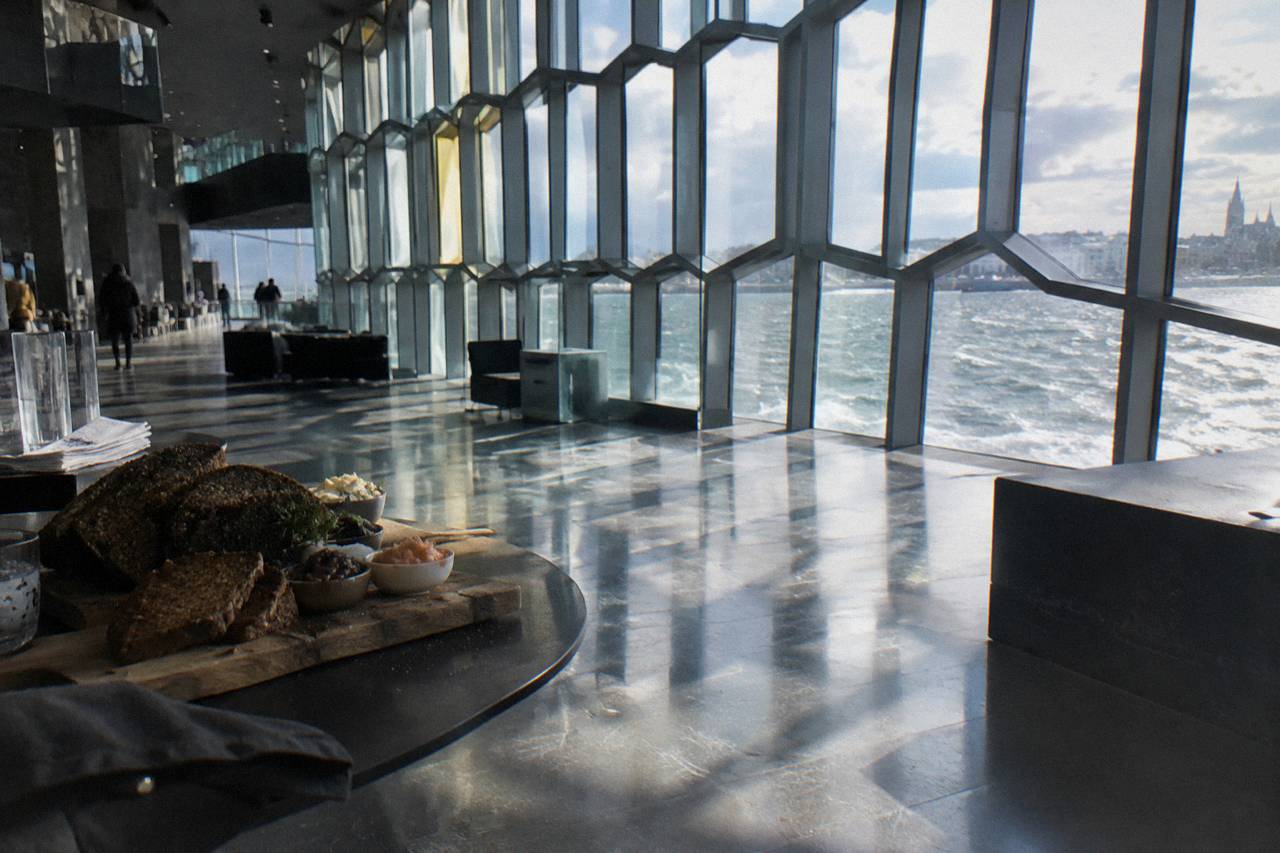
What To Eat In Reykjavik
Icelandic food is simpler and better than its reputation suggests: fresh fish, slow-cooked lamb, dense rye bread and a hot dog culture that locals take seriously. Here is what to order, where to eat it, and what a day of eating in the capital realistically costs.
Short answer
Eat fresh Arctic fish, lamb soup, rye bread, skyr and a Bæjarins Beztu hot dog, which lists at 920 ISK. Hlemmur Mathöll and Grandi Mathöll food halls cover most sit-down needs from about 11:00 daily. A guided food tour runs from $136.58 to $223 per person and compresses six or more tastings into three hours.
What Should You Actually Eat In Reykjavik?
Build your eating around five things: fresh fish, lamb, rye bread, skyr and the Icelandic hot dog. The hot dog stand by the harbour has served pylsa since 1937, with a current menu price of 920 ISK, and fish soup or lamb soup appears on nearly every traditional menu in the city centre. None of it requires an adventurous palate, and most of it is genuinely good.
Iceland's food reputation suffers from two outdated ideas: that everything is fermented shark, and that everything is expensive. The first is a party trick locals break out on special occasions, not dinner. The second is partly true in restaurants, and entirely avoidable if you know where the value sits. The everyday Icelandic plate is seafood caught hours away, free-grazed lamb, and dairy that tastes like it came from a colder, cleaner place than most dairy does.
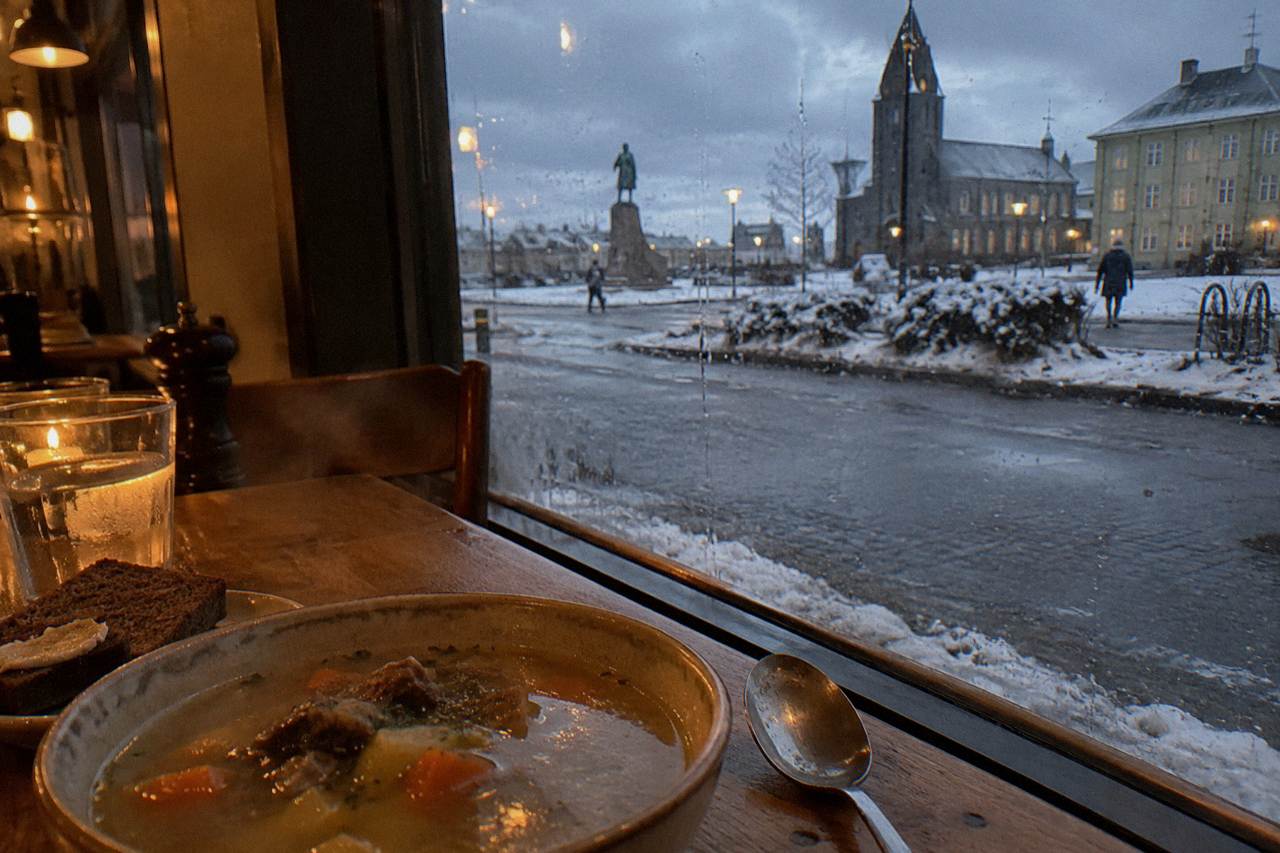
Start with the fish. Cod, haddock, Arctic char and langoustine show up smoked, cured, pan-fried or in soup, and the quality floor in Reykjavik is remarkably high because the harbour is a ten minute walk from most restaurants. Fish soup, usually a creamy tomato-based broth with chunks of the day's catch, is the single best value lunch in the city. Lamb soup, a clear broth with root vegetables and lamb on the bone, is its winter twin.
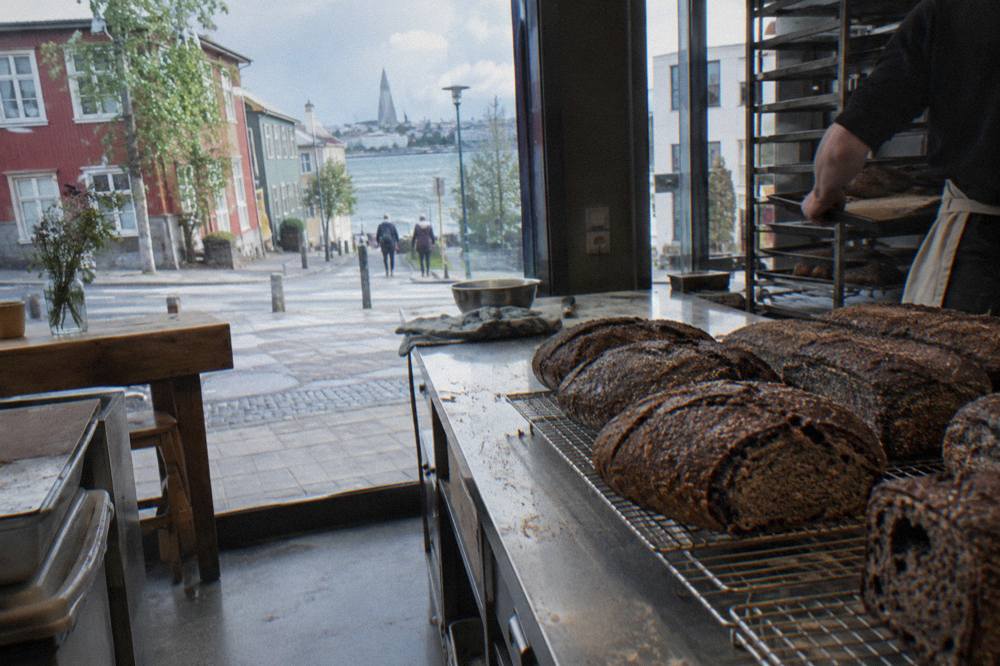
Then there is the bread. Icelandic rye bread, historically steamed in geothermal ground near hot springs, is dense, dark and faintly sweet, and it turns up beside everything. Its best deployment is rye bread ice cream, a dessert several food tours treat as a signature stop. Skyr, the thick cultured dairy that behaves like yoghurt, comes in every supermarket flavour and makes the cheapest respectable breakfast in the country.
The hot dog deserves its own paragraph. Bæjarins Beztu Pylsur has operated since 1937, and its current menu lists a pylsa at 920 ISK. The classic order is "eina með öllu", one with everything: raw and fried onion, ketchup, sweet mustard and remoulade. Visitors and long-haul drivers queue at the same window, which is the strongest endorsement available.
| Dish | What it is | Where it is easiest to find |
|---|---|---|
| Pylsa (hot dog) | Lamb-based sausage with onions, mustard and remoulade | Bæjarins Beztu stands, listed at 920 ISK |
| Fish soup | Creamy tomato broth with fresh catch | Traditional restaurants and harbour-area menus |
| Lamb soup | Clear broth, root vegetables, lamb on the bone | Traditional restaurants, especially in colder months |
| Rye bread | Dense, sweet, geothermally steamed dark bread | Restaurant bread baskets and bakeries |
| Rye bread ice cream | Vanilla-style ice cream with rye crumb | Dessert counters and food tour stops |
| Skyr | Thick cultured dairy, eaten like yoghurt | Every supermarket, from morning onwards |
| Kleina | Twisted fried dough, an Icelandic donut | Bakeries and Christmas markets |
If you want all of this handed to you in a single three hour walk instead of researched over three days, that is exactly the job of a guided food tour, and the options later in this guide are built around the classics on this table.
Where Do Locals Eat In Reykjavik?
Locals eat at the two food halls: Hlemmur Mathöll, open daily from 11:00 in a converted bus terminal on Laugavegur, and Grandi Mathöll, open daily 11:00 to 21:00 in the old harbour district at Grandagarður 16. Both put a dozen vendors under one roof, so a group can split between fish, pizza, Asian noodle soup and gelato without a negotiation.
Hlemmur Mathöll was the city's first food hall, opened in the former main bus station on Laugavegur, and it remains the most central. Vendors rotate but the mix has held steady: a bistro, a pizza operation, a grill, an Indian and an Asian noodle counter, and a gelato window. Hours run from 11:00 into the late evening, with occasional closure days for building works, so check the hall's own site before making it your only plan. The building itself is a piece of the city's everyday life, which is the point: you are eating where the buses used to terminate.
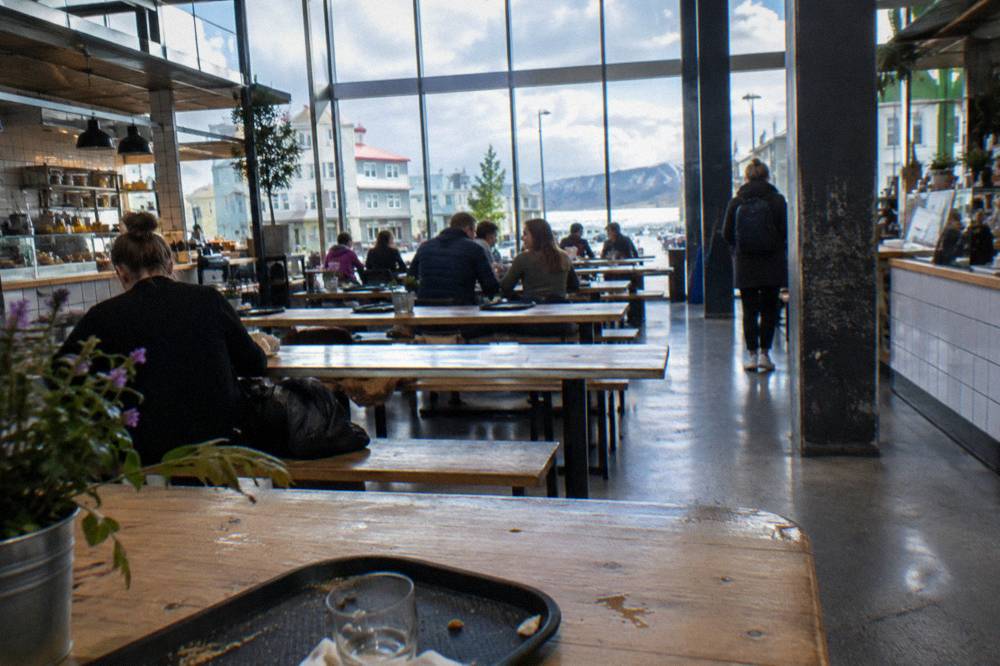
Grandi Mathöll sits in the old harbour district at Grandagarður 16, steps from where whale watching boats dock. It skews towards street food, with traditional Icelandic dishes alongside international options, communal seating and harbour views through the windows. It opens at 11:00 and closes at 21:00, with closures on specific holiday dates such as 24 to 26 December and 1 January. Pair it with a harbour morning and you have the most efficient eating-and-sightseeing block in the city.
Between the halls, the everyday answer is simpler than the internet suggests. Bakeries open early and sell kleina and cinnamon rolls for breakfast money. The hot dog stand covers lunch. Supermarkets, above all the budget chains, stock skyr, smoked lamb and rye bread for a picnic that costs a fraction of a restaurant plate. For a longer treatment of the local angle, read where locals actually eat in Reykjavik.
| Eating place | Location | Hours | Best for |
|---|---|---|---|
| Hlemmur Mathöll | Laugavegur, former bus terminal | Daily from 11:00, late close varies | Mixed groups, central location |
| Grandi Mathöll | Grandagarður 16, harbour district | Daily 11:00 to 21:00 | Street food, harbour views |
| Bæjarins Beztu Pylsur | City centre stands | Long daily hours | The classic hot dog, 920 ISK |
| Bakeries | City centre and residential streets | From early morning | Kleina, cinnamon rolls, coffee |
| Supermarkets | Citywide | Long hours | Skyr, smoked lamb, picnic supplies |
For structure on your first day, the walking format does the neighbourhood work for you: a guided street food walk moves between stalls and halls in the centre while a guide explains what each dish is and where it came from.
A good middle path is the Street Food Walking Tour, rated 4.9 across 40 reviews and priced from $136.58 per person for roughly three hours of stall-to-stall eating. It suits travellers who want the casual end of the spectrum, hot dogs and street snacks included, rather than a long sit-down progression.
How Much Does Eating In Reykjavik Cost?
A hot dog runs 920 ISK, food hall mains usually land somewhere between the hot dog and a restaurant plate in price, and a full restaurant dinner with a drink sits at the top of the scale. Tipping is not expected or customary anywhere in Iceland, service charges are built into prices, and tap water is free and safe, so the tap is your cheapest drink.
The honest framing is that Reykjavik is an expensive city to eat out in, but the damage is controllable. Breakfast is the easy win: skyr and a bakery pastry are an easy budget pairing. Lunch at a food hall sits in the middle. Dinner at a traditional restaurant is where the budget goes, and a starter-main-dessert progression is where visitors report sticker surprise. Standard VAT in Iceland runs 24 percent, with a reduced 11 percent rate applied to food and accommodation, so part of what you are paying is tax structure rather than greed. For specific menu prices, check the board at each vendor, since every hall posts its own list.
Two structural savings are worth knowing. First, the tap water: Reykjavik's supply is groundwater, tested weekly across the distribution network, and safe to drink straight from the tap, so never buy bottled water. Second, tipping: it is not customary for restaurants, taxis, hotels or most guides. Nothing is added for service beyond what is already in the menu price, and a small optional amount for exceptional service is appreciated but never assumed.

| Eating level | Typical cost per person | Notes |
|---|---|---|
| Hot dog | 920 ISK | Bæjarins Beztu menu price |
| Bakery breakfast | Cheapest full breakfast in the city | Skyr, kleina, coffee |
| Food hall main | Mid-range, posted at each vendor | Hlemmur and Grandi boards |
| Restaurant dinner | Top of the scale, traditional menus | Main plus a drink |
| Guided food tour | From $136.58 to $223 | Six or more tastings, three to four hours |
The food tour line in that table is the interesting one. At from $141 for the Icelandic Food Tour, rated 4.6 across 482 reviews, a tour costs about the same as a mid-range restaurant dinner, and it converts the money into tastings plus context. For budget framing around the whole trip, see is Reykjavik very expensive and how much cash you need in Reykjavik, since almost everything here takes card and cash is close to optional.
Should You Take A Food Tour In Reykjavik?
A food tour earns its price when you have two or three days in the city and want the classics decoded quickly. Guided options run from $136.58 to $223 per person for three to four hours, and the most reviewed, the Guided Foodie Walking Tour with 6 Tastings, is rated 4.9 across 2,124 reviews from $147. Independent eating is cheaper per calorie, but slower per insight.
The case for a tour is compression. On your own, finding rye bread ice cream, a respected fish soup and the right hot dog order takes research and walking. On a guided walk, those stops arrive in sequence with a story attached, and the guide fields the questions you would otherwise type into a phone: what skyr actually is, why lamb tastes different here, which fermented things are jokes and which are lunch. The review pools tell you the format lands: even the smaller walks carry ratings in the high 4s.
The case against is money and pace. If you already know your way around food halls and you like choosing your own stops, the tour price buys a lot of pylsa and fish soup instead. Tours also fix your schedule around food rather than sights, which matters if you are fitting a harbour cruise or a museum into a short visit.
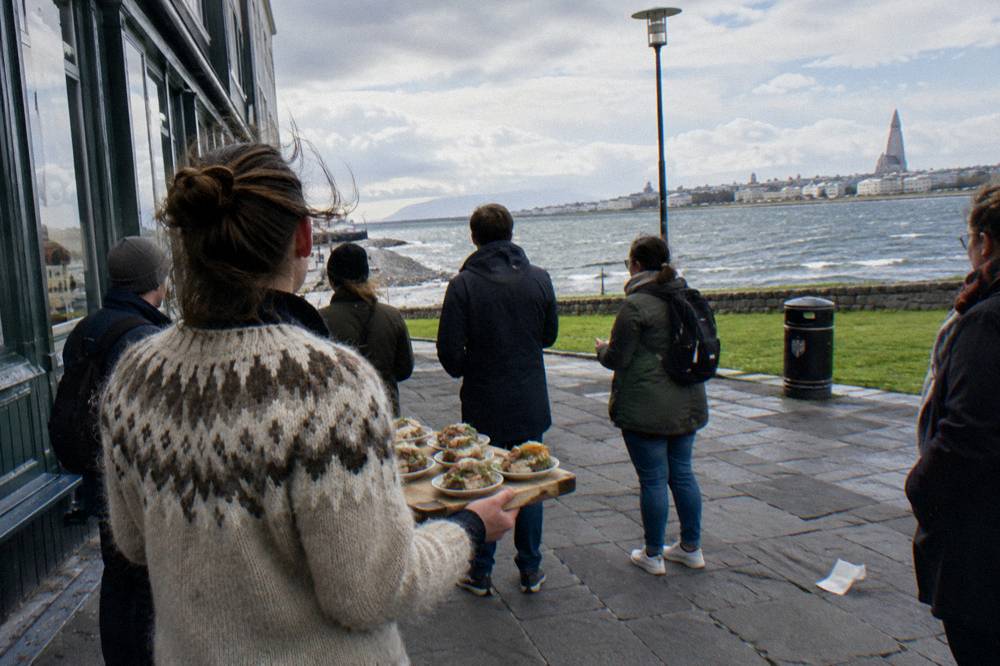
The Guided Foodie Walking Tour with 6 Tastings is the volume leader: about three hours with six tastings, rated 4.9 across 2,124 reviews, from $147 per person. The listing includes free cancellation, so plans can change if something else comes up. For depth on the category, the site's food tour guide compares every format on offer.
At the other end of the scale, the Food Tour with 6+ Tastings of Icelandic Classics builds its walk around kleina, the Icelandic hot dog, seafood soup, a Viking platter of smoked lamb and lamb soup, dried fish with butter, jams, chocolate and Icelandic marriage cake. It is rated 4.8 across 23 reviews and priced from $149 per person for about three hours, and it is the most explicit checklist of the classic table above in a single booking.
For a longer, drink-inclusive evening, the All In One Food Tour runs about four hours with food and drinks including beer, rated 5 across 162 reviews, from $199.18 per person. A sibling version with locals, Eat Drink & Explore, covers similar ground over 4 hours, from $223, rated 4.9 across 18 reviews.
| Food tour | Length | Rating and reviews | Price from |
|---|---|---|---|
| Street Food Walking Tour | About 3 hours | 4.9 across 40 reviews | $136.58 |
| Food Lovers Tour, Icelandic Traditional Food | About 3 hours | 4.8 across 1,144 reviews | $143.41 |
| Guided Foodie Walking Tour with 6 Tastings | About 3 hours | 4.9 across 2,124 reviews | $147 |
| Food Tour with 6+ Tastings of Icelandic Classics | About 3 hours | 4.8 across 23 reviews | $149 |
| Icelandic Food Tour | About 3 hours | 4.6 across 482 reviews | $141 |
| All In One Food Tour, Eat Drink & Explore | About 4 hours | 5 across 162 reviews | $199.18 |
The Food Lovers Tour of Icelandic traditional food, rated 4.8 across 1,144 reviews and from $143.41, sits in the middle of that table as the balanced pick: traditional dishes, small group, roughly three hours, and a review pool large enough to trust. Meeting points and exact stop lists vary by operator, so the booking page is the place to confirm details for any specific date.
What Does A Food Tour Day Actually Look Like?
Most Reykjavik food tours run about three hours, start in the early afternoon in the city centre, and move on foot between five or six stops, ending near the harbour or downtown. You should eat lightly beforehand, wear warm layers in any season, and expect to stand and walk more than sit, with the longest seated stretch usually at the final stop.
The shape is consistent across operators. You meet at a central point, almost always within a few minutes' walk of Laugavegur or the Old Harbour. The first stop is usually something quick and iconic, the hot dog or a bakery tasting, both because it is near the meeting point and because it sets the tone. From there the walk alternates between a seated stop and a standing tasting: soup at one place, smoked lamb or a fish course at another, something sweet near the end, and a drink at the final stop on the tours that include one.
Distances are small. Reykjavik's eating core fits inside a rectangle you can cross in twenty minutes, so a three hour tour spends its time eating and listening, not marching. Groups are typically capped around 12 to 15 people, and the smaller the cap, the more the tour feels like a guided meal with strangers who leave as acquaintances.
A few practical notes before you book: tell the operator about allergies when booking rather than at the first stop, since several tastings involve fish, dairy and rye; bring a bottle you can fill from the tap, because the water is excellent and free; and check the meeting point on the booking page the day before, since operators occasionally shift start locations. Cancellation terms differ by operator, but the featured walks allow free cancellation, so booking early costs nothing if plans move.
When Is The Best Time To Eat Out In Reykjavik?
Daylight, not appetite, sets the rhythm: in midwinter Reykjavik gets about four hours of true day, while midsummer delivers over twenty-one hours of light, so dinner often happens in what feels like late afternoon in winter and broad evening light in summer. Food halls open at 11:00 daily, the hot dog stand runs long hours, and restaurant kitchens typically wind down well before midnight.
The seasonal swing is extreme and it changes how you eat. Around the winter solstice the sun rises after 11:00 and sets before 16:00, and the 15th of December offers about four hours and thirteen minutes of daylight. That pushes lunch and dinner earlier: you eat your main meal while it is dark, and a food hall's 11:00 opening becomes a natural anchor for the day. In June the opposite happens, over twenty-one hours of daylight on the longest day, and dinner at 20:00 still feels like lunchtime outside, which is why harbour tables and the hot dog queue stay busy late.
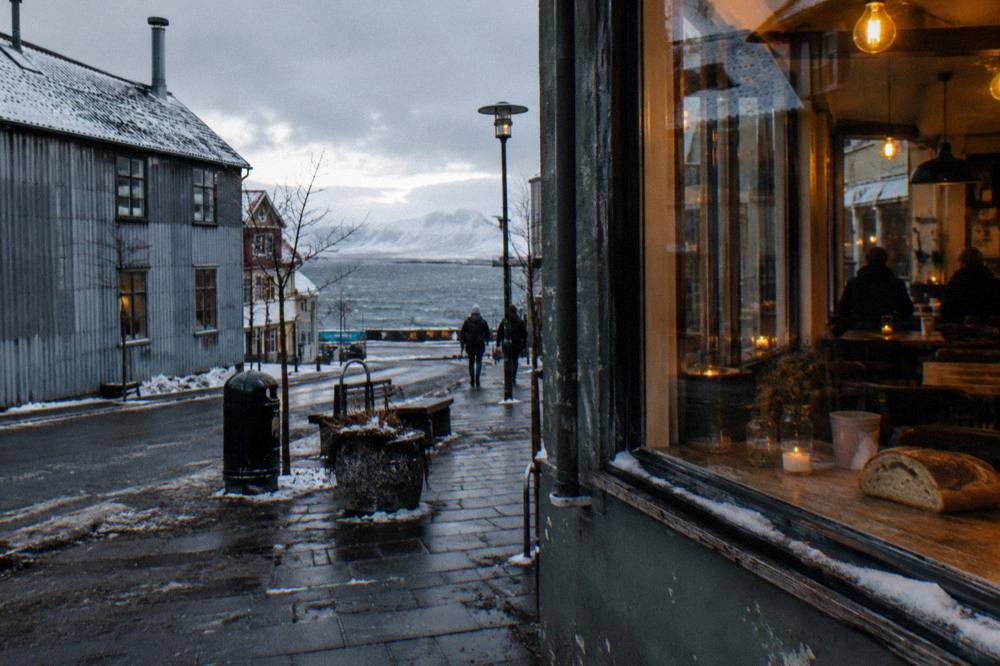
Weather matters more than the calendar. Reykjavik winter means average temperatures near freezing and rain or sleet on many days, so book food tours with indoor stops in the colder half of the year and treat the weather guidance in what to wear on a Reykjavik walking tour as relevant to eating walks too. A food tour in a storm is still food, but it is better food in the right coat.
| Period | Daylight feel | What it means for eating |
|---|---|---|
| December to January | About 4 to 6 hours of day | Early dinner, food halls at 11:00, warm indoor stops |
| February to April | Day length climbing fast, about 8 hours 38 minutes by mid-February | Comfortable walking tours, aurora-season evenings |
| May to July | 15 to 21 hours of light | Late outdoor eating, harbour tables, book tours ahead |
| August to October | Light shrinking from about 16.5 hours | Food tour season runs on into autumn |
One timing trap: holiday closures. Both food halls close on specific dates around Christmas and New Year, traditional restaurants fill for the festive weeks, and several tours reduce departures in the deepest winter. The booking page for each walk shows live departure days, which beats any printed schedule. For readers mapping eating into a wider itinerary, Reykjavik City Tours compares the food walks that combine with harbour trips and city walks in a single day.
Common Questions About Eating In Reykjavik
What Food Is Reykjavik Known For?
Fresh fish and lamb soup, rye bread, skyr and the Icelandic hot dog. The hot dog stand tradition dates to 1937 and a pylsa lists at 920 ISK. Rye bread ice cream is the signature dessert, and fish soup is the most common traditional lunch.
Where Do Locals Eat In Reykjavik?
Mostly at the food halls: Hlemmur Mathöll on Laugavegur, open daily from 11:00, and Grandi Mathöll at Grandagarður 16 in the harbour district, open daily 11:00 to 21:00. Beyond the halls, locals rely on bakeries, the hot dog stands and supermarket skyr for everyday eating.
Is Food In Reykjavik Expensive?
Eating out is expensive by European standards, and a restaurant dinner with a drink sits at the top of the scale. But a 920 ISK hot dog, bakery breakfasts and mid-range food hall mains keep a day of eating manageable. No tipping is expected, and tap water is free.
Is A Food Tour In Reykjavik Worth It?
If you have two or three days and want the classics decoded fast, yes. Walks run from $136.58 to $223 per person for three to four hours and six or more tastings. The most reviewed option is rated 4.9 across 2,124 reviews, so the format reliably satisfies guests.
What Is A Kleina?
A kleina is a twisted strip of fried dough, an Icelandic donut with no filling and a light sugar crust. It appears at every bakery, at Christmas markets, and as a first tasting on several food tours, including the Food Tour with 6+ Tastings of Icelandic Classics.
Do You Tip In Reykjavik Restaurants?
No. Tipping is not customary or expected in Iceland for restaurants, taxis, hotels or most guides. Service charges are included in prices. A small optional amount for exceptional service is appreciated but never assumed.