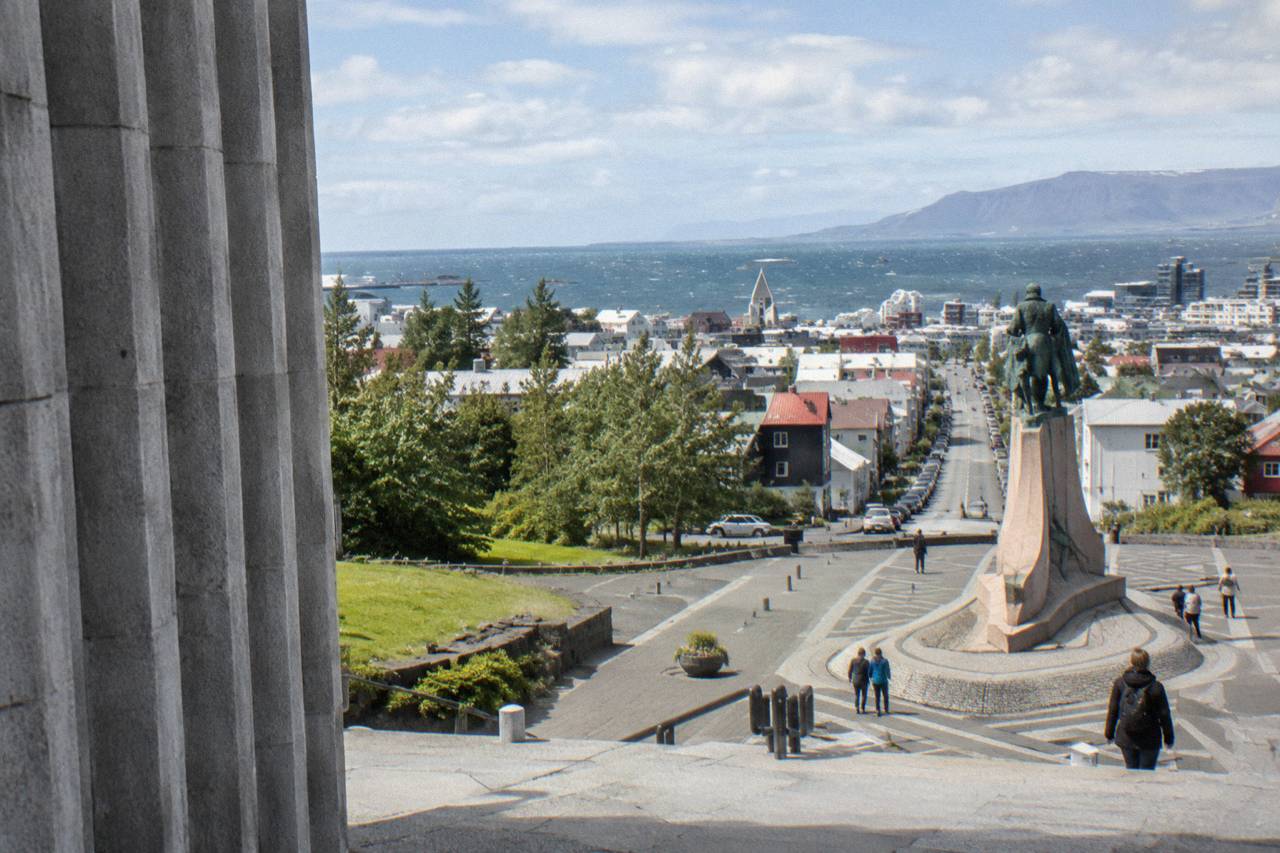
Reykjavik Tours In Winter: Daylight, Ice And Dress
Reykjavik does not shut for winter. Tours run through the darkest weeks, but the day is short, the sidewalks can be glassy, and a few seasonal rules change how you plan. Here is what operates, what the light does, and what to pack.
Short answer
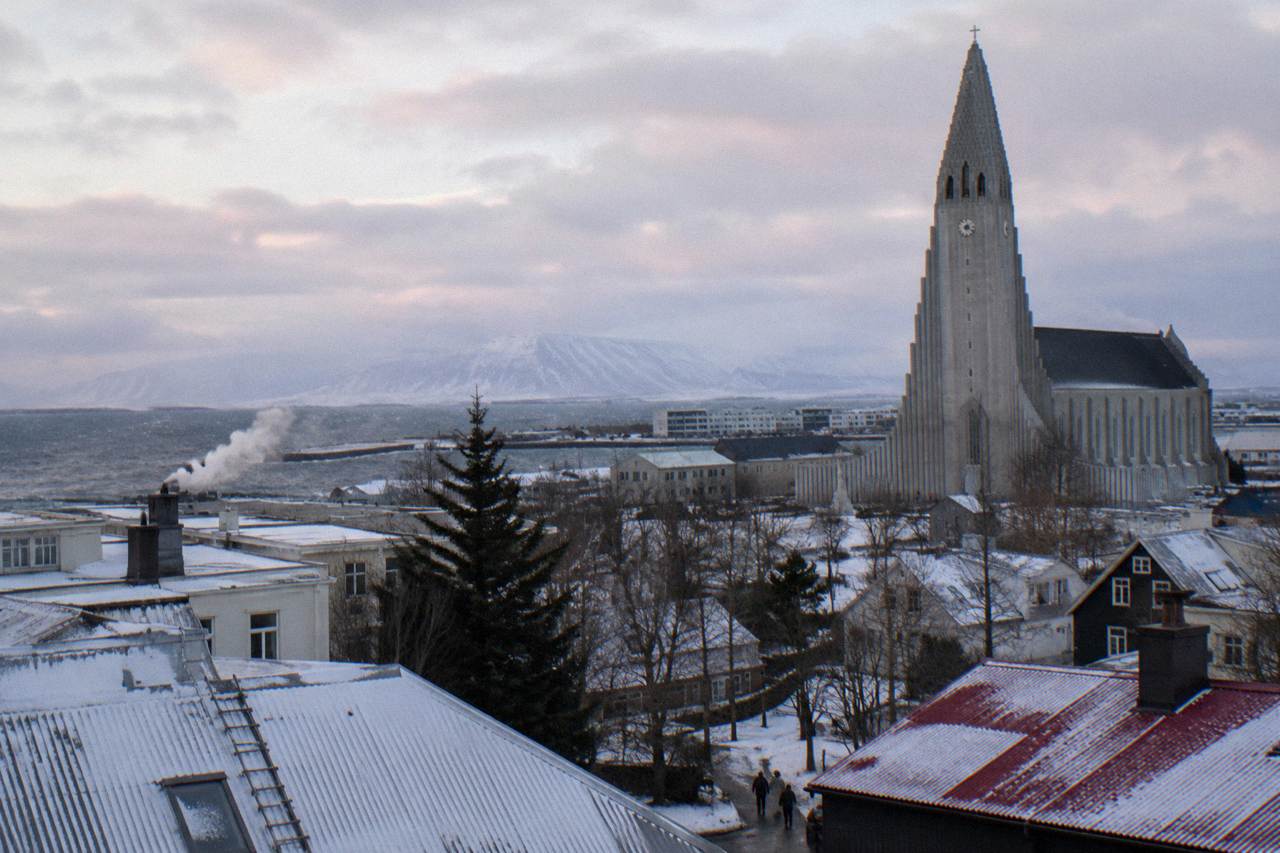
Most Reykjavik walking, food, folklore and bus tours run all winter, with usable daylight shrinking toward about 4 hours in late December. Winter temperatures average near 0.8 C in December, with icy sidewalks common. Studded footwear, layers and a windproof shell matter more than heavy insulation.
Winter in Reykjavik is not a shutdown, it is a schedule change. The city keeps operating through the dark months, and so do most of its tours. What changes is the shape of the day: four hours of usable light near the solstice, sidewalks that turn to glass after a thaw, and a shift of activity toward museums, food halls, evening walks and the harbour. Plan around the light and the ice and the season works in your favor, with fewer people on the streets and prices on the page rather than in the summer stratosphere.
The Iceland Met Office puts Reykjavik's December mean temperature at 0.8 C, which sounds gentle until you factor wind. The same records show 9 to 15 days per month with a millimeter or more of rain, and rain that freezes overnight is what makes December walking a footwear question rather than a coat question. This guide walks through daylight hour by hour, what is actually operating, how to dress for wind-chill and ice, and which tours fill the long evenings.
What Can You Actually Do In Reykjavik In Winter?
Yes, nearly everything runs: guided walks, food tours, folklore and ghost walks, the hop-on hop-off bus, whale watching from the Old Harbour and the main museums all operate through the winter, with slightly reduced schedules around the holidays. Winter is a normal working season for Reykjavik tourism, not a closure.
The core walking formats do not stop. The guided folklore walk, the Viking-history walk and the classic city walks all list winter departures, and they are arguably better in the dark season, when a ghost story lands properly and the guide is not shouting over summer crowds. Food tours run through winter too, because their venues, restaurants, food halls and the famous hot dog stands, are year-round businesses.
Water-based tours are the one category with real seasonal logic. Classic whale watching from the Old Harbour runs year-round, with Elding's departures listed daily and its premium RIB boats typically stored after October. Special Tours and Whale Safari both list classic whale watching and northern lights cruises through the winter. Puffin tours do not run, the nesting season runs roughly May to August, so a winter puffin promise should be treated with suspicion anywhere you see it.
The hop-on hop-off bus runs through winter on a reduced cold-season timetable, pausing between seasons: departures roughly every 45 minutes from about 9:30, with the last departure at 16:15 from Harpa, and a full loop of about 80 to 85 minutes. That last-departure time is worth internalizing, because in late December the sun sets in mid-afternoon and you will be riding the loop in the dark, with the audio guide in eight languages doing more work than the windows.
For planning purposes, three winter formats cover most travelers: a short guided walk for orientation and stories, a food tour because it is the one tour format that is genuinely better in cold weather, and the bus for covering ground when walking conditions are bad. Beyond those, the winter calendar fills out with events: the Winter Lights Festival runs 4 to 7 February 2027, and Iceland Noir and the Reykjavik Dance Festival both land in mid-November 2026, so a city that feels quiet on a Tuesday can be fully booked on a festival weekend.
If you want a deeper cut on one format, the guides on Reykjavik tours from the cruise port and Reykjavik evening and night tours cover their seasons in more detail.
How Much Daylight Does Reykjavik Get In Winter?
Reykjavik's shortest day is about 4 hours 7 minutes around 21 December. On 1 November the sun rises at 09:10 and sets at 17:10, by 15 November sunrise is 09:56 and sunset 16:27, and by 15 February the day is back to 8 hours 38 minutes. Plan each day around one or two anchor activities, not a list.
The arithmetic of an Icelandic winter day surprises people more than the cold does. It is not that the sun never rises, it is that it barely clears the horizon and stays low, so the light is long, amber and slow, more of a several-hour sunrise than a day. Photographers love it. Sightseers who scheduled four attractions need to triage.
Here is how the light behaves across the season, using astronomical tables for Reykjavik. Where a date is not listed below, the tables give the daylength for the nearest mid-month point:
| Date | Sunrise | Sunset | Daylight |
|---|---|---|---|
| 31 October | 09:07 | 17:13 | About 8 hours 6 minutes |
| 1 November | 09:10 | 17:10 | 7 hours 59 minutes |
| 15 November | 09:56 | 16:27 | 6 hours 31 minutes |
| 21 December | 11:21 | 15:29 | About 4 hours 7 minutes, the shortest day of the year |
| 15 January | 10:54 | 16:19 | 5 hours 25 minutes, gaining fast |
| 15 February | 09:23 | 18:00 | 8 hours 38 minutes, near normal again |
| 15 March | 07:46 | 19:27 | 11 hours 42 minutes, fully recovered |
Two practical consequences follow. First, morning departures matter: a tour that leaves at 9:00 in November uses daylight, the same slot in late December uses darkness, which is fine for a folklore walk and a waste for a photography walk. Second, the recovery is fast. Iceland gains daylight at a startling rate after the solstice, so a trip in mid-February feels like a different planet from mid-December.

Which Reykjavik Outings Are Best In The Dark Months?
The formats that suit winter are the ones the dark helps: the folklore and ghost walk, the food tour, the classic whale watch, and anything indoors such as the Saga Museum. The food tour with six tastings of Icelandic classics runs about 3 hours, rated 4.8 across 23 reviews, from $149 per person, and it never depends on the weather.
Darkness is not a constraint on a ghost story, it is a production value. The folklore walking tour format, elves, trolls and ghosts, runs about 1.5 hours and is built for the season: a short walk, a warm group and a guide whose material is literally about what walks the night. A city walk with a Viking-theme runs about 2 hours, rated 4.7 across 497 reviews, from $52 per person, and works fine under streetlights, since Reykjavik's center is compact and well lit.
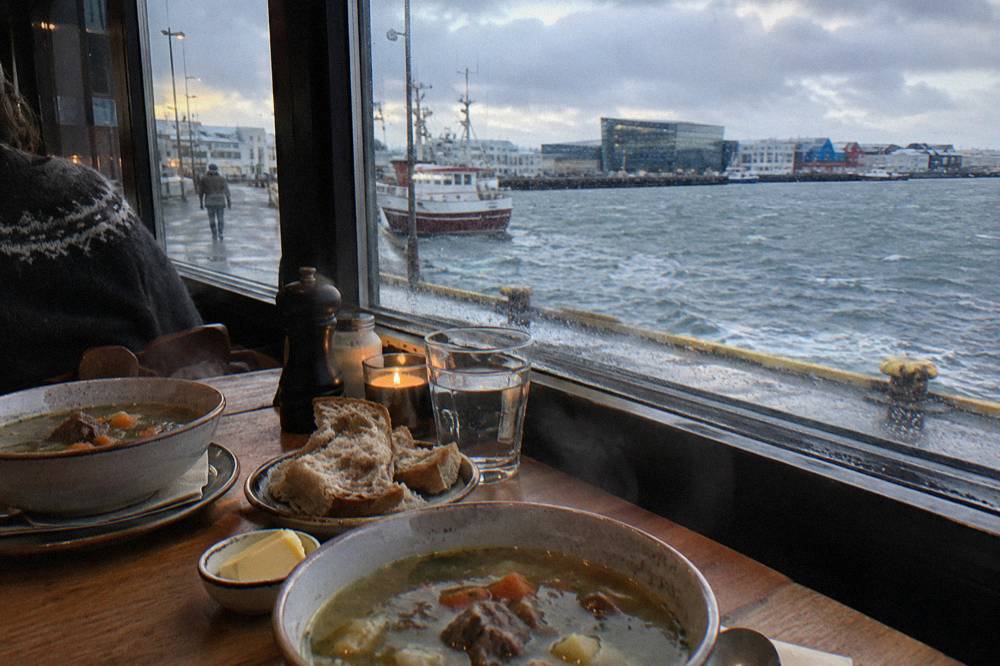
Food tours are the other winter winner. You move between venues every half hour, so nobody stands in the wind for long, and the tastings, lamb soup, seafood, rye bread ice cream, hot dogs, are cold-weather food by design. Between the formats, whale watching from the Old Harbour remains the big-ticket winter option: the original classic whale watching trip runs year-round, rated 4.6 across 2,999 reviews, from $105 per person, about 2 to 3.5 hours. Operators report sightings rather than promise them, and in winter you should weight the decision toward whether you want three hours of North Atlantic air at all.
The comparison worth making before you book:
| Winter format | Length | Price from | Rating and reviews | Why it suits winter |
|---|---|---|---|---|
| Folklore walking tour | ~1.5 hours | $52 per person | 4.7 across 375 reviews | Short, dark-friendly, low commitment |
| Food tour, 6+ tastings | ~3 hours | $149 per person | 4.8 across 23 reviews | Indoors between stops, warm food |
| Hop-on hop-off bus, 24 or 48 hours | 1 or 2 days | $53.49 per person | 3.2 across 909 reviews | Escapes the ice underfoot |
| Classic whale watching | ~3 to 3.5 hours | $105 per person | 4.6 across 2,999 reviews | Year-round harbour departures |
| Saga Museum (indoor attraction, not a tour) | ~45 to 60 minutes | 4,000 ISK adult | self-guided, multilingual audio guide | Fully indoors, saga history in wax |
One scheduling note that trips people up: winter departures cluster late morning and early afternoon, roughly 9:00 to 17:00, because that is where the daylight is. Evening slots belong to northern lights cruises and ghost walks. If you build a day with a 10:00 walk and a 13:00 food tour, you have used most of your light on two good things, which is exactly the right winter pace. The guide on the best time of day for a Reykjavik walking tour breaks this down further.
How Cold Is Reykjavik In Winter, Really?
Reykjavik's winter means sit just above freezing: 0.8 C in December, 0.7 C in January, 0.5 C in February. That is milder than Montreal or Minneapolis, but the wind and the rain make it feel colder, and the damp is what reaches you, not the arithmetic on the thermometer.
The honest framing is that Reykjavik in winter is a maritime cold, not a continental one. The North Atlantic current keeps the city hovering around zero, so you get snow some weeks, cold rain others, and the notorious cycle where rain falls in the afternoon and freezes on the pavement overnight. Ice, not temperature, is the actual hazard, and it returns later in this guide.
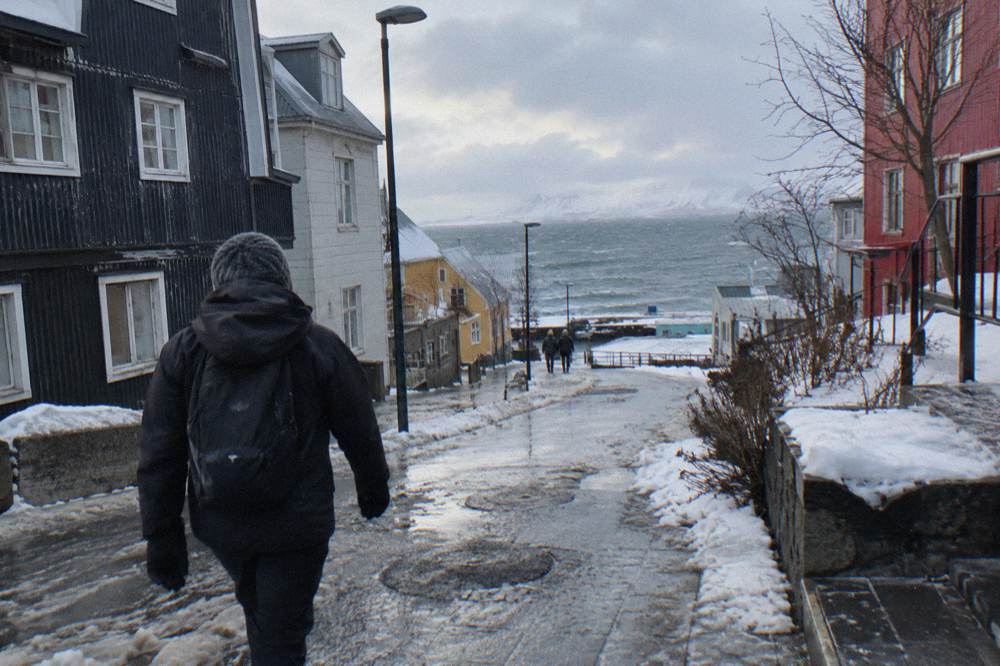
Layering beats insulation. A merino or synthetic base layer, a warm mid-layer such as a fleece or light down, and a genuine windproof and waterproof shell will carry you through every Reykjavik winter day, because the shell is doing the real work against the wind. Jeans deserve a caution: cotton holds damp against skin, and damp skin in wind is how a 2 C day becomes miserable. The long-form answer lives in what to wear on a Reykjavik walking tour.
A realistic winter packing table:
| Item | Why it matters in Reykjavik | Notes |
|---|---|---|
| Waterproof shell with hood | Wind off the harbour is constant | More useful than a heavy parka |
| Merino base layers | Damp cold, indoor overheating | Two sets is enough for a week |
| Insulated, grippy footwear | Pavement ice after freeze-thaw | See the ice section below |
| Wool hat and gloves | Wind chill at the waterfront | Thin liner gloves under mittens |
| Small daypack | Indoor-outdoor temperature swings | You will shed and add layers hourly |
Swimming belongs on this list even though it sounds like a summer habit. Reykjavik's geothermal pools run all winter and they are at their best in a snowfall, adult admission is 1,500 ISK at the public pools, and the Reykjavik City Card, 6,100 ISK for 24 hours, includes pool access, 17 museums and unlimited capital-area buses. On a day when the weather defeats your plans, a hot pool and a museum is the local move, and the city's tap water is safe, tested weekly, so fill your bottle anywhere.
Is Ice A Real Problem On Reykjavik Sidewalks?
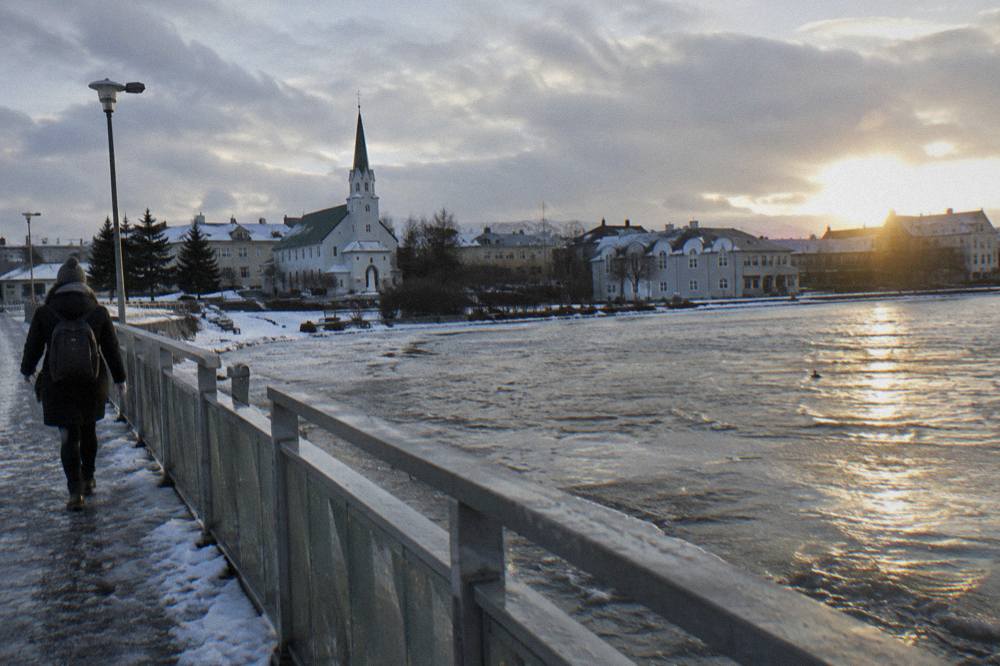
Yes, ice is the most under-estimated winter hazard in Reykjavik. Rain that falls at 3 C often freezes on the pavement overnight, and downtown's older streets stay glassy for days. Serious winter footwear with aggressive tread, or slip-on ice cleats over normal boots, is the single best gear decision you can make.
Visitors from genuinely cold climates often get caught out here, because continental cities get snow that gets plowed, while Reykjavik gets a freeze-thaw cycle that produces a thin, transparent, extremely slick film. Locals walk differently in January, short steps, weight low, and after a day you will too. The gravel that the city spreads helps, but it helps unevenly.
The footwear rules are simple. Rigid leather soles are the enemy. Soft, deep-lugged soles grip far better, and the cheapest reliable upgrade is a set of pull-on ice cleats that live in your daypack for the frozen stretches and come off indoors, since cleats on a museum floor are both useless and rude. Even a short walking tour covers several kilometers of center-city pavement, so treat shoes as tour equipment, not luggage filler.
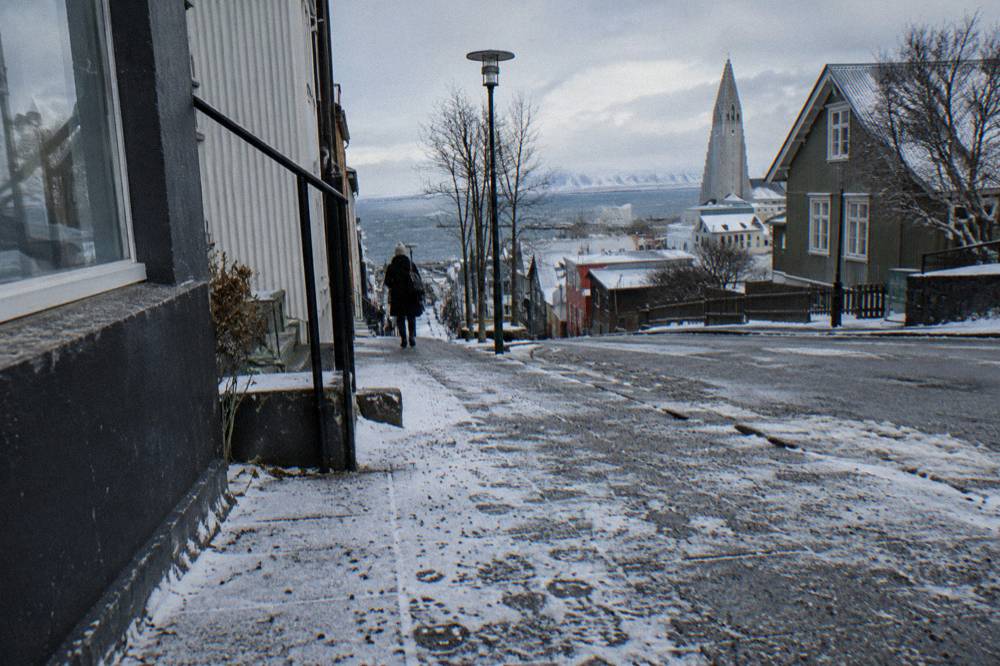
When the pavement is genuinely bad, tours adapt rather than cancel: walking guides shorten outdoor stops and add indoor ones, and the hop-on hop-off bus becomes the mobility plan of last resort, with a heated cabin and the full loop in 80 to 85 minutes. Operators report their winter adaptations rather than guaranteeing a fixed route, and if conditions are severe, the booking pages handle rebooking, so check the tour's page on the morning. The rain-day playbook in Reykjavik tours in the rain covers the wet-weather version of the same problem.
Can You See The Northern Lights From Reykjavik In Winter?
Winter is northern lights season: the aurora window in Reykjavik runs from mid-August to late April, whenever the sky is dark and clear, which in December means most of the clock. Sightings are never promised by any honest operator, they depend on solar activity and cloud cover, but the dark hours are long and the odds are as good as they get.
The geometry favors you twice over. Darkness is the raw material, and midwinter Reykjavik has far more night than day, and the city is small enough that a 15-minute drive or a short boat trip from the Old Harbour puts you under darker sky. Boat-based northern lights cruises of about 2 hours depart the harbour through the aurora season, roughly mid-August to late April, trading the harbor lights for open water.
The honest caveats matter. Aurora is a forecast-and-luck phenomenon: the Icelandic Met Office publishes aurora and cloud forecasts, and the correct local strategy is to check the forecast, pick a clear window, and be somewhere dark when it arrives. Any operator that promises sightings is promising something nobody can deliver. A city walk on a cloudy aurora night is not a consolation prize either, the midnight-sun ghost walk format flips to dark-winter mode and the folklore tours are built for exactly these evenings.
Practical odds-management in one table:
| Approach | Rough cost | Upside | Downside |
|---|---|---|---|
| Self-guided dark-sky walk from the center | free | Flexible, repeatable nightly | City glow, needs transport for real dark |
| Northern lights boat cruise | from about 10,490 ISK | Open water, no light pollution | Cold on deck, sea state matters |
| Book a second, third night in the city | lodging only | Keeps a backup night open | Patience required |
The longer aurora and sky context, plus the harbour departure details, are covered in whale watching tours from Reykjavik harbour, which shares the Old Harbour evening logistics with the lights cruises.
What Does A Winter Day In Reykjavik Look Like Hour By Hour?
A workable winter template: geothermal pool before 10:00 while it is still dark, your one anchor tour from late morning through early afternoon inside the daylight window, a long food-tour dinner from 17:00, then a folklore walk or an aurora stakeout from 20:00. The mistake to avoid is booking two daytime tours, which leaves no margin for the light or the ice.
Here is a December-day skeleton that many visitors converge on, and it survives most weather. Wake to darkness, which is easy, and use the pre-10:00 dark for the warmest cheap activity in the city, a geothermal pool. Morning swims cost 1,500 ISK at the public pools and the water is hot regardless of the air. Shower before entering, it is a hard rule, not a suggestion.
From about 10:30 the blue-hour light arrives, and that is when your anchor tour should start, a city walk, the bus loop's first full circuit, or a whale watch if the sea state is kind. By mid-afternoon in December the sun is gone and the evening program takes over. Dinner in Iceland starts early by continental standards and the food tours typically run late afternoon or early evening, roughly 3 hours of movement between warm rooms. The food hall scene carries the rest: Hlemmur Matholl, the city's first food hall in a former bus terminal, keeps vendors going daily into the evening, and Grandi Matholl in the old harbour district runs daily until about 21:00 with harbour views.
After 20:00 the winter evening owns you, so own it back. A folklore walk, roughly 1.5 hours and from $52 per person, rated 4.7 across 375 reviews, is the format the season was built for, and the Guided Folklore Walking Tour fits the slot exactly; details and availability are on the folklore walking tour's page, with free cancellation if the sky opens. On a clear night, check the aurora forecast instead and get somewhere dark. Tipping, for the record, is not expected or customary in Iceland, on tours or anywhere else.
Getting around the skeleton is straightforward. The center is walkable, ice permitting, and the Straeto buses cover the rest at 690 ISK a single adult fare with contactless, children 11 and under free, and fare capping that stops charging after three adult rides a day. Day passes are no longer sold, so ride and let the cap do the math. Full transport detail lives in how to get around Reykjavik without a car, and the fare rules are published on the official Straeto pricing page.
A whale watch is the one winter day-trip that rewrites the template: it eats 3 to 4 hours including check-in and gear-up, so on those days it is the anchor and everything else is garnish. The harbour operators supply warm flotation suits, which solves most of the dress problem for you.
What Should You Book Ahead For A Winter Trip?
Book ahead only what is date-locked or capacity-small: the food tours, the folklore and ghost walks, whale watching on a specific day, and the 5-hour private city tours. Walking formats rarely sell out in winter, but holiday weeks around Christmas and the Winter Lights Festival in early February do fill, and free cancellation is common on the booking pages.
Winter demand is real but uneven. A random Tuesday in January has space everywhere, while the week between Christmas and New Year, and the festival weekends, behave like high season. The private formats are the most capacity-constrained by design, a private city tour of Perlan, Arbaer and the landmarks runs about 5 hours from $784 per group, and the 2-hour private walking tour from $443.89 per group, both priced per group rather than per person, so check the group basis on the booking page before comparing.
For weather-dependent picks, whale watching and aurora cruises, book the first viable day of your trip and keep later nights free as retries, because the sea state and the cloud forecast decide more than your calendar does. The Reykjavik City Card, 6,100 ISK for 24 hours or 10,500 ISK for 72, pairs well with a booked tour day, since museums fill the dark hours between commitments; the current inclusions are on the official City Card page.
Evening drink formats deserve a mention in the same breath, because winter nights are long and the beer and booze tour, about 2.5 hours, rated 4.9 across 72 reviews, from $122 per person, is a structured way through them that ends somewhere warm. Iceland's beer culture carries a long prohibition-era story, and the guides tell it well on a cold night.
A final packing-and-booking checklist for the season, drawn together in one place:
| Book ahead | Book on the day | Skip in winter |
|---|---|---|
| Food tours on festival weekends | Short city walks | Puffin tours, nesting is May to August |
| Whale watch on your first viable day | Hop-on hop-off bus | Premium RIB whale trips, boats stored after October |
| Folklore or ghost walk for one evening | Saga Museum, pools | Anything promising a guaranteed aurora |
Winter in this city rewards low ambition per hour and good boots. Pick one daylight anchor, one long warm evening, let the forecast shuffle the rest, and the season does the scenery for you, whichever Reykjavik City Tours you choose.
Common Questions About Reykjavik Winter Tours
What Can You Actually Do In Reykjavik In Winter?
Walking tours, food tours, folklore and ghost walks, the hop-on hop-off bus, year-round whale watching from the Old Harbour, museums, food halls and geothermal pools all operate through winter. Puffin tours do not run, the nesting season is roughly May to August, and premium RIB whale trips typically end in October.
How Much Daylight Does Reykjavik Get In Winter?
7 hours 59 minutes on 1 November, shrinking to the year's floor of about 4 hours 7 minutes around 21 December, then climbing back to 8 hours 38 minutes by 15 February. In mid-December, plan around one anchor activity in the light and save the rest for evening formats.
Is Reykjavik Too Cold For Walking Tours In Winter?
No. Winter means sit just above freezing, 0.8 C in December, and the real issues are wind and ice rather than temperature. A windproof shell over layers, plus grippy footwear or ice cleats, makes a 2-hour winter walk entirely comfortable.
Do The Hop-On Hop-Off Buses Run In Winter?
Yes, it runs daily through winter on a reduced timetable: departures roughly every 45 minutes from about 9:30, the last departure at 16:15 from Harpa, and a full loop of about 80 to 85 minutes with an audio guide in eight languages.
Can You See The Northern Lights From Reykjavik In Winter?
The aurora season runs mid-August to late April and winter darkness gives the longest windows. Sightings are never guaranteed, they depend on solar activity and clear sky, so check the forecast, keep several nights free, and treat any operator promising sightings with skepticism.
What Should I Wear On A Reykjavik Winter Tour?
Layered merino base, warm mid-layer and a waterproof, windproof shell, wool hat and gloves, and above all soft-soled, deep-lugged footwear or pull-on ice cleats for the freeze-thaw ice on downtown pavement. Skip cotton jeans, they hold the damp.