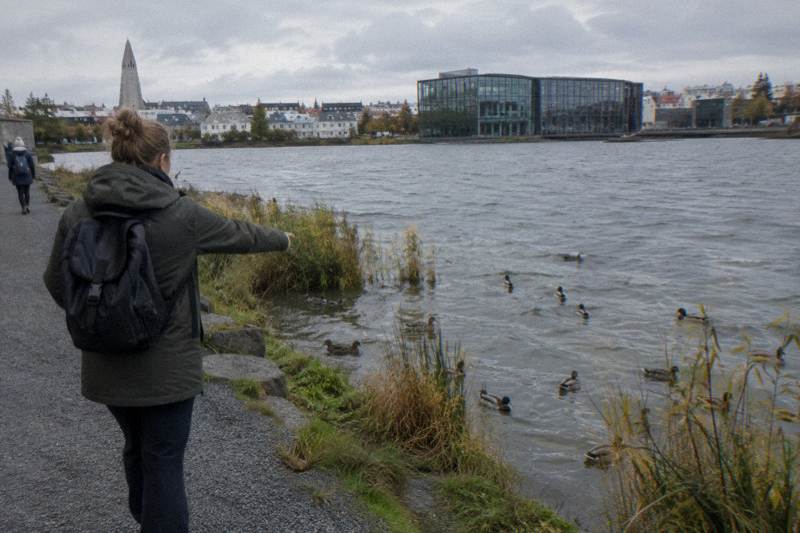
Photography Walking Tours In Reykjavik
Reykjavik is a compact, walkable city where the light does most of the work: a church tower over the rooftops, a working harbour ten minutes from the centre, and winter afternoons that turn gold by three. Here is how to shoot it, with or without a guide.
Short answer
There is no dedicated photography tour sold for Reykjavik, but the city's guided walking tours double as photo walks: from $52 for a roughly 144-minute guided city walk rated 5 across 106 reviews. Sunset on 1 November 2026 falls at 17:10, so late-afternoon walks catch golden hour in winter.
Reykjavik packs a disproportionate amount of photographic material into a small footprint. The Hallgrimskirkja church rises above low rooftops like a basalt organ, the old harbour sits ten minutes downhill from it, and the light at this latitude swings from a 21-hour day in June to just over four hours at the winter solstice. That swing is the single biggest factor in planning any photo walk here, bigger than gear or route.
One honest point up front: no operator sells a dedicated photography tour of the city. What exists instead is a set of guided walking tours that happen to pass the locations photographers come for, led by locals who know the stories behind them. This guide covers both angles: which guided walks work best if you want commentary and company, and how to plan your own route if you would rather chase the light alone.
Can You Take A Photography Tour Of Reykjavik?
No dedicated photography tour of Reykjavik exists among the bookable options, but the city's guided walking tours cover the same ground and work well for photographers. The Guided City Walking Tour runs about 144 minutes, is rated 5 across 106 reviews, and costs from $52, hitting the core downtown sights at a pace that leaves room to shoot.
Think of a photo walk in Reykjavik as a walking tour with a camera. The distances involved are short: the historic centre stretches roughly from the church down to the harbour, and a leisurely loop with photo stops takes two to three hours. A guide adds context you cannot get from a map, who built the corrugated-iron houses, why the harbour wall faces north, where the oldest street in the city sits, and that context often translates into better frames because you know what you are looking at.
If a camera-first experience matters more than commentary, a self-guided route is entirely practical. Downtown is compact and safe, pavements are good, and the key locations are obvious on any city map. The trade-off is light management on your own: in winter the usable window is short, and misjudging it means shooting the harbour in flat midday grey instead of the low gold that arrives by mid-afternoon.
For route planning, the self-guided downtown walking routes and the walking tour map of central Reykjavik give stop-by-stop detail you can adapt to a photography pace.
Where Are The Best Photo Locations In Reykjavik?
Three locations anchor almost every good photo set from Reykjavik: the Hallgrimskirkja church and its tower view, the old harbour with its boats and mountain backdrop, and the painted corrugated-iron houses of the downtown streets between them. A loop linking all three covers roughly two kilometres and takes about two hours at shooting pace.
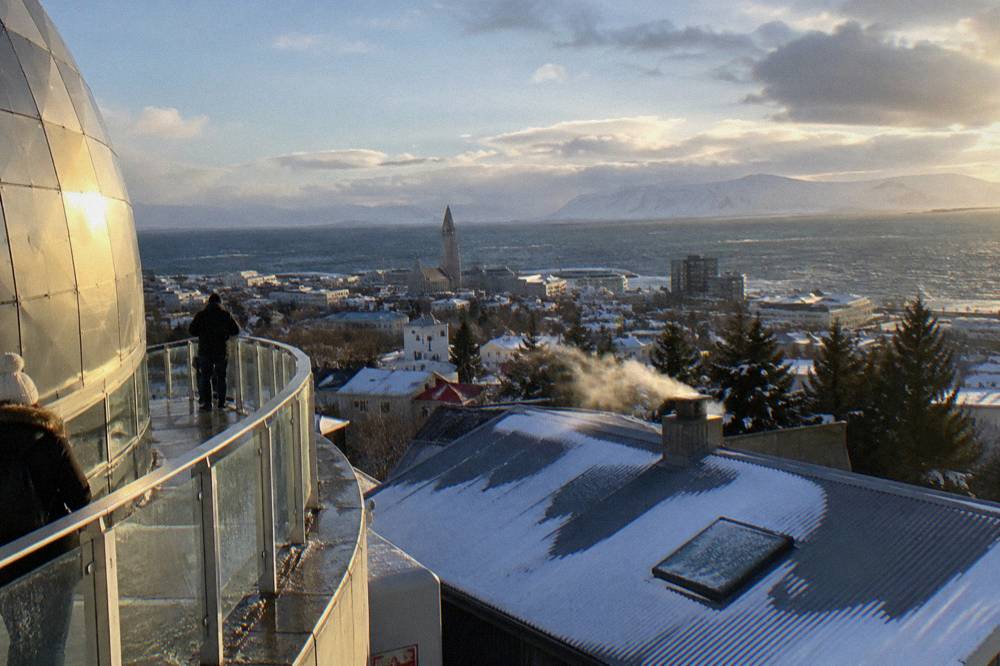
Hallgrimskirkja is the vertical. The tower gives the only elevated view over the coloured rooftops toward the sea, and it is ticketed at the church shop on site, with no advance booking, so you queue and pay when you arrive. Winter hours run 10:00 to 17:00 with last tower entry at 16:45, and access is restricted during services and concerts, so check the church's own opening hours page before planning a tower shot. From the ground, the church's concrete columns photograph best in raking side light, which in November means late morning or mid-afternoon.
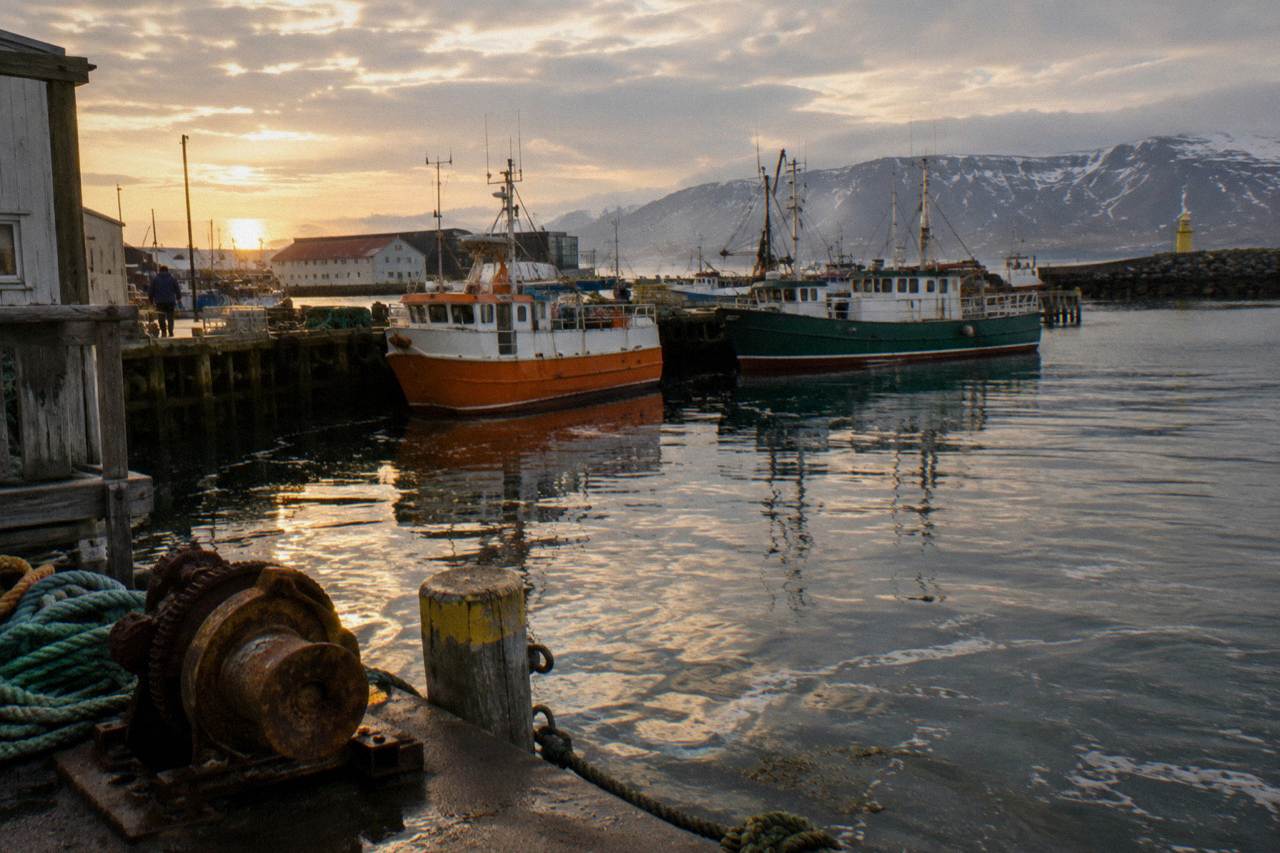
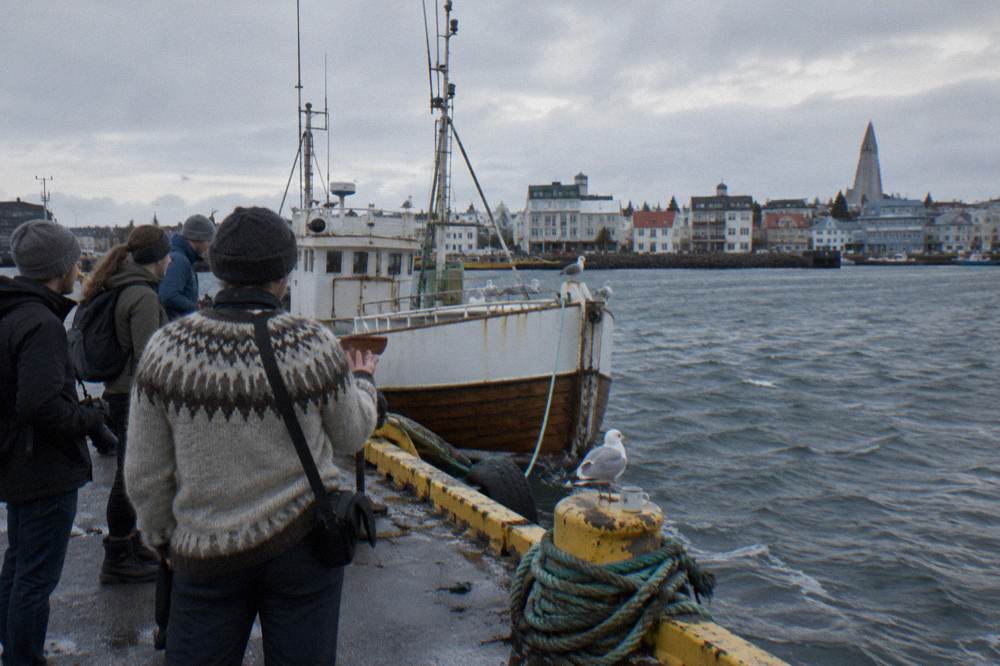
The harbour is the horizontal. Working boats, a breakwater line, and the Esja mountain range across the water give you a foreground, middle and distance in a single frame, and the district changes character with the tide of the fishing day. The Saga Museum sits at Grandagardur 2 in the Grandi harbour district, its wax figures of saga characters worth a frame if the weather turns. Grandi's street-food hall makes a warm editing stop between shoots.
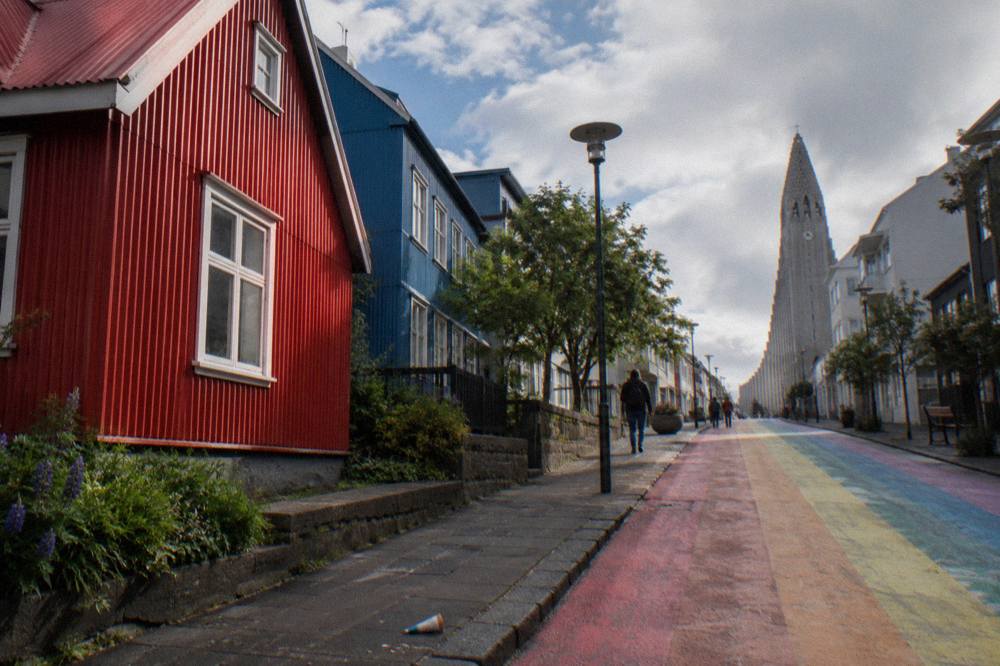
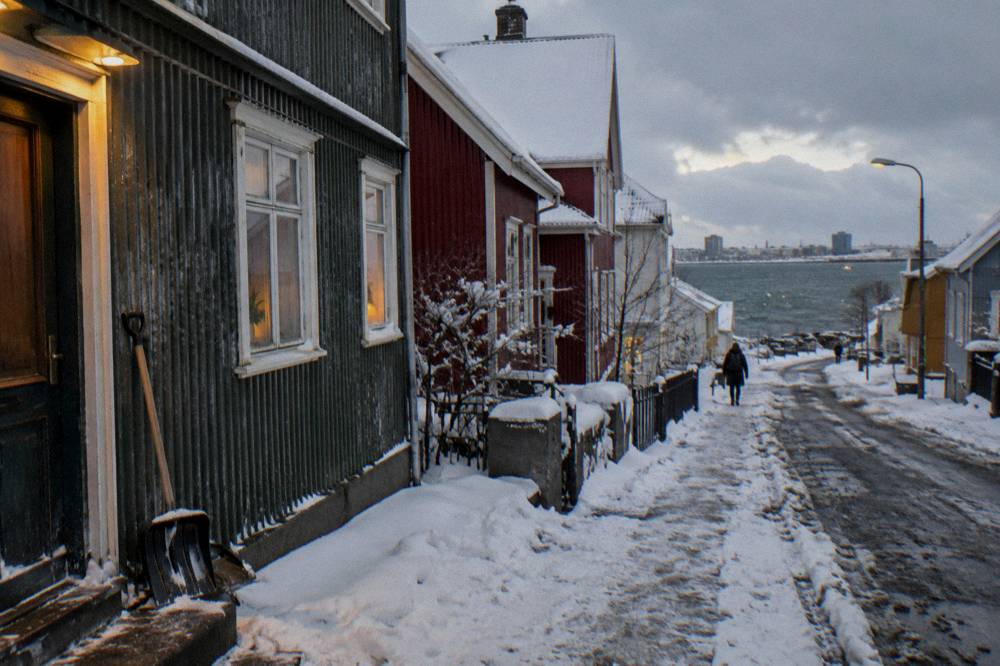
Between church and harbour sit the streets most photographers actually remember: Skolavordustig running downhill from Hallgrimskirkja, and the residential blocks where corrugated iron is painted in saturated reds, blues and yellows against a grey-green hillside. These are at their best under a passing cloud break, when one house lights up like a spotlit stage set.
The guided options below all pass through this core. The trio covers a standard small-group walk, a private version, and a themed variant, which is really the whole decision: how much structure, and how much company, you want while you shoot.
Guided Photo Walk Or Shooting Solo: Which Should You Choose?
Choose a guided walk if you want local context, a fixed route and company on short winter days; shoot solo if your priority is waiting for light at specific spots. Guided city walks run from $52, a private three-hour version runs from $338, and a solo route costs nothing but your time, so the choice hinges on control versus convenience.
The case for a guide is stronger in Reykjavik than in many capitals, because the city's photogenic surface hides stories that are easy to walk straight past. A guide who lives here points out buildings, sculptures and street corners worth a photo, and explains the history behind them. None of that is visible in a frame, but it changes how you shoot, and it fills the flat-light hours when there is nothing worth photographing anyway.
The case for solo is equally real. Light at this latitude is a moving target, and a group moves on schedule. If the cloud breaks at 15:40 and the tour turns back at 15:30, you lose the shot. Solo shooters can also linger: waiting twenty minutes for a fishing boat to clear the frame, or for the street in front of Hallgrimskirkja to empty, is normal behaviour for photographers and impossible on a group walk.
A middle path works well: book a guided walk for your first morning to learn the geography and the stories, then spend a second session solo at the two or three spots you want to re-shoot in better light. The Guided City Walking Tour, about 144 minutes and rated 5 across 106 reviews from $52, is a good first-morning candidate, and you can check availability alongside the guided city walking tour page. The Walking Tour of Reykjavik city, rated 5 across 494 reviews from $51.22, runs a slightly longer loop of two and a half to three hours if you want more ground covered.
When Is Golden Hour In Reykjavik?
Golden hour in Reykjavik depends entirely on the month: in midsummer the sun barely sets and the best light is the long low evening, while in November the sun rises at 09:10 and sets at 17:10, putting golden hour at roughly 15:30 to 16:30. Mid-November gives about six and a half hours of daylight, and the winter solstice about four hours.
The swing between seasons is extreme enough to plan a whole trip around. On 21 June the city gets 21 hours and 8 minutes of daylight; on 21 December it gets about 4 hours. On 1 November the sun rises at 09:10 and sets at 17:10, and by the 15th of November the day has shrunk to about 6 hours 31 minutes, with sunrise near 09:56 and sunset at 16:27. For precise times on your exact dates, the sun tables for Reykjavik are the reference photographers here use.
Winter is quietly the better season for photographers. The sun never climbs high, so the entire usable day is a stretched golden hour, and snow on the rooftops reflects light back into the shadow sides of the coloured houses. The cost is quantity: you get perhaps three good shooting hours between the morning blue and the evening blue, and one of them will be consumed by coffee. Summer inverts the trade, with endless light but a sun that refuses to drop low enough for dramatic angles until close to midnight, when most tours have long since ended.
| Date | Sunrise | Sunset | Daylight |
|---|---|---|---|
| 15 Jan | late morning | late afternoon | about 5 h 25 m |
| 15 Feb | mid-morning | late afternoon | about 8 h 38 m |
| 15 Mar | early morning | early evening | about 11 h 42 m |
| 15 Apr | early morning | evening | about 15 h 05 m |
| 15 Jun | before 3:00 | after midnight | about 21 h 02 m |
| 15 Sep | early morning | evening | about 13 h 03 m |
| 1 Nov | 09:10 | 17:10 | about 8 h 00 m |
| 15 Nov | 09:56 | 16:27 | about 6 h 31 m |
| 21 Dec | late morning | mid-afternoon | about 4 h 07 m |

What Should You Pack For Photographing Reykjavik?
Pack for wind and horizontal rain before you pack for cold: a weather-sealed camera or a good cover, gloves with working fingertips, and lens cloths in every pocket. Reykjavik's December mean temperature is a mild 0.8 degrees C, but 9 to 15 days a month see a millimetre or more of rain, and sea wind ruins more shoots than temperature does.
The Icelandic coast is warmer than its latitude suggests, because the Gulf Stream keeps winter means hovering around freezing. What it does not moderate is wind off the Atlantic, which drives rain and sea spray sideways and coats front elements faster than you can wipe them. Microfibre cloths, plural, live in coat pockets, and a plastic bag and rubber band make a functional emergency cover. Tripods are useful for the harbour at dusk but awkward in winter wind, so weight the legs or brace against the breakwater.
Batteries deserve a note. Cold shortens charge dramatically, and a day that starts at 09:10 and ends at 17:10 in November means you are outside through the entire usable window. Carry a spare battery in an inside pocket, warm, and rotate them. Memory cards are cheap; re-walking a missed shot in a four-hour day is not.
For clothing depth, the what to wear on a Reykjavik walking tour guide covers layering in detail, and the rainy-day tour options in Reykjavik are worth knowing if a front settles in for your whole stay.
| Condition | Frequency or figure | What it means for shooting |
|---|---|---|
| December mean temperature | 0.8 degrees C | Mild by winter standards, dress in layers |
| Days per month with 1 mm+ rain | 9 to 15 | Weather sealing or covers are essential |
| Winter wind | frequent off the sea | Brace tripods, shield lens cloths |
| November sunrise | 09:10 on 1 Nov | Morning blue hour overlaps breakfast |
| November sunset | 17:10 on 1 Nov | Golden hour lands mid-afternoon |
Can You Photograph The Northern Lights From Reykjavik?
Yes, the northern lights are photographed from within Reykjavik, and the aurora season runs from mid-August to late April whenever the sky is dark enough. A boat-based northern lights cruise departs the Old Harbour at around 21:00 in season, which removes the streetlights from your frame entirely, though sightings are never promised.
The city's own light pollution is the enemy, not the latitude. Aurora displays strong enough to photograph from downtown do happen, and the classic in-town workaround is the harbour area or the Seltjarnarnes peninsula at the city's western edge, where the sky over the water is darker than over the centre. The practical recipe is unchanging: tripod, manual focus at infinity, a wide aperture, and patience measured in nights rather than hours, because cloud cover decides the outcome more than solar activity does.
Going out on the water tilts the odds. Operators run northern lights cruises of roughly two hours from the Old Harbour, departing around 21:00 during the season, with the season running into mid-April; the operator's schedule page lists departures and prices. Elding's schedule and prices show the current season structure. No operator promises an aurora, and a good one says so plainly; the value is the darker northern sky over the water and a guide reading the forecast for you.
Timing within the night matters less than timing within the week. Check the Icelandic Met Office's aurora and cloud forecasts, pick the clearest night of your stay, and treat everything else as scouting. On a winter photography trip, the aurora night is often the one evening you skip the pub for the peninsula.
How Much Does A Photo-Friendly Walking Tour Cost?
Photo-friendly guided walks in Reykjavik cost from $50.08 to $68.29 for standard small-group tours, with themed history walks slightly higher and private versions from $338. The cheapest useful option is a roughly two-hour city walk from $50.08, rated 4.9 across 5,260 reviews, and the most reviewed tours cluster tightly within that same narrow band.
The price band is narrow because the product is similar: a local guide, a loop of the centre, two to three hours. What you are choosing between is tone and angle. The Funky History Walking Tour, rated 5 across 444 reviews from $68.29, leans on storytelling, which suits photographers who want the tales behind the frames. The sightseeing walk with a Viking guide, rated 4.7 across 497 reviews from $52, plays the history for fun and is a hit with families. The Guided City Walking Tour, rated 5 across 106 reviews from $52, is the straightforward option: all the core sights, no gimmick, a clean fit for a first-day orientation shoot.
Private versions change the economics completely. The Private Shopping and Sightseeing Walking Tour, from $338 per person over about three hours, lets you set the pace and the stops, which for a photographer means building the route around the light rather than the guide's schedule. Whether that is worth several times the group price depends on how specific your shot list is.
| Tour | Length | Rating and reviews | From |
|---|---|---|---|
| Guided City Walking Tour | about 144 min | 5 across 106 reviews | $52 |
| Sightseeing Walk with a Viking | about 2 h | 4.7 across 497 reviews | $52 |
| Funky History Walking Tour | about 2.5 h | 5 across 444 reviews | $68.29 |
| Walking Tour of Reykjavik city | 2.5 to 3 h | 5 across 494 reviews | $51.22 |
| Guided Folklore Walking Tour | about 1.5 h | 4.7 across 375 reviews | $52 |
| Private Shopping and Sightseeing Walk | about 3 h | 3 reviews | $338 |
Beyond the tour ticket, the walking day is cheap. Tap water is safe and free, public pools cost 1,500 ISK for adults if you want a hot-soak edit session, and the Reykjavik City Card at 6,100 ISK for 24 hours bundles museums, pools and buses if your shooting day includes warming stops. Detailed budgeting lives in the walking tour cost breakdown for Reykjavik.
Which Season Gives The Best Photos Of Reykjavik?
November through February gives the most dramatic light, with a sun that stays low all day and roughly 95 mm of December precipitation that often arrives as snow on the rooftops; June gives 21-hour days and midnight light but flat midday angles. For most photographers, late winter wins: four to eight hours of continuous low golden light per day.
Each season sells a different city. Spring thaws the light into something clean and long, and the streets empty enough that compositions without strangers become realistic. Summer erases the night entirely; the best frames come in the late evening close to midnight, when the sun finally drops low enough for shadows, and the harbour glows in a perpetual dusk that never fully darkens. It is also the season of puffins, with boat tours from the harbour running about an hour from $67, rated 4.6 across 1,434 reviews, a genuine two-for-one for wildlife and city shooters.
Autumn is the connoisseur's pick. The aurora season opens in mid-August, the tourist density falls, and by October the day has shortened enough that golden hour lands at a civilised 17:00 instead of midnight. Winter doubles down: the days are short, the light is theatrical, and the Christmas season adds the Yule Lads and city lights to the downtown streets, covered in detail by the Christmas tours and Yule Lads guide.
The folklore angle deserves a mention for photographers chasing something stranger than postcards. The Guided Folklore Walking Tour, about 90 minutes from $52 and rated 4.7 across 375 reviews, walks the elves, trolls and ghosts into the cityscape, and the stories attach themselves to specific corners in a way that reshapes how you frame them afterwards.
Should You Book A Walking Tour Before You Travel?
Book before you travel if you are visiting between November and February, when short days mean fewer departures and small groups fill on the best-light slots; in summer you can often book a day or two ahead. Free cancellation on most city walking tours makes an early booking low-risk, since you can rebook if the forecast turns.
Winter constrains supply in ways that are not obvious until you are in it. A four-hour daylight window means morning departures are late, afternoon departures are few, and the ones timed to end at sunset are the ones every photographer wants. Small-group formats cap numbers, and the best-reviewed guides fill first. If the tower view and a golden-hour harbour finish are the shots you came for, securing that specific departure early is the difference between getting it and improvising.
The reverse logic applies in summer. Departures are many, days are endless, and same-week booking is usually fine. Even then, the themed walks with small caps, the folklore walk and the private options, are worth locking in ahead, because their capacity is thin year-round.
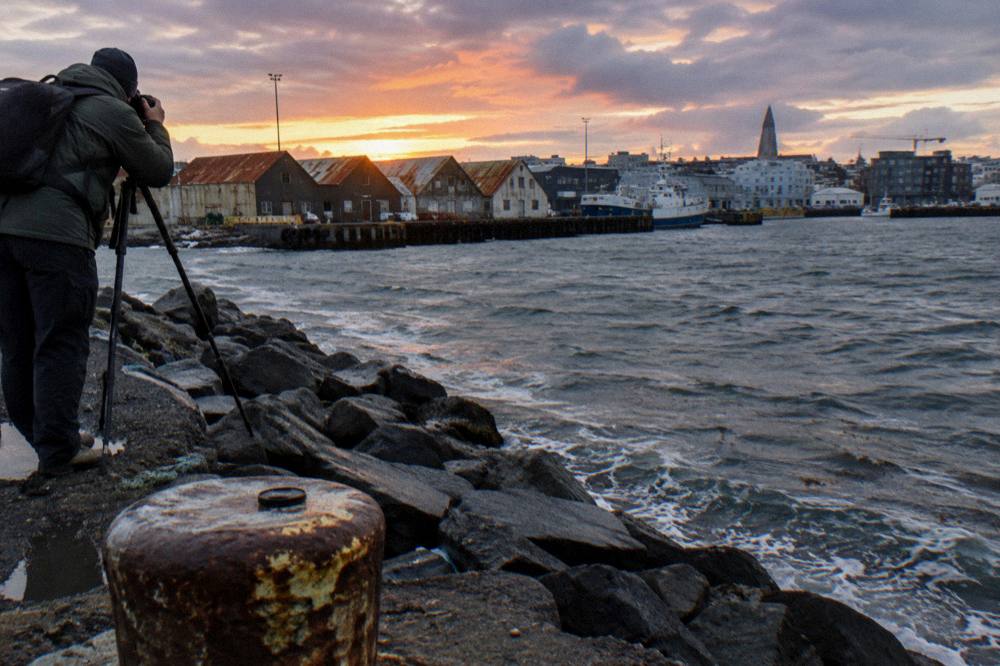
Whatever you choose, build the itinerary around light, not lunch. Start at the tower when it opens, walk the coloured streets through the flat midday hours, and be on the harbour breakwater when the sun gets low. A route that respects the sun in Reykjavik photographs itself; a route that fights it just walks.
In practice a photographer in Reykjavik picks between three formats: the standard small-group city walk, the private version for full route control, and the themed Viking walk for a lighter tone.
Planning a full shooting day in the capital starts with Reykjavik City Tours, where the walking, food and harbour options are laid out side by side for comparison.
Common Questions About Photography Tours In Reykjavik
Is There A Dedicated Photography Tour In Reykjavik?
No. No bookable option offers a camera-led tour of the city, but the guided walking tours cover the same locations with local commentary, from $52 for a roughly 144-minute city walk rated 5 across 106 reviews.
Where Should I Stand For The Classic Reykjavik Photo?
The Hallgrimskirkja tower gives the elevated rooftop view, ticketed at the church shop with last winter entry at 16:45. From the ground, Skolavordustig running downhill from the church, and the harbour breakwater with the Esja mountains behind, are the three anchors of nearly every classic set.
What Time Is Golden Hour In Reykjavik In Winter?
In November, roughly 15:30 to 16:30, with sunset at 17:10 on 1 November and 16:27 by the 15th. In December the whole short day behaves like one extended golden hour, with the sun never climbing high.
Can I Photograph The Northern Lights Without Leaving The City?
Yes, though street light is the obstacle. The harbour area and the western peninsula offer darker skies within walking distance, and roughly two-hour northern lights cruises depart the Old Harbour around 21:00 in season, which runs mid-August to late April. No operator promises a sighting.
Do I Need A Tripod For A Reykjavik Photo Walk?
For dusk harbour shots and any aurora attempt, yes. For daytime street work the light is often bright enough that a fast lens and steady hands suffice, and winter wind makes a light tripod more hindrance than help unless it is braced or weighted.
Which Walking Tour Is Best For Photographers?
The Guided City Walking Tour, from $52 and rated 5 across 106 reviews, covers the core loop at a pace with room to shoot. For full control of stops and timing, the private version from $338 lets you build the route around the light rather than a schedule.