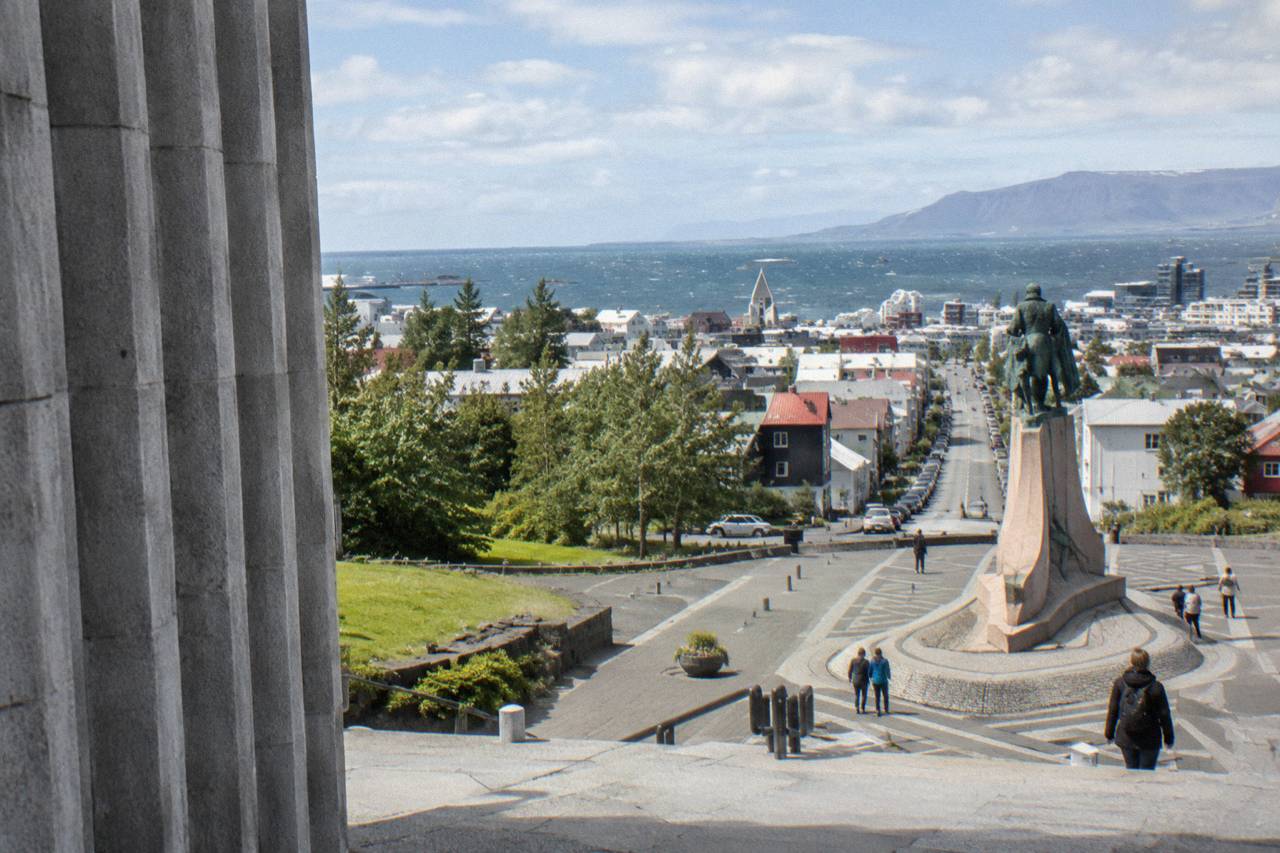
Are Tours Usually Worth The Money? A Reykjavik Answer
A direct answer to whether tours are usually worth the money, tested against real Reykjavik tour prices, DIY costs, and what a guided day actually delivers.
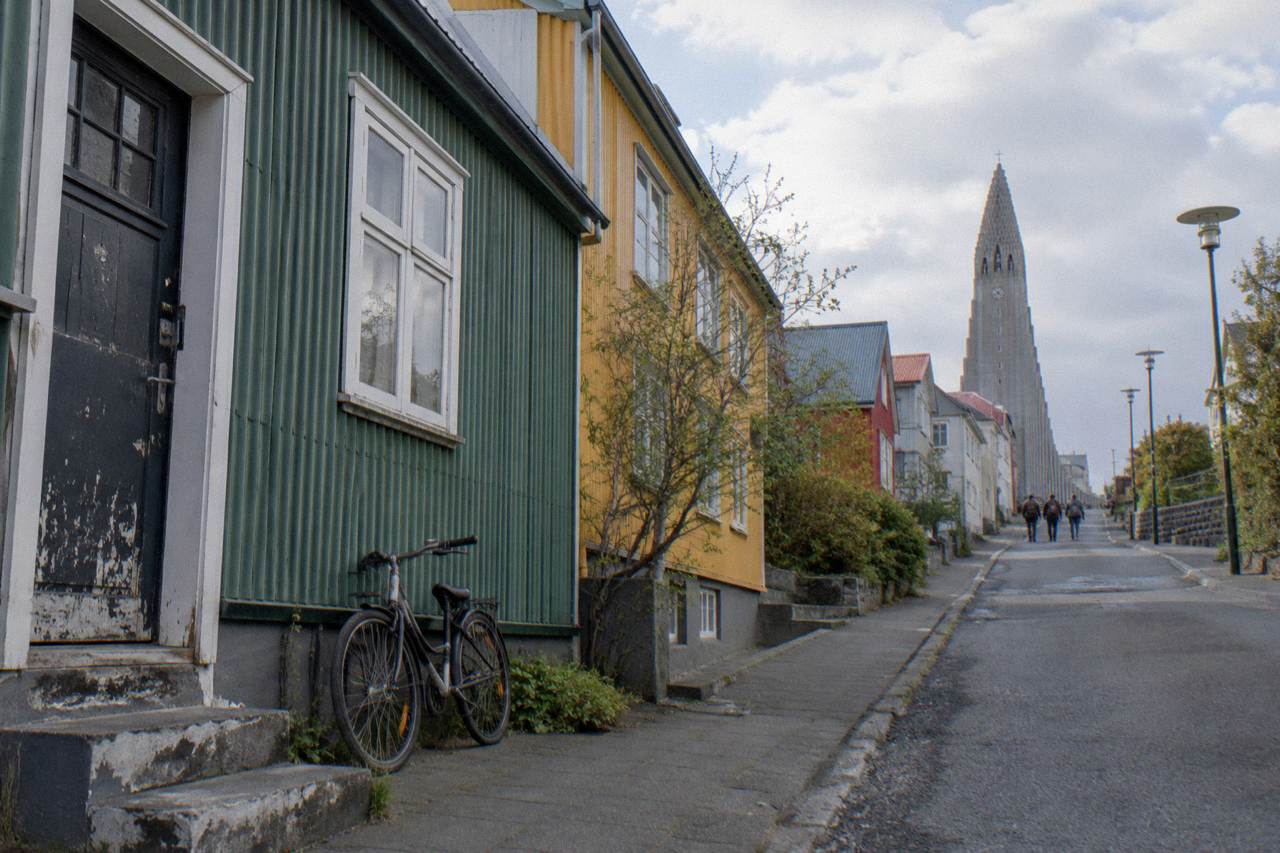
Reykjavik sits at the expensive end of European capitals, and the instinct to cut costs usually lands on guided tours first. A walk is free, the reasoning goes, so why pay for one? That instinct is sometimes right and sometimes wrong, and the difference is easier to see with real numbers than with generalities. This page answers the question directly, then works through what a guided day in Reykjavik actually delivers, what the do-it-yourself alternative really costs, and how to tell before paying whether a specific tour will earn its price. The most common test case is a walk through the city center, and our guide to whether downtown Reykjavik is worth your time prices out a day there and flags when adding a guide makes sense.
Are Tours Usually Worth The Money?
For a first visit to a compact, expensive city like Reykjavik, a well-chosen guided tour is usually worth the money: the small-group city walk costs from $50.08 per person and returns two hours of context, navigation, and local judgment that would take a full day of solo reading to assemble. The exception is the second or third visit, or a traveller who enjoys researching more than being guided, where tours often stop paying off.
The honest version of the answer has three parts. First, tours are worth the money when they buy something you cannot get by walking the same streets alone: interpretation, judgment about what deserves your time, and access to a local's sense of the city. A guide who can tell you why a plain concrete wall matters, or which of six museums is skippable, saves you more than the ticket price in wasted hours.
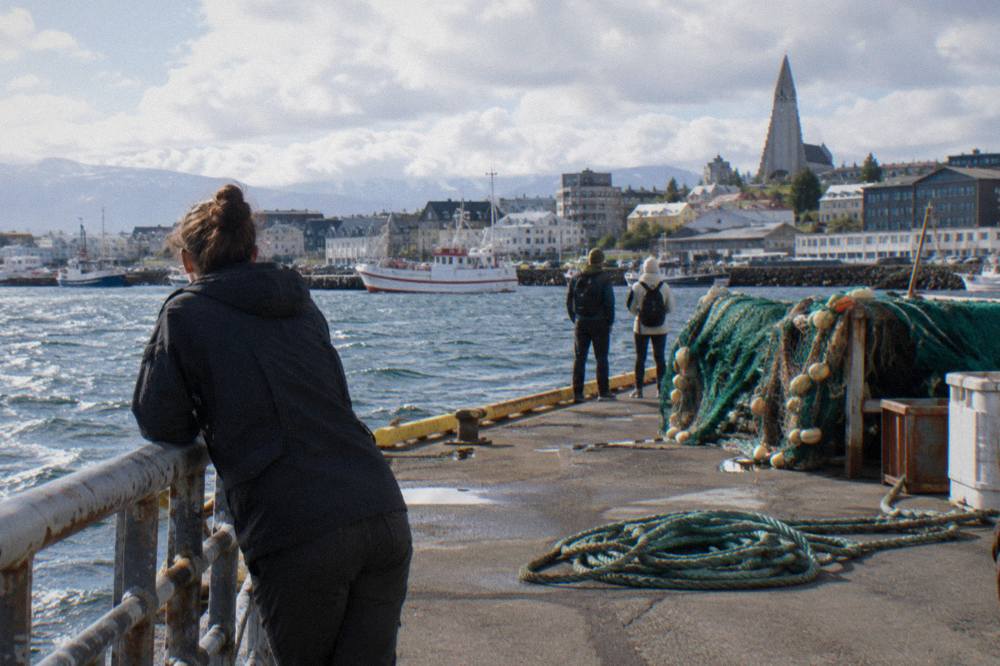
Second, tours are rarely worth the money when the product is pure transport or pure access. If the only thing a tour sells is a seat on a vehicle that also runs as a public bus, the public bus wins on price. Reykjavik makes this comparison unusually easy because the city is genuinely walkable; downtown sits on a small peninsula, and the distances between the harbour, the main church, and the shopping street are short enough that a tour bus is a convenience rather than a need.
Third, the value depends on the operator, not the category. A 3.2-rated hop-on hop-off ticket and a 4.9-rated small-group walk are both "tours," but they are different products. The sections below separate the two kinds of value with actual prices.
What A Good Guide Actually Adds
A good guide adds three things a map cannot: interpretation that turns plain buildings into history, prioritization that saves your limited hours, and local answers to questions you did not know to ask. In Reykjavik those three things matter more than usual, because the city's story, from settlement to independence to the banking crash, is mostly invisible in the streets themselves.
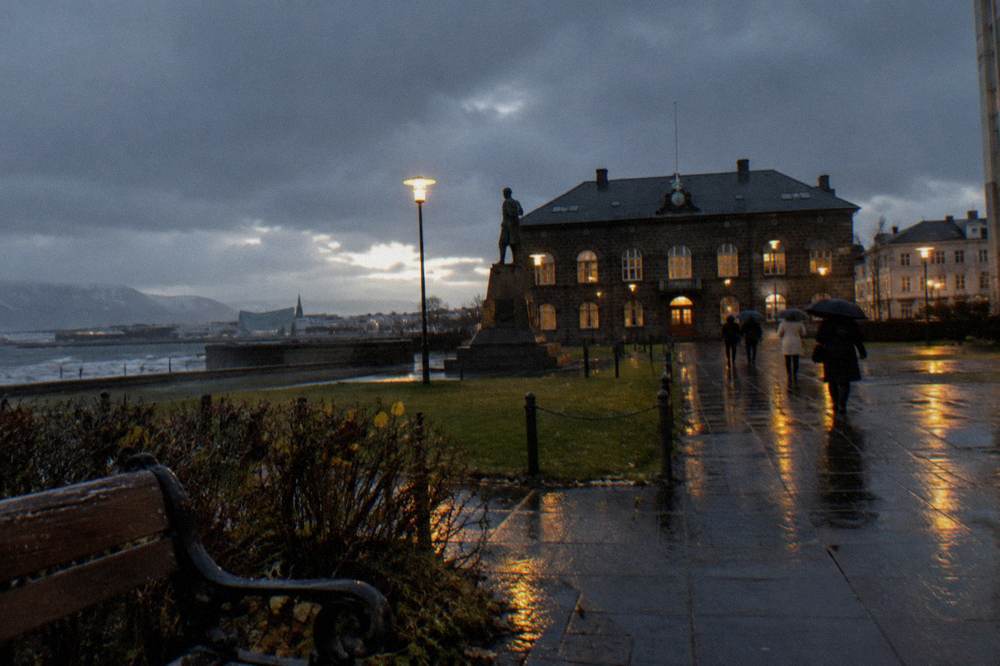
Reykjavik does not announce itself. The downtown core is low, corrugated iron, and quietly modern; a visitor walking alone past the parliament building or the city lake will see pleasant streets and miss almost everything that makes them interesting. A guide closes that gap. The most-reviewed small-group walk in the city, rated 4.9 across 5,260 reviews and priced from $50.08, spends roughly two hours doing exactly this work, and its review pool is large enough that the rating carries real weight rather than a handful of enthusiastic early guests. If you're deciding what to wear for that kind of wandering, the guide to jeans and Reykjavik weather tells you what the streets will ask of your clothes month by month.
The comparison worth making is against the alternative uses of the same money. A Reykjavík City Card costs 6,100 ISK for 24 hours and buys entry to museums, pools, and buses. That is a strong product for a self-directed traveller. But the card does not interpret anything; it admits you to rooms where you read panels on your own. A guided walk and a city card are complements, not substitutes, and travellers who try to replace one with the other often end up slightly disappointed by both.
There is also a smaller, subtler benefit: guides answer the unscripted questions. Where to eat tonight that is not a tourist trap, whether the weather will hold, whether an attraction is worth the walk in November daylight. That kind of judgment is the hardest thing to buy and the easiest thing to undervalue until you have spent a trip without it.
The Math: Guided Tour Versus Doing It Yourself
Counted honestly, the do-it-yourself day in Reykjavik is not free. A small-group walking tour costs from $50.08 per person, while a City Card at 6,100 ISK, museum entries, bus fares, and food-hall lunches quietly stack up on the independent side, so the real premium for a guide is smaller than it first looks, paid in exchange for two hours of expertise.
The table below puts the typical pieces side by side. Tour prices reflect the live listings; other figures come from official city and operator sources., and a couple of items are worth checking on the day because holiday hours shift them.
| Day option | What you get | Typical cost | Guided equivalent |
|---|---|---|---|
| Small-group city walk (guided) | About 2 hours, guide, city centre route | From $50.08 per person | The baseline |
| City Card, 24 hours | 17 museums, 8 pools, unlimited buses | 6,100 ISK | Covers entry, no interpretation |
| Saga Museum entry | Self-guided audio tour, wax-figure sagas | 4,000 ISK adult | A guided walk covers the same stories in the street |
| Straeto bus single fare | One ride, capital area | 690 ISK adult | Included in City Card, not in tours |
| Public pool admission | Geothermal pool, all day | 1,500 ISK adult | No guided equivalent needed |
| Hot dog at the 1937 harbour stand | One classic Icelandic pylsa | 920 ISK | A common stop on food tours |
Two conclusions fall out of this arithmetic. The first is that "free" independent sightseeing in Reykjavik quietly accumulates costs: one museum, one pool, one bus, one lunch, and the day is no longer cheap. The second is that the guide's premium is the cheapest expertise on the list. Nobody blinks at 4,000 ISK to walk through wax figures reading placards; the question of whether a living guide is "worth it" deserves the same standard.
The trap runs the other way too. A traveller who books three tours in two days, a walk, a food tour, and a bus ticket, has bought a package that can crowd out the aimless wandering that makes a small city pleasant. The value question is not only "is this tour worth it" but "is this tour worth it today, given everything else booked."
When Tours Are Not Worth The Money
Tours usually fail to earn their price in three situations: when they sell transport the city already provides cheaply, when the review pool is too thin to trust, and when the itinerary duplicates something a free resource covers. Reykjavik's compactness makes the first failure mode common, because a bus loop around a walkable peninsula competes directly with a 690 ISK public fare.
The clearest local example is the hop-on hop-off product. The 24 or 48-hour ticket is priced from $53.49 and rated 3.2 across 909 reviews, a genuinely middling score on a large sample, and the service has had schedule interruptions in the past, including a suspension in spring 2026. In a city where the headline sights sit within a 20-minute walk of each other, the honest assessment is that this product makes sense mainly for visitors with limited mobility, tight layovers, or a strong preference for sitting. For everyone else, feet and the occasional bus fare win.
Review-pool size is the second tell. A tour with 5,260 reviews averaging 4.9 is a known quantity; a tour with seven reviews at any score is a gamble, not a bad product necessarily, just an unproven one. When a listing shows a handful of reviews, the price should be treated as an experiment budget rather than a sure thing, and checking the booking page for group size and cancellation terms matters more than usual.
The third failure mode is duplication. Booking both a general city walk and a themed walk that covers the same central blocks, or a food tour that stops at the same five downtown venues a walk already passed, doubles spending without doubling insight. Anyone booking multiple tours should read the route descriptions side by side and cut the overlap.
The guided foodie walk is a different case worth naming, because it is the category people most often doubt before booking and least often regret after. The most-reviewed food tour in the city is rated 4.9 across 2,124 reviews and costs from $147, and its price makes sense only when counted against what the same tastings would cost bought separately. Six tastings, at restaurant prices in one of Europe's pricier capitals, plus a guide routing you between them, is not a cheap product to deliver. The math favors the tour when you would have eaten most of those items anyway.
What The Day Actually Looks Like
A paid day in Reykjavik usually runs one of three shapes: a two-hour morning walk followed by an independent afternoon, a three-hour food tour as the day's main event, or a hop-on hop-off ticket as a slow loop between sights. The walk-plus-afternoon shape delivers the best value, because it spends money on interpretation exactly once and leaves the rest of the day open.
The morning-walk shape starts around 10:00, which suits Reykjavik's late sunrises: on 1 November the sun comes up at 9:10, so a 10:30 tour start catches the full daylight window. Two hours with a guide covers the core, the harbour, the main church, the oldest streets, and leaves the afternoon for a pool, a museum, or the food halls at Hlemmur Mathöll, which opens at 11:00 daily with a dozen vendors, or Grandi Mathöll by the old harbour, open 11:00 to 21:00. The walk is the only paid decision of the morning; everything after it can be as cheap or as expensive as appetite dictates.
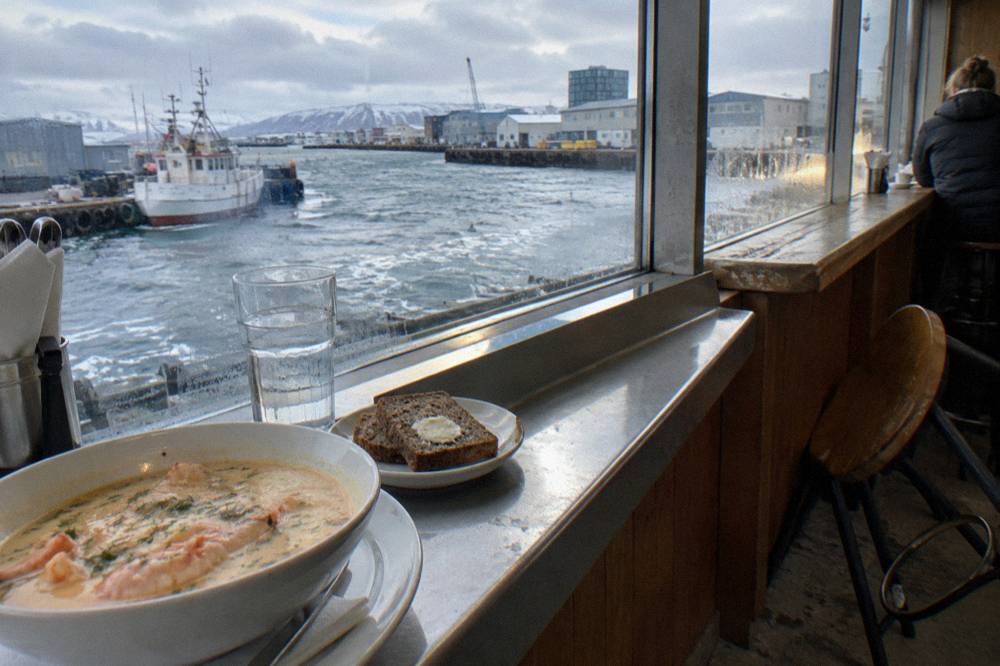
The food-tour shape inverts the day. Three hours of tastings becomes lunch, and the practical advice is to book it midday, eat nothing beforehand, and treat the evening as light. Food walks are among the best-reviewed tours in Reykjavik, with ratings from 4.6 to 5 across the category., which is the mechanism that makes the ticket defensible: it is not a supplement to dinner, it replaces it.
The bus-loop shape is the loosest structure and the one most dependent on weather. Winter departures run roughly every 45 minutes from about 9:30, with a last departure around 16:15 and a full loop of about 80 to 85 minutes, per current operator schedules. In November daylight, roughly eight hours between sunrise at 9:10 and sunset at 17:10, a bus day needs tighter planning than summer, and a poorly timed loop can consume a quarter of the usable light waiting at stops.
| Day shape | Money spent on | Hours of daylight needed | Best for |
|---|---|---|---|
| Morning walk + free afternoon | One guided walk | 2 to 3 | First visit, most travellers |
| Midday food tour | One food tour | 3 | Food-first visitors, short stays |
| Bus loop day | One bus ticket | 4 to 6 | Limited mobility, wet days |
| Fully independent | Museums, pools, buses | All day | Second visits, confident researchers |
The guided city walk from $52, rated 5.0 across 106 reviews, is a good fit for the walk-shape day when the small-group format matters less than the schedule. For travellers connecting the question of tour value to the practical question of pacing, the best time of day for a Reykjavik walking tour guide breaks the daylight arithmetic down month by month.
Seasons, Weather, And Whether The Price Holds
Tour prices in Reykjavik hold fairly steady through the year, but the experience behind them swings with daylight and weather, so the value question changes season to season. Winter tours buy their worth by doing the daylight planning for you; summer tours buy it by sparing you the crowds, and rain tests both. Weather decides some tours more than others, and the guide to Segway and e-scooter tours in Reykjavik spells out which ones still run when rain rolls in.
Winter, November through February, is when a guide arguably earns the most. Daylight shrinks to about four hours at the solstice, streets ice over, and the cost of a wasted morning is measured in a large fraction of the usable day. A guide who starts on time, routes efficiently, and keeps the group moving converts a scarce commodity, light, into sightseeing. Aurora season also runs through winter, mid-August to late April on dark nights, though no operator can promise a sighting, and independent aurora hunting from the city is free if you accept a lower success rate.
Summer inverts the equation. With over 21 hours of day around the June solstice, the pressure of time disappears and independent walking becomes maximally easy, but the downtown core fills with visitors and the queuing at the famous church tower, ticketed on-site at the church shop with no advance booking, eats time a guided route would sidestep. The church keeps winter hours of 10:00 to 17:00 with last tower entry at 16:45, and access tightens during services, so a guide who knows the day's closure list saves a wasted trip.
Rain is the honest wildcard. Reykjavik sees measurable rain on 9 to 15 days per month in a typical year, and no tour can schedule around it. The practical response is to check the cancellation terms on the booking page before paying, favour operators with flexible rebooking, and keep one indoor backup, a museum or the food hall, in reserve. The Reykjavik tours in the rain guide covers wet-day planning in detail, and the what to wear on a Reykjavik walking tour guide covers the clothing half of the problem.
How To Judge A Tour Before You Pay
Judge any tour on four signals before paying: review count alongside rating, group size, what the price actually includes, and the cancellation terms. In Reykjavik a useful rule of thumb is that a rating on at least a few hundred reviews is evidence, a rating on a dozen is noise, and inclusions, not the headline price, decide most value disputes.
Review count first, because it is the cheapest signal. The small-group walk's 4.9 across 5,260 reviews and the classic food walk's 4.9 across 2,124 reviews are stable facts; a 5.0 from three reviews is a compliment from three people. Neither number makes a tour good or bad, but the large pools at least tell you what past guests broadly experienced.
Group size second. The difference between a group of 6 and a group of 30 is the difference between a conversation and a lecture, and listings state it. Small-group formats cost a little more per person and usually justify it in questions asked and answered.
Inclusions third. A food tour from $149 with six-plus tastings of Icelandic classics is a different product from an evening walk that includes nothing but the guide. Read the inclusions list on the booking page the way you would read a restaurant bill, and price the missing pieces separately before deciding the tour is expensive.
Cancellation last. Weather in Iceland moves tours, not the reverse, and an operator with a flexible cancellation policy is selling insurance along with the sightseeing. Where the listing does not state the policy, check the booking page before paying rather than after.
The final honest word on the money question: the travellers who regret tours in Reykjavik are rarely the ones who paid for one good guide. They are the ones who stacked three overlapping products, or bought transport in a city built for feet. One well-reviewed walk on the first morning, an optional food tour if eating is the point of the trip, and free feet for everything else, is the pattern that most reliably leaves both wallet and itinerary intact. For a broader walk-through of the options, Reykjavik City Tours lays out the full range of guided formats with live prices.
Common Questions About Tour Value
Are Tours Usually Worth The Money?
In Reykjavik, usually yes for a first visit: a small-group city walk from $50.08 returns two hours of interpretation and local judgment that is hard to assemble alone. Tours stop paying off on repeat visits, for confident independent researchers, or when a product merely sells transport in a city that is easy to walk.
Why Pay For A Walking Tour When Walking Is Free?
Because Reykjavik's history is largely invisible in its streets. A guide turns plain buildings into stories, prioritizes your limited daylight hours, and answers unscripted questions. The most-reviewed walk, rated 4.9 across 5,260 reviews, costs from $50.08, comparable to a single museum ticket elsewhere in the city's price environment.
How Do I Know If A Tour Is Good Before Booking?
Check the review count beside the rating, the stated group size, the full inclusions list, and the cancellation terms on the booking page. A 4.9 across thousands of reviews is strong evidence; a high rating from a handful of reviews tells you little.
Are Food Tours Worth It In An Expensive City?
They can be, when counted as a meal. The leading food tour, rated 4.9 across 2,124 reviews, costs from $147 and includes six tastings plus guidance between stops. Guests routinely describe leaving full, so the fair comparison is against a restaurant dinner plus the value of the routing, not against a free walk.
Do I Need A Bus Tour To Get Around Reykjavik?
Generally no. Downtown is compact and walkable, the adult bus fare is 690 ISK, and the hop-on hop-off product, from $53.49 and rated 3.2 across 909 reviews, suits mainly travellers with limited mobility or tight schedules. Winter service also runs a reduced timetable with a last departure around 16:15.
Does Bad Weather Make Tours A Waste Of Money?
Not if the terms are checked first. Rain falls on 9 to 15 days most months, so pick operators with flexible cancellation or rebooking, dress for the forecast, and keep an indoor backup such as a museum or a food hall. No operator controls the weather, and no sighting or view is ever guaranteed.