How Long Does It Take To Walk Around Reykjavik?
How long does it take to walk around Reykjavik? A direct answer with time budgets for the city centre, seasonal daylight, and guided walks that match each pace.
Reykjavik is one of the smallest capital cities in Europe, and its walkable core is smaller still. Almost everything visitors come to see sits inside a rectangle bounded by the harbour to the north, the pond to the south, and the residential slopes either side of the main shopping street. That shape is the reason the question of time comes up so often: people assume a capital needs days to walk, arrive, and discover the whole centre fits between lunch and dinner. The honest answer depends on what counts as "around", and this page breaks that down by route, by season and by whether a guide is setting the pace. If you're still weighing whether that compact centre deserves your hours at all, our verdict on whether downtown Reykjavik earns its keep covers what a day there costs and when a guided walk makes sense.
It also depends on who is asking. A cruise passenger with four hours ashore, a family with tired children, and a photographer waiting for evening light all need different versions of the same answer, and the good news is that the city accommodates all of them without strain. The loop is short enough to be forgiving. Miss a street on the first pass and the return walk to it costs five minutes, not an hour, which is a luxury few capitals offer.
A full loop of Reykjavik's city centre, taking in the harbour, the pond, the main church and the shopping street with photo stops, takes roughly two to three hours at a relaxed pace. A fast, stop-free circuit takes about an hour. Guided walks reflect the same spread: from the 60-minute express format at $89 to standard small-group tours of around two to two and a half hours.
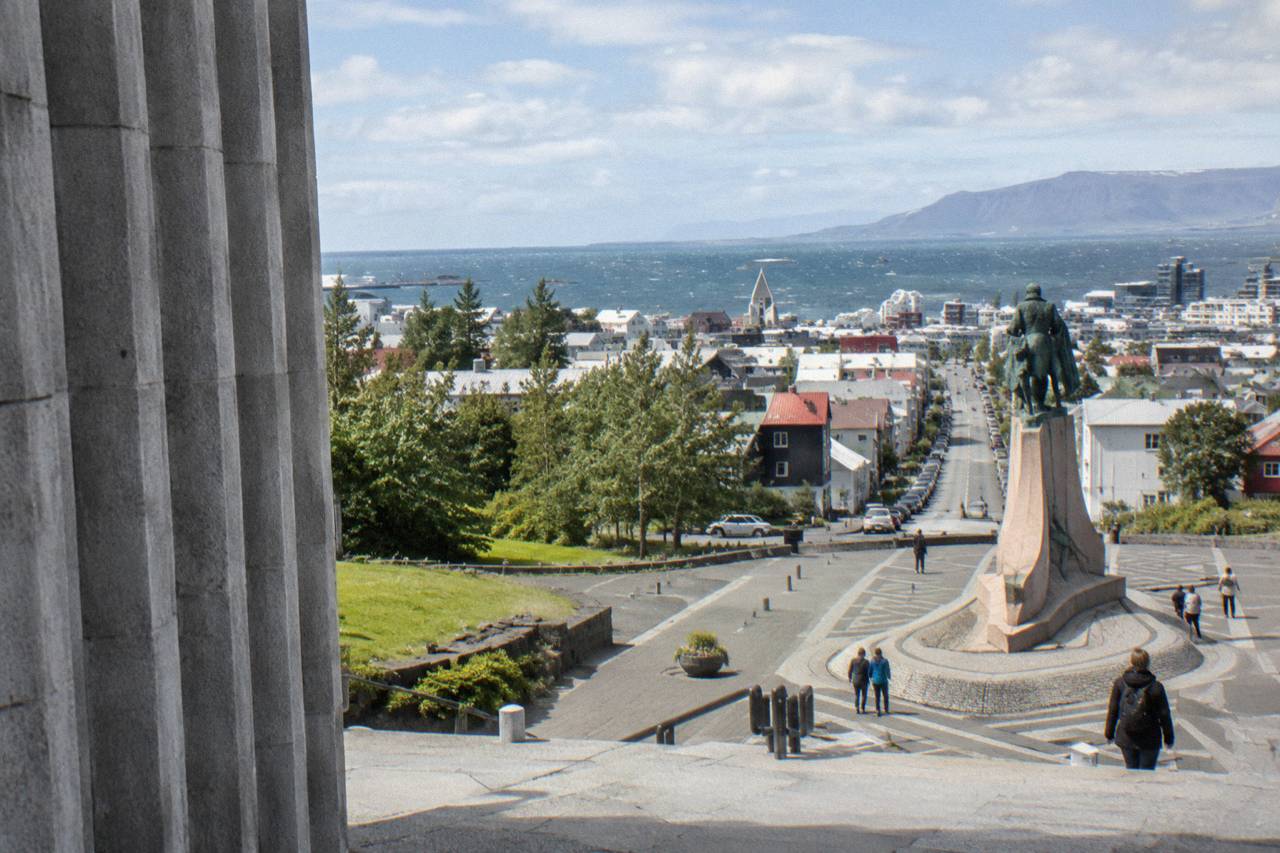
That two-to-three-hour figure assumes the loop most visitors actually want: out along the old harbour, up past the concert hall to the tall church on the hill, down the main shopping street, around the city pond, and back to the centre. It allows time to step inside a building or two and stand still for photos. Anyone marching without stops can compress the same circuit into an hour, which is exactly the thinking behind the express format of the Reykjavik Express Walk with a Local in 60 minutes, from $89 per person, which squeezes the centre into a single hour to 90 minute window.
The other end of the scale is a full day, and it is a legitimate way to do the city, because the centre keeps revealing side streets, harbour viewpoints and museum doorways. A day-long walk is really a chain of short walks with coffee, food halls and exhibits threaded between them. The distinction matters for planning: the loop itself is short, the day is long, and both answers are true at once.
Between those poles sits the most common real-world version, the half-day walk. Three to four hours lets a visitor add the harbor district properly, including the Saga Museum with its wax-figure scenes of Icelandic history, where 17 wax figures bring the sagas to life and adult admission is 4,000 ISK. It also leaves room for the Settlement Exhibition in the city museum family, open daily 10:00 to 17:00 and closed 24 to 26 December and 31 December to 1 January. Neither museum is large; both reward unhurried attention rather than a rushed tag at the end of a loop.
For travellers who would rather have someone else manage the clock, the two-to-three-hour band is where most guided options sit.
The express walk covers the core in about an hour from $89. The small-group walk runs about two hours from $50.08 and carries a rating of 4.9 across 5,260 reviews, the deepest review pool of any walking option in the city. The small-group tour with a local guide takes about two and a half hours, from $49, rated 4.8 across 616 reviews. Between them they span three different durations, so you can pick your pace.
How Compact Is The Centre On Foot?
The walkable core of Reykjavik fits inside roughly a 20-minute stroll in any direction from the central shopping street, and the landmarks that define a first visit sit within a few minutes of each other. Nothing in the historic centre requires transport, and the farthest common pairing, old harbour to the church tower, is a walk of about 10 to 15 minutes.
That compactness is structural. The city grew around a single low-rise grid, and planning rules kept buildings low for decades, so the centre reads as a dense cluster rather than a spread-out metropolis. The church tower marks the highest natural point in the immediate area; the harbour sits one short slope below it; the pond sits five minutes south of the shopping street. A visitor standing at the middle of the main shopping drag can see, or almost see, every edge of the walkable centre.
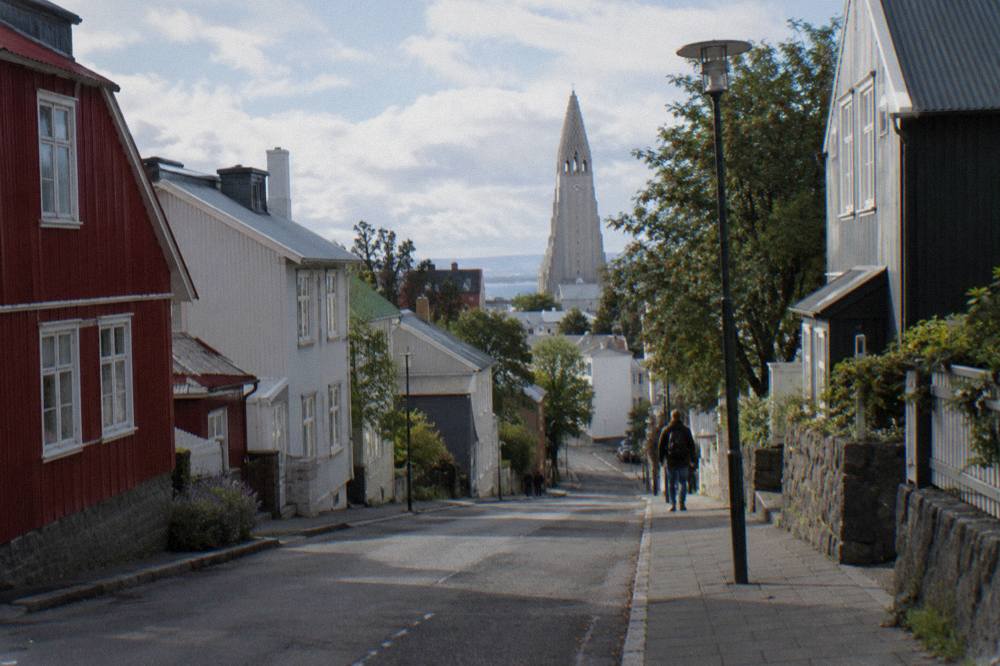
Compactness does not mean there is nothing to linger over. The tower of the main church is ticketed at the church shop, sold on site only with no advance booking, and winter opening runs 10:00 to 17:00 with last tower entry at 16:45; access is restricted during services and events, so the daily closure list on the church's own site is worth a glance before planning a tower stop into a walk. The pond, the harbour edge and the concert hall are all free to wander at any pace.
The practical consequence of all this is that walking speed matters less than stop count. Two visitors covering the identical loop can finish 90 minutes apart purely because one went up the tower and the other did not. Budget time per stop rather than per street, and the arithmetic of the day falls into place.
It also means the loop scales down gracefully for short visits. A visitor with a single free hour before a flight can walk the harbour stretch, stand at the foot of the church, and still make it back with minutes to spare. That elasticity is unusual among capitals and it is the reason time-boxed travellers, cruise passengers in particular, keep asking this question and keep being pleasantly surprised by the answer. The walkability question is explored from the safety and night-time angle in is it safe to walk around downtown Reykjavik at night, for anyone planning an evening version.
For anyone stretching beyond the core, the geothermal pools and museums further out are reachable on foot with patience, or with a city bus: the adult single fare is 690 ISK, with children 11 and under free, and the official transit pricing page carries the full fare table. A 24, 48 or 72-hour Reykjavik City Card bundles unlimited buses with museums and pools, priced at 6,100 to 10,500 ISK per the official card page.
What Does A Sensible Walking Loop Look Like Hour By Hour?
A sensible loop starts at the harbour or the church, runs two to three hours, and alternates walking bursts with fixed stops. Roughly: 30 minutes for the harbour and concert hall, 30 to 45 minutes at the church including the tower queue, 45 minutes down the shopping street with a snack stop, and 30 minutes around the pond and back to the start.
The shape of the loop rewards a clockwise start from the harbour in the morning, because the low winter sun sits behind you as you climb toward the church, and the shopping street's cafes open as you descend. In summer the direction matters little; there are up to 21 hours of daylight around the solstice, and visitors routinely walk the loop late into the evening in full light. For route ideas and guided walks, browse Reykjavik City Tours.
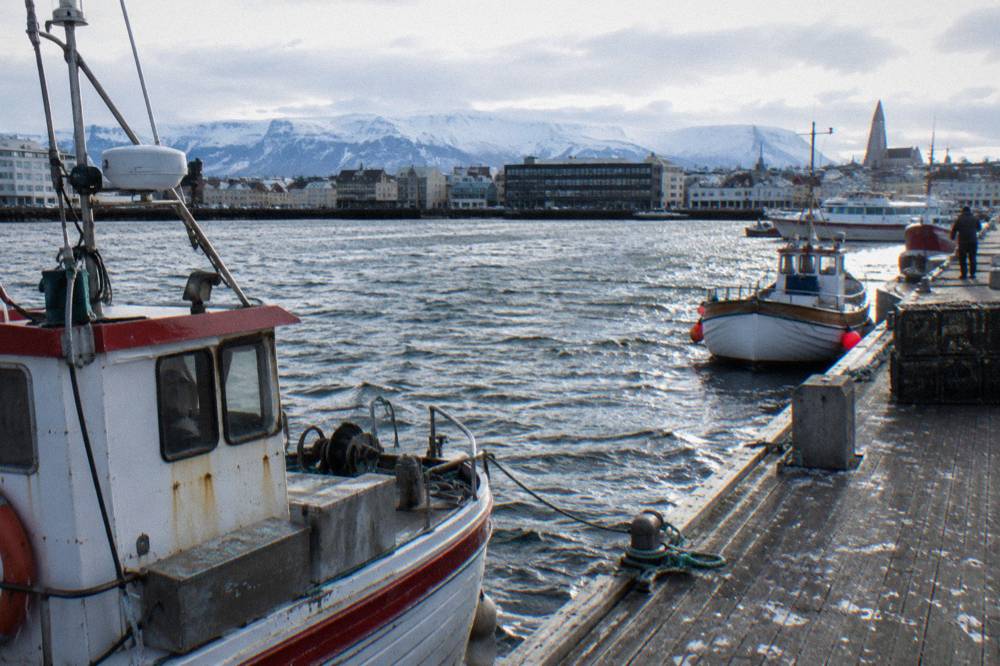
The stops, not the streets, consume the clock. The food halls are the classic mid-loop pause: the harbor district street-food hall opens daily at 11:00 and closes at 21:00, and the first food hall in the former bus terminal opens late morning and serves until late evening, though both close on specific holiday dates. The famous hot dog stand near the harbour has operated since 1937 and serves fast enough to cost minutes rather than half hours. Anyone tracing a self-directed route can borrow the structure laid out in the self-guided walking tour of Reykjavik, and the Reykjavik walking tour map pins the same loop visually.
A food stop deserves deliberate budgeting, because it is the single most underestimated time sink on the loop. A counter-service hot dog costs ten minutes; a seated stop at a food hall vendor costs 45 minutes to an hour once ordering, eating and paying are counted. Visitors who plan a proper lunch inside the loop should therefore treat the walk as a three-hour commitment minimum, while those content with a standing snack hold the two-hour line. The street-food tour format, about three hours from $136.58, exists precisely because eating and walking blur together in this city.
One structural tip: the loop has a hill. The climb from the harbour up to the church is short but steady, and winter sidewalks can hold ice from November onward. Footwear with grip changes the winter version of this walk more than any other single decision; the guide on what to wear on a Reykjavik walking tour covers it in detail.
Families should add a buffer rather than subtract one. The pond's birds and the harbour's boats are natural attention traps for children, and the walking itself is easy enough that the loop works for school-age kids without complaint. The dedicated guide at Reykjavik tours for kids and families adapts the same geography for younger legs.
| Stop on the loop | Typical time on a relaxed walk | Notes |
|---|---|---|
| Old harbour and concert hall exterior | 25 to 30 minutes | Free to wander, boats and birdlife |
| Church tower visit | 30 to 45 minutes | Ticketed on site only, last tower entry 16:45 in winter |
| Shopping street with a snack | 40 to 60 minutes | Hot dog stand since 1937, cafes, design shops |
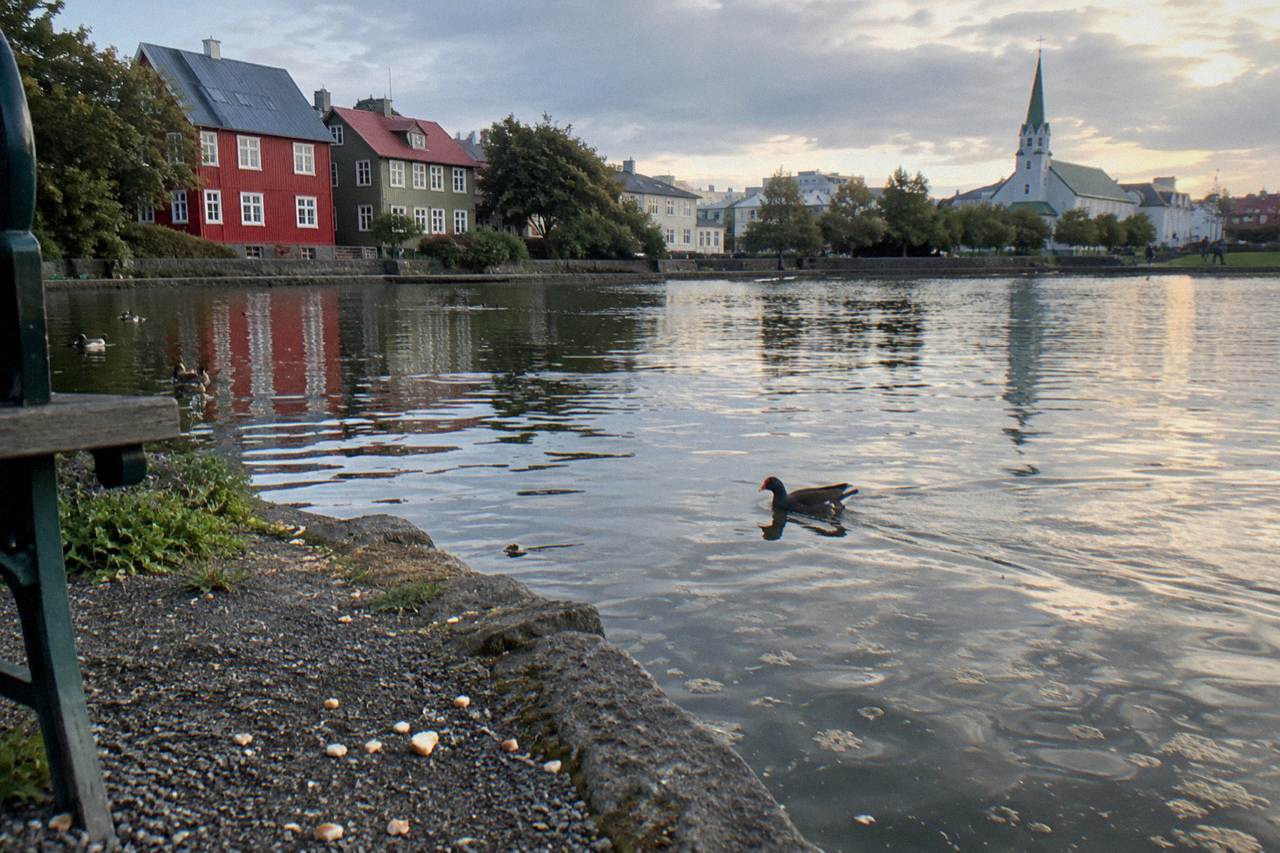
| City pond loop | 20 to 30 minutes | Flat, swans and ducks, quick detour |
| Harbor district museum add-on | 45 to 60 minutes | Saga Museum visit length, adult 4,000 ISK |
| Full circuit total | 2 to 3 hours | Matches standard guided tour durations |
The table's bottom line matches the guided market almost exactly, which is not a coincidence: operators design two-hour tours around what a visitor can comfortably walk with stops, and the standard options in the city run 90 minutes to three hours as a result.
Does The Season Change How Long The Walk Takes?
Yes, mainly through daylight rather than distance. In early November the sun rises around 9:10 and sets by 17:10, shrinking the comfortable walking window to about eight hours, while around the June solstice the city gets over 21 hours of light and the loop can happen at midnight. Ice and wind in winter also slow the average pace.
Daylight is the single biggest seasonal variable. The astronomy tables for the city show the 15th of each month swinging from about 21 hours of daylight in June to barely four in December. A December visitor has a narrow band of grey light, roughly 11:00 to 15:30, in which the whole loop plus a tower visit must fit. A June visitor can stroll the harbour at 23:00 in daylight and treat the loop as a flexible all-day option.
Winter weather adds friction, not distance. Mean December temperature sits just above freezing but precipitation lands on nine to fifteen days per month in amounts of 1 mm or more, so pavement ice is routine and winter tyres become mandatory on Icelandic roads from 1 November. None of this stops the walks: operators run city tours year-round, and the standard two-hour formats keep their schedules through the dark months. It simply means the same loop takes modestly longer, and warm layers move from optional to necessary.
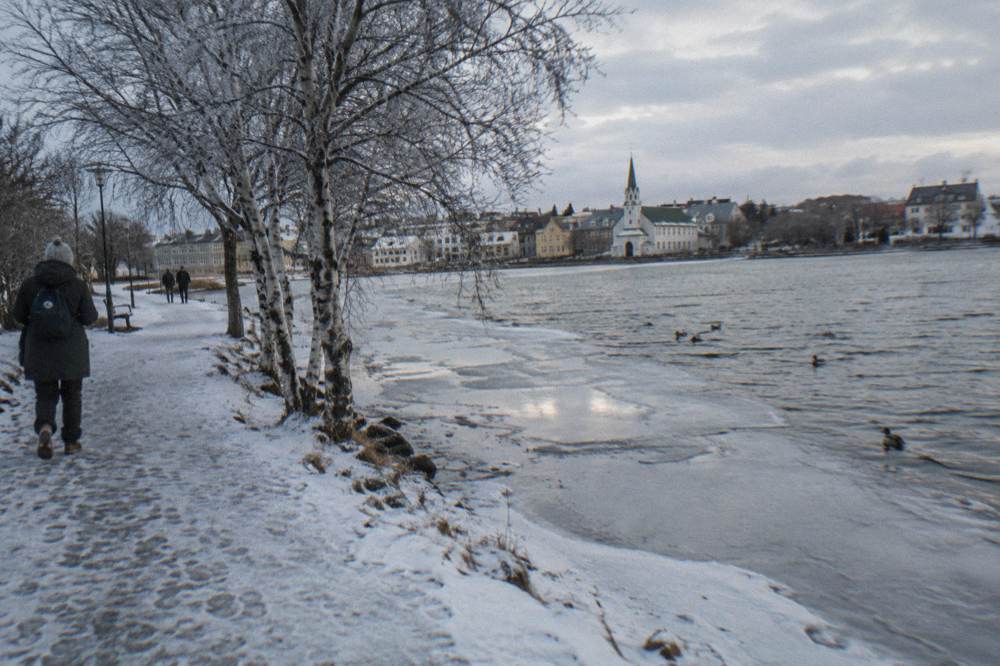
The season also changes what the loop is for. From mid-August to late April, dark nights bring the aurora season, and evening walks double as informal sky-watching, though sightings depend entirely on conditions and are never promised. In the nesting season roughly May to August the harbour edge adds puffin boats to the view, a one-hour sail from $67 that pairs neatly with a harbour-first loop. The seasonal planning guide at Reykjavik tours in winter works through the full cold-weather picture.
Spring and autumn sit between the extremes and are quietly the best walking seasons of all. Mid-April brings about 15 hours of daylight with none of the deep-winter ice, and mid-September offers about 13 hours with the first aurora chances returning after dark. Shoulder-season visitors get the full loop, a museum stop and an evening walk in one day without any of the scheduling pressure that midwinter imposes.
Rain deserves a specific word because it is more likely than snow. The city sees wet days in every month of the year, and a shower can add 20 minutes to a loop simply through shelter stops and a slower pace under waterproofs. The guide to Reykjavik tours in the rain covers the wet-day arithmetic, including which stretches of the loop have shelter nearby and which expose the walker to the harbour wind.
Should A Guide Set The Pace Instead?
For most first-time visitors with limited time, yes. A guided walk converts the same two hours into a narrated loop, removes route-finding and tower-queue guesswork, and costs from about $49 to $52 for standard small-group formats. The guided market's durations, 60 minutes to about three hours, mirror the independent time budgets almost exactly.
The value of a guide in this particular city is not navigation, the centre barely allows a visitor to get lost, it is context. Two hours with a local turns the corrugated-iron facades into a story about tin cladding imported by the shipload, the pond into a site of political history, and the harbour into an explanation of why the city exists at all. That is the difference between walking around a place and understanding it.
The options cluster tightly. The small-group walk rated 4.9 across 5,260 reviews runs about two hours from $50.08 and is the most reviewed walking tour in the city. A guided city walking tour rated 5 across 106 reviews takes about 144 minutes from $52. These are not different products so much as different paces of the same loop.
One distinction worth knowing: the longer formats trade breadth for depth. The guided city walking tour above stretches toward two and a half hours, which suits visitors who want the fullest single-session version of the loop. Travellers matching a walk to a tight connection, a cruise stop or a flight day get more from the shorter formats, and the cruise-port guide at Reykjavik tours from the cruise port addresses that exact time-boxed scenario.
Price per hour is a fair way to compare them, since duration is the variable. At from $49 for about two and a half hours, the small-group local-guided tour lands around $20 per hour; the express format from $89 for about an hour costs more per minute but buys back the single resource a short visit cannot replace, clock time. Neither comparison makes one objectively better; they serve opposite constraints, and knowing which constraint applies is the whole decision.
Themed walks stretch the same streets further. A folklore walk of about 90 minutes from $52.36, rated 4.8 across 758 reviews, covers a shorter physical route and spends its minutes on elves, trolls and ghosts instead. A food tour of about three hours from $141, rated 4.6 across 482 reviews, barely covers more ground than the core loop but fills every pause with tastings. The Reykjavik food tour guide unpacks that category, and the Reykjavik folklore and saga walking tours guide does the same for the storytelling ones. For a December visit, the Reykjavik Christmas tours and Yule Lads guide explains how those same folklore walks shift toward holiday tales and market stops.
Whichever way the clock is managed, the underlying answer holds steady. Reykjavik's centre yields to a walk of two to three relaxed hours, compresses to an hour at speed or with a guide running an express format, and expands to a full day only when museums, food halls and tower queues are invited along. Pick the budget first, then the tour or route that fits it, and the city will cooperate: it is, in the most literal sense, a walkable size.
Common Questions About Walking Around Reykjavik
How Long Does It Take To Walk Around Reykjavik?
About two to three hours at a relaxed pace for the full city-centre loop, including photo stops. A fast circuit without stops takes around an hour, and guided formats range from a 60-minute express walk to roughly three-hour food-inclusive routes.
Can You Walk Everywhere In Central Reykjavik?
Yes. The historic core sits within roughly a 20-minute walk of the central shopping street in any direction, and the harbour, church, pond and concert hall are all a few minutes apart. Buses at 690 ISK per adult single cover anything beyond the centre.
Is Reykjavik Too Cold To Walk Around In Winter?
No, but pace slows. Temperatures average just above freezing, ice on sidewalks is common from November, and daylight shrinks to about four hours in late December, so layers, grippy footwear and a daylight-window plan matter more than distance.
Is A Guided Walking Tour Worth It In Such A Small City?
For most first visits, yes. Standard small-group walks cost from about $49 to $52, run around two hours, and add history and context the streets do not announce on their own. The most reviewed option carries a 4.9 rating across 5,260 reviews.
How Long Is The Shortest Guided Walk Of The City?
The express format runs about 60 to 90 minutes, from $89 per person, and covers the core loop at a brisk pace. It suits tight schedules, layovers and cruise stops where the walking window is fixed.
What Is The Best Time Of Day To Do The Walk?
In winter, between about 11:00 and 15:00, inside the daylight window and before the 16:45 last entry to the church tower. In summer the answer barely matters, with over 21 hours of light around the June solstice.