Is Reykjavik Walkable From A Cruise Port?
Yes, Reykjavik's centre is walkable from the cruise terminals, and a guided walk or a hop-on hop-off ticket covers the rest. Here is how cruise passengers should plan the day.
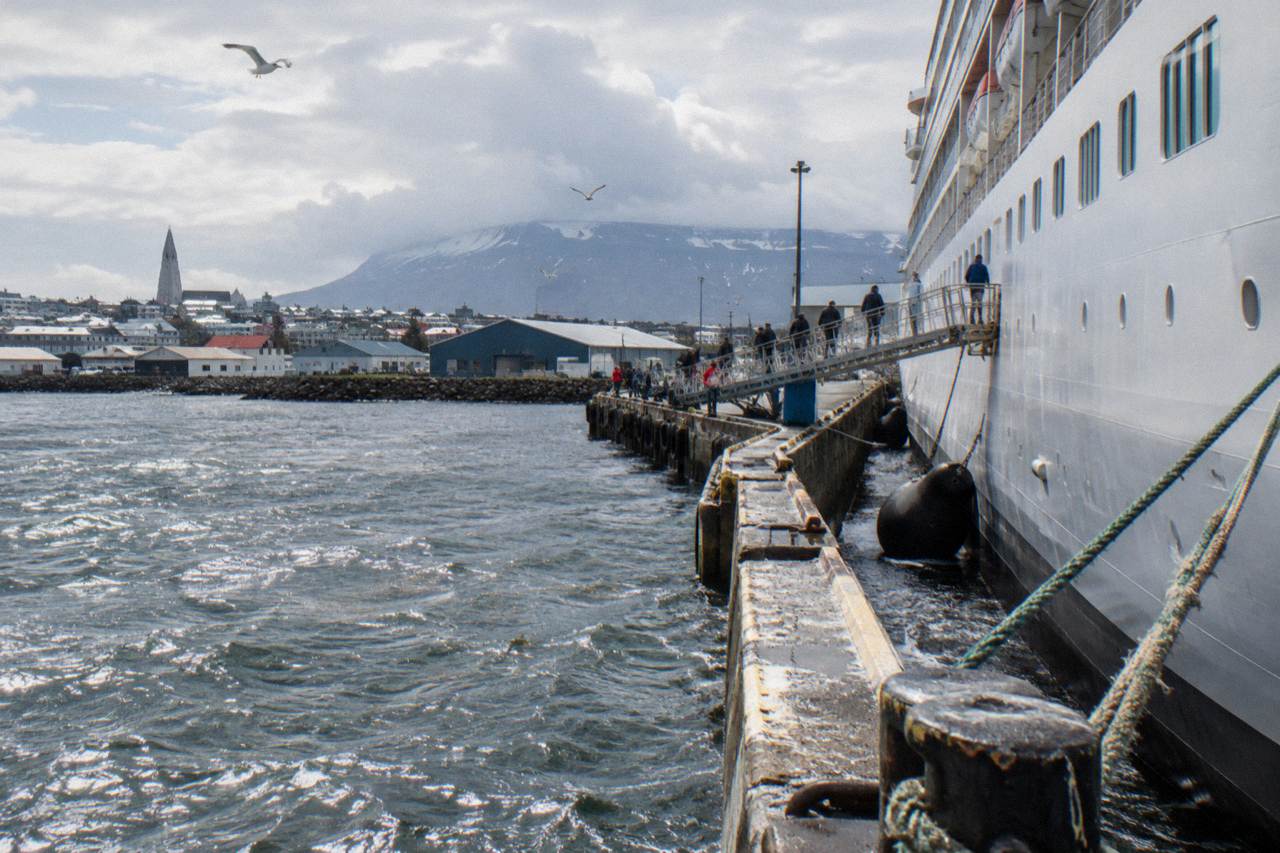
Yes, central Reykjavik is walkable from the cruise berths for most passengers, with one caveat: the distance depends on which pier your ship uses. Ships tying up close to the Old Harbour are a short stroll from the heart of downtown, while vessels docked at the larger terminals further along the waterfront face a longer haul on foot. Plenty of cruise guests walk it. Plenty also decide their hours are better spent with a guide who covers the ground efficiently.
Reykjavik is a compact capital. The whole downtown core, from the harbour edge to the pond and the main shopping street, unwinds in a rectangle you can cross on foot in well under an hour at a relaxed pace. That compactness is exactly what makes the cruise-port question worth asking properly rather than answering with a flat yes. If your ship berths near the Old Harbour, the city centre starts almost at the gangway. If it berths at the deeper-water terminal used by bigger vessels, you are looking at a longer walk along the water before downtown proper begins, and many passengers take the shuttle or a public bus for that first leg. Once you do reach the centre on foot, a guide to Laugavegur, the famous shopping street covers what to expect and what things cost along the way.
The honest answer also depends on the day. Late October brings sunrise around 9:07 and sunset around 17:13, so an autumn call starts dim and ends dark. December daylight shrinks to roughly four hours around the solstice. A summer call, by contrast, gives you daylight late into the evening and an easy wandering day. The walkability does not change; the comfort and safety margins do, and wet, windy harbour wind is a Reykjavik constant in any season.
For cruise guests weighing walking alone against a guided option, three formats fit a port day particularly well: a small-group city walk, a one-hour express walk, and a hop-on hop-off bus ticket that covers the longer stretches.
How Far Is The Walk From The Cruise Terminal Into Town?
There is no single answer because Reykjavik's cruise ships use more than one berth. Smaller ships often moor within easy walking distance of the Old Harbour and the Grandi district, where restaurants, food halls and museums sit right at the waterfront. Larger vessels typically use the terminal further east along the shore, from which the centre is often 45 minutes or more each way on foot. Confirm your berth with your cruise line before planning the day.
The distinction matters more than most port guides admit. A ship at the Old Harbour end puts you beside Grandi Mathöll, the street-food hall at Grandagarður 16, which opens daily at 11:00 and closes at 21:00, with holiday closures around Christmas and New Year. From there, the heart of downtown is close enough that you could be photographing the harbour, eating, and browsing the main street within your first hour ashore. A ship at the eastern terminal flips the arithmetic: the walk into town follows the waterfront path and is pleasant in decent weather, but it eats cruise time twice, once going in and once coming back, and the weather does not always cooperate.
That waterfront route is genuinely attractive when conditions behave. The path runs along the water with views across the bay to Mount Esja, past sculpture and modern apartment blocks, and it is flat the whole way. In summer it is one of the nicer urban walks in the Nordics. In November gales, the same stretch is exposed with little shelter, and the wind off the North Atlantic turns an umbrella into a lost cause.
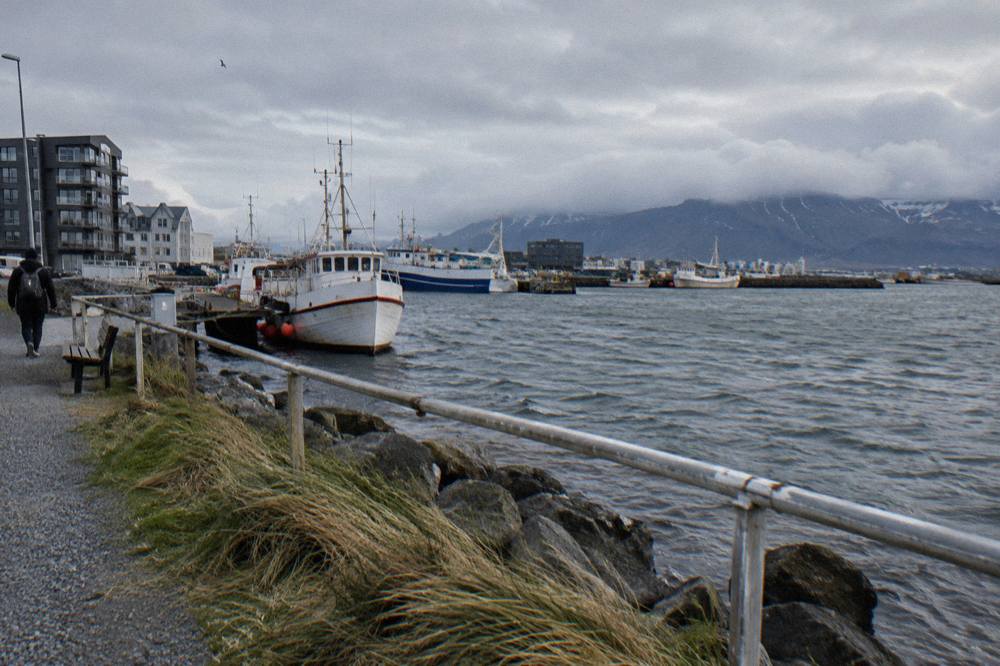
A practical middle path: walk one direction and ride the other. Public buses in the capital area charge an adult single fare of 690 ISK with contactless payment accepted, and children 11 and under ride free, so a family can move into the centre for less than the price of two coffees. Full fares and capping rules are on the operator's pricing page. Note that the old 24-hour and 72-hour day passes are no longer sold; the system now caps what an adult pays at three rides per day and nine per week, which suits a cruise day of two or three bus hops nicely. Scheduled service reductions on some capital-area routes from 1 December 2026 make timetables worth a fresh check on a winter call.
What Does A Walking Day Ashore Actually Look Like?
A realistic self-guided day runs like this: walk or bus into the centre, spend two to three hours on the compact downtown core, eat, then return to the ship with buffer time. The core sights cluster tightly. The main church tower, the concert hall on the harbour edge, the main shopping street and the city pond all sit within a few minutes of each other, so a loop is easy to improvise without a map.
Start at the harbour end and the concert hall, whose glass facade has become a harbourside landmark, then head up the gentle slope to Hallgrímskirkja, the Lutheran church whose tower defines the skyline. Winter hours run 10:00 to 17:00 with last tower entry at 16:45, and tower tickets are sold only at the church shop, no advance booking. The nave and tower close for services and concerts, so a same-day check of the church's site saves a wasted climb. From the church, the main shopping street runs downhill toward the pond, and the whole loop, unhurried with stops, fits inside two hours.
The Reykjavik City Tours library of walking itineraries covers this downtown core in detail if you want a fuller route, including a dedicated self-guided walking route of Reykjavik and a walking tour map of the city. Both pages assume you are on foot from the centre, which is exactly the position a cruise walker is in after the first leg from the pier.
Food breaks solve themselves downtown. Hlemmur Mathöll, the food hall in a former bus terminal, opens daily from 11:00 and hosts vendors ranging from a bistro to pizza, Thai and gelato, though it closes occasionally for maintenance works. Grandi Mathöll on the harbour side is the other strong option and doubles as a reason to walk the Grandi stretch even if your ship berths elsewhere. The famous hot dog stand downtown, operating since 1937, lists a pylsa at 920 ISK on its current menu, a cheap anchor for a cruise-day lunch. More eating ideas sit in the guide to what to eat in Reykjavik.
Time discipline is the part cruise guests underestimate. All-aboard times often land in late afternoon, and the walk or ride back to the pier plus a security buffer can claim an hour of your day. Set a turn-back time before you start wandering, and treat anything beyond it as a bus or taxi ride, not a brisk jog.
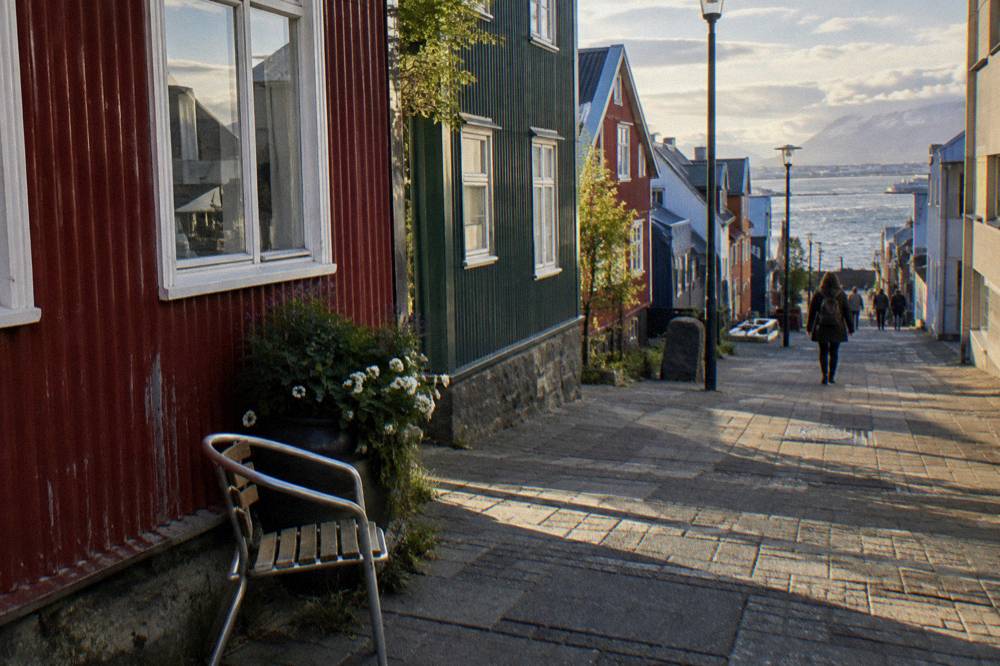
When Does A Guided Walk Beat Walking Alone?
A guided walk earns its price when your hours are short, your berth is the far one, or you want the city explained rather than just seen. A two-hour small-group walk covers the downtown core with a local guide and costs from $50.08 per person. A one-hour express walk from $89 compresses the essentials further. Both deliver context no map provides, and both end you back in the centre with your bearings set.
The small-group format suits a port day unusually well. The Reykjavík Small Group Walking Tour runs about two hours, is rated 4.9 across 5,260 reviews, and keeps numbers low so questions actually get asked and answered. Two hours is a comfortable slice of a typical call: it leaves time for lunch and a museum or a food hall afterwards, and it does not gamble your all-aboard time on a long transit. Meeting point details are on the booking page.
The express format is the port-day specialist. One hour, a local guide, the headline sights and stories at a pace that respects a tight timetable, from $89 per person. For a call of six hours or less, or a first-time visitor who wants the city decoded before exploring solo, it is hard to beat the arithmetic. The booking page lists the departure point.
There is also a case for skipping the walking debate entirely on short or cold calls. The hop-on hop-off bus explained in our city bus guide covers the longer distances a walker would otherwise absorb, with an audio guide in eight languages and a full loop of roughly 80 to 85 minutes. In winter it runs every 45 minutes from about 9:30, with the last departure at 16:15 from the harbour-side concert hall, a schedule that maps almost perfectly onto short winter daylight. It is rated 3.2 across 909 reviews and costs from $53.49.
Should You Walk Or Take The Hop-On Hop-Off Bus?
Walk if your berth is the close one and the weather is kind: downtown is genuinely pedestrian territory and the bus adds little inside it. Take the bus if your berth is the far terminal, the weather is foul, or your call is short. The 24 or 48-hour ticket from $53.49 pairs the harbour and downtown stops with the longer reaches of the city, and winter frequency of every 45 minutes works for a single port day.
The bus does one thing walking cannot: it collapses the distance between the spread-out sights that sit beyond the compact core, without you paying for taxis or decoding bus routes on a clock. Against that, its review score of 3.2 across 909 reviews is noticeably lower than the walking tours' scores, and the hop-on hop-off bus works as transport with commentary rather than a guided tour. Used as a shuttle with context, it does its job.
One seasonal note: the service has suspended operations for a spring stretch in the past, including 2 March to 23 May in one recent year, so a shoulder-season call should confirm the bus is running before building the day around it. The listing shows current schedules.
A hybrid works well in practice. Bus in from the far berth, walk the core on foot where the bus is wasted, bus back out. That keeps the walking where walking wins, downtown, and saves the exposed waterfront slog for a heated seat.
What About Weather, Daylight And The Season You Sail?
Season changes the cruise-day plan more than the port does. Summer calls bring up to 21 hours of daylight and mild air, making everything walkable. Winter calls bring roughly four to eight hours of daylight, mean temperatures near freezing, and frequent wind and rain along the waterfront, which shifts the balance toward short tours and indoor stops. Aurora season runs mid-August to late April if your call runs into the evening.
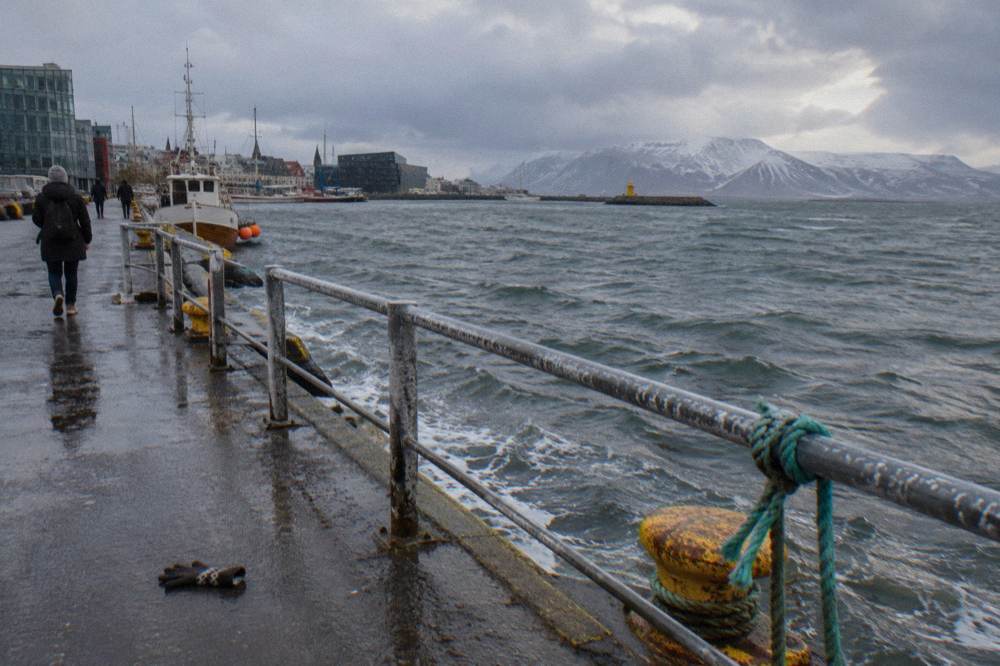
The numbers are stark. On 1 November, sunrise is 9:10 and sunset 17:10, about eight hours of daylight. By the winter solstice the day shrinks to around four hours. December's mean temperature sits at 0.8 °C with about 95 mm of precipitation, and Reykjavik sees 9 to 15 days per month with a millimetre or more of rain, so a dry call is never a given. Wind, not temperature, is what makes the harbour walk punishing; the waterfront is exposed and the funnels between buildings downtown can be brisk.
Winter also carries a specific safety note for anyone wandering beyond town: winter tyres are mandatory on Icelandic roads from 1 November, a reminder that ice is assumed, and city pavements can be slick in the mornings after a freeze. Decent footwear with grip matters more than a heavy coat.
None of this makes winter un-walkable. It makes winter the season for the one-hour express walk or a two-hour small-group tour with a guide who reroutes indoors when the weather turns, rather than an open-ended self-guided ramble against a shrinking clock. Our page on Reykjavik tours in winter and the practical rundown in what to wear on a Reykjavik walking tour cover the kit list in detail.
Is A City Card Worth It On A Cruise Day?
Sometimes. The Reykjavík City Card costs 6,100 ISK for 24 hours and bundles 17 museums, eight geothermal pools, unlimited capital-area buses and the Videy ferry. If your day includes two or three museums and a pool, it pays for itself. If your day is one walking loop and lunch, buy nothing and pay as you go.
The card's strength on a port day is the bus inclusion: it removes fare fiddling for the leg in from the far terminal and any hops between districts, and the museum list includes the Settlement Exhibition, which is one of the better rainy-hour stops downtown and open 10:00 to 17:00 daily with holiday closures. Children under 18 enter museums free with an adult card, which tilts the math for families. One exclusion matters to cruise passengers: the card does not cover the airport bus route, irrelevant in town but worth knowing if you are combining a cruise with a hotel night. Full details are on the official City Card page.
Pools deserve a mention because they are the card's quiet bargain. Adult admission at a city pool runs 1,500 ISK per visit, so a swim plus two museums on a 24-hour card already approaches break-even before the buses count.
| Option | Cost | Best for a cruise day |
|---|---|---|
| Walk only | Free | Close berth, good weather, long call |
| Public bus singles | 690 ISK per adult ride | One or two hops from the far terminal |
| Reykjavík City Card, 24 h | 6,100 ISK | Two or more museums plus buses and a pool |
| Small-group walking tour | From $50.08 per person | Context and bearings in about 2 hours |
| Express walk | From $89 per person | Short calls, tight timetables |
| Hop-on hop-off, 24/48 h | From $53.49 | Far berth, foul weather, spread-out stops |
How Do Cruise Passengers Get The Most Out Of A Short Call?
Plan backwards from all-aboard, pick one anchor activity rather than five loose intentions, and keep the return leg simple. A pattern that works: a guided walk in the first hours ashore to learn the city, free time for lunch and one museum or the food hall, then a bus or shuttle back with at least 45 minutes of buffer. The mistake to avoid is an ambitious self-guided loop that runs long with no transport plan home.
The guided-first approach does something walking alone cannot: it front-loads orientation. After two hours with a local guide you know which street is which, where to eat, what is worth your remaining hours, and, often, what locals actually do with a free afternoon. That is why the small-group walk pairs so well with a morning ashore and improvise the afternoon.
Money hygiene is easy here. Iceland is close to cashless, tipping is not expected or customary, and tap water is safe and free, so refill a bottle rather than buying one. Standard VAT runs 24 percent with a reduced 11 percent rate on accommodation and certain tour and food services, all baked into displayed prices; what you see is what you pay.
If your call is your first taste of the city and you want the fuller decision tree, including which tours suit which berths and time budgets, the dedicated guide to Reykjavik tours from the cruise port walks through it in depth.
Common Questions About Walking Into Reykjavik From A Cruise Port
Is Reykjavik Walkable From A Cruise Port?
Yes, with a caveat about berths. Ships near the Old Harbour are a short walk from downtown; ships at the larger eastern terminal face a longer waterfront walk, often 45 minutes or more each way. Many passengers walk one leg and bus the other, or book a two-hour guided walk that covers the core efficiently.
How Long Does It Take To Walk Around Reykjavik?
The compact downtown core, the church, the concert hall, the main shopping street and the pond, can be walked in under an hour without stopping, and explored properly in two to three hours. A fuller loop taking in the Grandi harbour district adds another hour or so.
Is Downtown Reykjavik Worth Visiting On A Short Cruise Call?
Yes. Downtown concentrates the city's architecture, food halls, museums and shopping into a small walkable area, and a single well-chosen tour plus lunch fills a typical call comfortably. The main risk is overplanning, not underplanning.
Do You Need A Tour Guide For Reykjavik Or Can You Walk It Yourself?
You can absolutely walk it yourself; the centre is compact and signed. A guide adds history, context and local tips you will not get from a map, which is why many cruise guests take a short guided walk first and explore solo afterwards. Small-group walks run about two hours from $50.08 per person.
What Is The Best Way To Get Around Reykjavik Without A Car?
On foot inside the downtown core, by public bus for longer hops at 690 ISK per adult single, or by the hop-on hop-off bus from $53.49 if you want the spread-out sights covered. E-scooters also operate year-round, from 115 ISK to start plus 45 ISK per minute, for riders 18 and over.
Is Reykjavik Safe To Walk Around From The Ship?
Yes, Reykjavik is a safe, low-crime capital and walking from the harbour presents no security concern. The real hazards are weather-related: wind on the exposed waterfront and icy pavements in winter. Dress for wind and rain, and wear shoes with grip between November and March.
If your call is still months out and the berth unconfirmed, the safest plan is the flexible one: a short guided walk you can move or cancel, a bus fare you can pay by card in a second, and a food hall you can find without a reservation. The city will still be compact when you tie up.